Two wild elephants found dead in Karnataka's Chamarajanagar district
Synopsis
Two elephant carcasses have turned up in Chamarajanagar district on the same day — one near a lake close to a deadly poaching shootout site, another in Bandipur. With Karnataka already having lost over 280 elephants in three years and FSL results still pending, wildlife advocates are demanding urgent answers about forest department patrolling.
Key Takeaways
Two wild elephant carcasses were found in Chamarajanagar district , Karnataka , on 20 October 2026 .
The first was discovered near Karadigudda Lake in the Hanur forest division ; samples sent to the Forensic Science Laboratory (FSL) .
The second, a female elephant , was found near Marikatte Lake in the Bandipur forest division ; officials suspect natural causes.
The Hanur site is close to where three suspected poachers were shot dead by forest staff in August 2026 .
Karnataka has lost over 280 elephants in a recent three-year period; 522 people and 216 elephants killed in human-elephant conflict over 25 years , per a Wildlife Institute of India (WII) study.
Wildlife advocates have called for stronger surveillance and monitoring across the district's forest areas.
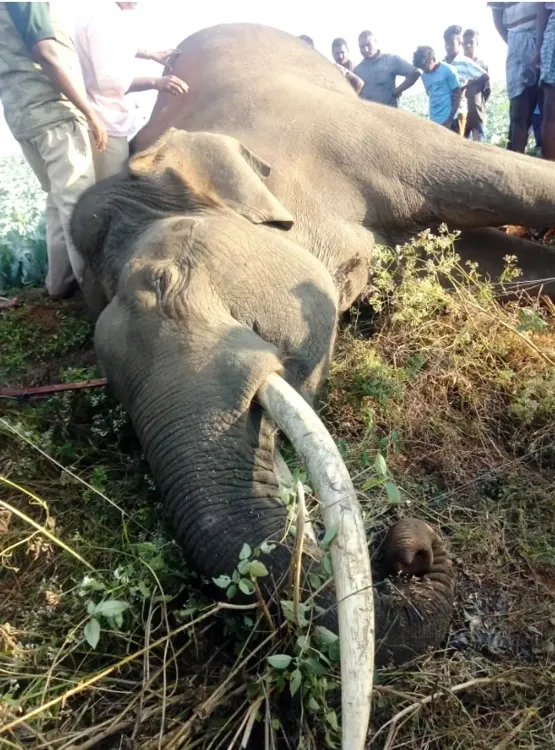
Two wild elephants have been found dead in Chamarajanagar district, Karnataka, on 20 October 2026, with forest officials collecting samples for forensic examination to determine the cause of death in both cases. The discoveries have intensified scrutiny of wildlife monitoring in a region already on edge following a deadly poaching-related shootout in August 2026.
First Carcass: Karadigudda Lake, Hanur Forest Division
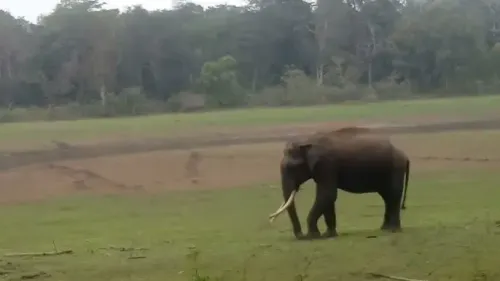
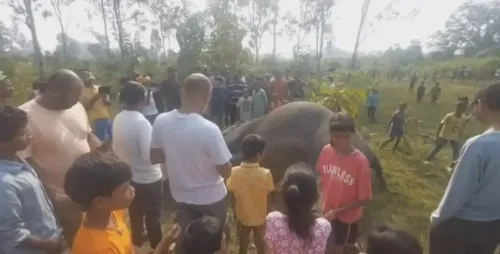
Patrolling staff from the Forest Department discovered the first carcass during a routine sweep near Karadigudda Lake in the Hanur forest division. The elephant's body was found in an advanced state of decomposition, making an immediate determination of cause of death difficult, according to officials. Samples have been dispatched to the Forensic Science Laboratory (FSL) for analysis, with results awaited.
Notably, the site is close to the area where a high-profile shootout was reported earlier this year. In August 2026, three suspected poachers — Anthonyswamy, Peter, and Kumar — were shot and killed during a crossfire after six suspects opened fire on a forest staff night patrol that had asked them to surrender. A forest staff member was injured in the incident, which subsequently triggered local protests and additional police deployments in Hanur.
Second Carcass: Bandipur Forest, Gundlupet Taluk
In a separate incident, the carcass of a female elephant was recovered near Marikatte Lake in the Berambadi beat of the Bandipur forest division in Gundlupet taluk. Deputy Conservator of Forests Nandeesh and veterinary officers visited the site to inspect the remains. Forest officials reportedly suspect the female elephant may have died of natural causes, possibly linked to age-related ailments, though a formal assessment is pending.
Wildlife Advocates Raise Alarm Over Patrolling Lapses
The twin discoveries have drawn sharp criticism from wildlife enthusiasts, who allege lapses in patrolling and monitoring across forest areas in Chamarajanagar. They have called for stronger surveillance mechanisms and more effective oversight to protect the district's wildlife. The concerns echo a broader pattern: Karnataka, home to over 6,000 wild elephants — the highest population in India — has lost more than 280 elephants over a recent three-year period, according to a study by the Wildlife Institute of India (WII).
The Wider Human-Elephant Conflict Crisis
The WII study further documents 216 elephants and 522 people killed in human-elephant conflict (HEC) incidents in Karnataka over the past 25 years. This comes amid persistent concerns about shrinking forest corridors, encroachment, and inadequate buffer zones that place both communities and animals at heightened risk. The Chamarajanagar district, which borders Tamil Nadu and is part of the Nilgiri Biosphere Reserve, remains one of the most ecologically sensitive — and contested — zones in the country.
Final forensic reports from the FSL are expected to shed light on whether either death was the result of foul play, illness, or natural causes, and could determine the next steps for both law enforcement and conservation authorities.
Point of View
Even if natural causes ultimately explain both deaths. Karnataka's record on elephant mortality is troubling — losing over 280 animals in three years while simultaneously recording 522 human deaths from conflict suggests a system under severe strain, not managed coexistence. The Forest Department's repeated reliance on pending FSL reports as a holding answer, while wildlife advocates flag patrolling gaps, points to an accountability deficit. With Chamarajanagar sitting inside the Nilgiri Biosphere Reserve, lapses here have consequences well beyond district boundaries.
NationPress
20 Oct 2026
Frequently Asked Questions
Where were the two elephant carcasses found in Chamarajanagar?
The first carcass was found near Karadigudda Lake in the Hanur forest division of Chamarajanagar district. The second, a female elephant, was discovered near Marikatte Lake in the Berambadi beat of the Bandipur forest division in Gundlupet taluk.
What is the suspected cause of death for the two elephants?
The cause of death for the first elephant remains unclear; samples have been sent to the Forensic Science Laboratory for analysis. For the second, a female elephant in Bandipur, forest officials reportedly suspect natural causes linked to age-related ailments, though a formal assessment is still pending.
Is there a connection between the elephant deaths and the Hanur shootout?
The first carcass was found close to the area where a poaching-related shootout occurred in August 2026, in which three suspected poachers were killed. Officials have not confirmed any direct link; FSL results are awaited to determine whether the elephant's death involved foul play.
How serious is elephant mortality in Karnataka?
Karnataka, which holds India's largest wild elephant population of over 6,000, has lost more than 280 elephants in a recent three-year period, according to a Wildlife Institute of India study. The same study recorded 216 elephant deaths and 522 human fatalities from human-elephant conflict over the past 25 years.
What are wildlife advocates demanding following these discoveries?
Wildlife enthusiasts have criticised the Forest Department over alleged lapses in patrolling and monitoring, calling for stronger surveillance mechanisms. They want more effective monitoring systems to prevent further loss of wildlife in the district's forest areas.