CM Conrad Sangma opens honey processing hub in Garo Hills
Synopsis
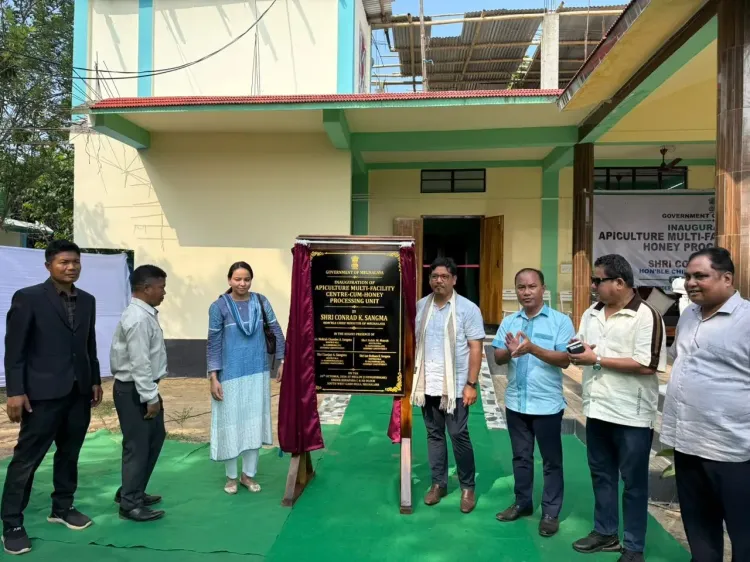
Meghalaya CM Conrad Sangma inaugurated a ₹1.52 crore Apiculture Multi-Facility Centre at Mellim, Rerapara on 20 October 2026, supporting 6,491 beekeepers across 87 clusters under Apiculture Mission 2.0 with a vision to take the state's organic honey to global markets.
Key Takeaways
₹1.52 crore Apiculture Multi-Facility Centre cum Processing Unit inaugurated at Mellim, Rerapara, South West Garo Hills District on 20 October 2026 .
Apiculture Mission 2.0 supports 6,491 beekeepers organised across 87 clusters in all 12 districts of Meghalaya.
The facility covers processing, bottling, quality testing, marketing and bee-box manufacturing under one roof.
CM Sangma aims to position Meghalaya's organic honey in global export markets through scientific beekeeping and strong branding.
A Bee Museum and Interpretation Centre is being explored to promote Meghalaya's honey identity and agri-tourism.
Central ministries — Agriculture and Farmers Welfare and Food Processing Industries — were tagged, signalling a push for central scheme convergence.
A ₹1.52 crore apiculture facility inaugurated deep in the hills of South West Garo Hills District could be the launchpad that sends Meghalaya's organic honey onto supermarket shelves worldwide. Meghalaya Chief Minister Conrad Sangma inaugurated the Apiculture Multi-Facility Centre cum Processing Unit at Mellim, Rerapara on Tuesday, 20 October 2026, calling the state's honey 'among the best in the world.'
What the Mellim facility actually does
The new centre is not just a storage shed — it is a full-spectrum value-chain node. Under one roof, it handles processing, bottling, quality testing, marketing support and even bee-box manufacturing. That last function matters: producing the hive units locally cuts a key input cost for small-scale beekeepers who often struggle to source equipment affordably from urban centres. Sangma framed the facility as direct infrastructure for rural income, posting: 'With scientific beekeeping, quality processing, packaging and strong branding, we can take our organic honey to global markets.' The language signals an intent to move beyond local and domestic sales into export positioning — a step that requires both laboratory-grade quality certification and consistent supply volumes.Apiculture Mission 2.0 and the 6,491 beekeepers behind it
The Mellim inauguration sits inside a broader state programme. Under Apiculture Mission 2.0, the Meghalaya government says it is supporting 6,491 beekeepers organised across 87 clusters spanning all 12 districts of the state. The cluster model is deliberate — aggregating small producers improves bargaining power, allows shared equipment use and makes quality standardisation achievable at scale. Northeast India's biodiversity is a genuine competitive asset here. The region's forests produce floral varieties unavailable to beekeepers on the plains, which is why 'organic' and 'forest honey' labels from the Northeast already command premium pricing in domestic specialty markets. The challenge has always been the leap from raw produce to shelf-ready, export-certified product — exactly the gap this processing unit is designed to close.Central ministries in the frame — and the proposed Bee Museum
Sangma's post tagged the Ministry of Agriculture and Farmers Welfare, the Ministry of Food Processing Industries, Union Agriculture Minister Shivraj Singh Chouhan and Union Minister Chirag Paswan — a deliberate signal that Meghalaya is looking to align state investment with central scheme support for processing infrastructure and market linkages. The Chief Minister also floated a forward-looking idea: the establishment of a Bee Museum and Interpretation Centre to showcase Meghalaya's honey heritage and attract agri-tourism interest. While still at the exploration stage, such a centre would serve a dual function — public education and soft-power branding for the state's premium honey identity on a national and global stage. From a single processing unit in Rerapara to a globally recognised organic honey brand — that ambition has a long road ahead, but today's inauguration at Mellim puts the foundation in concrete.Point of View
Export-ready agricultural products — a model that requires state investment in mid-stream infrastructure rather than just farmgate support. By clustering 6,491 beekeepers and anchoring them to a certified processing unit, Meghalaya is attempting the supply-side discipline that has historically been the weakest link in Indian speciality agri-export chains. Tagging both the Agriculture and Food Processing ministries in the same post is a calculated ask for dovetailing central mission funds — particularly relevant as the central government has been expanding its apiculture support footprint. The proposed Bee Museum adds a soft-power layer: agri-tourism and strong branding together can do more for premium pricing than processing infrastructure alone.
NationPress
20 Oct 2026
Frequently Asked Questions
What is the Apiculture Multi-Facility Centre inaugurated in Meghalaya?
It is a ₹1.52 crore centre at Mellim, Rerapara, South West Garo Hills District inaugurated by CM Conrad Sangma on 20 October 2026, offering honey processing, bottling, quality testing, marketing support and bee-box manufacturing under one facility.
What is Apiculture Mission 2.0 in Meghalaya?
Apiculture Mission 2.0 is a Meghalaya state programme supporting 6,491 beekeepers across 87 clusters in all 12 districts of the state, aimed at developing scientific beekeeping and building a honey value chain for rural livelihoods.
How many beekeepers does Meghalaya support under its apiculture programme?
The state supports 6,491 beekeepers organised into 87 clusters spanning all 12 districts of Meghalaya under Apiculture Mission 2.0.
What is the proposed Bee Museum in Meghalaya?
CM Conrad Sangma announced that the state is exploring a Bee Museum and Interpretation Centre to showcase Meghalaya's honey heritage, promote awareness of apiculture and potentially attract agri-tourism interest.
Why is Meghalaya's organic honey considered special?
Meghalaya's forests offer diverse, rare floral sources unavailable on the plains, giving the state's honey a unique organic character. CM Sangma has stated it has 'the potential to be among the best in the world,' with the goal of taking it to global export markets through quality processing and strong branding.