Jaishankar Meets UAE DPM Abdullah bin Zayed, Reviews Strategic Ties
Synopsis
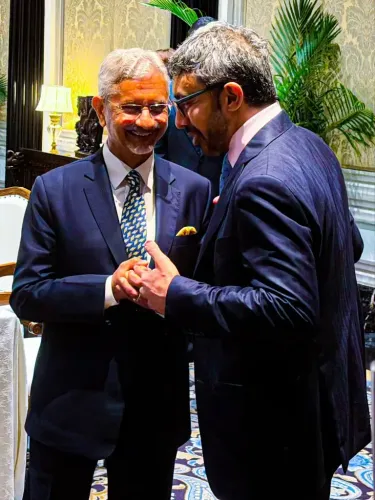
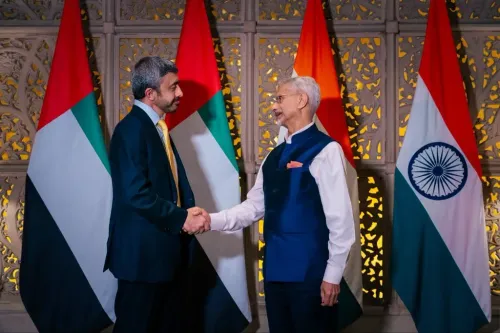
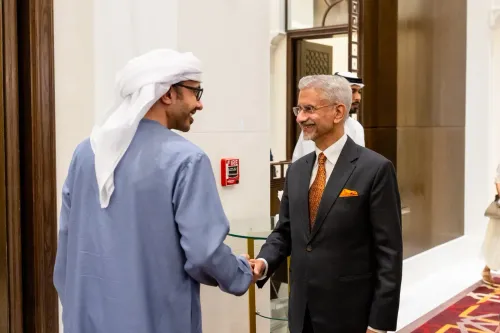
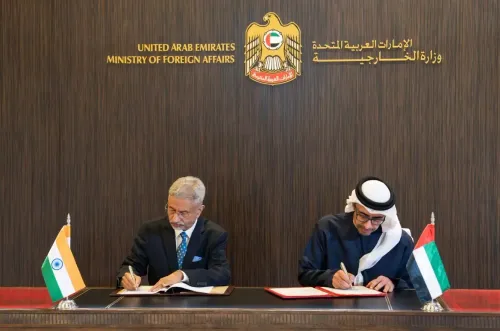
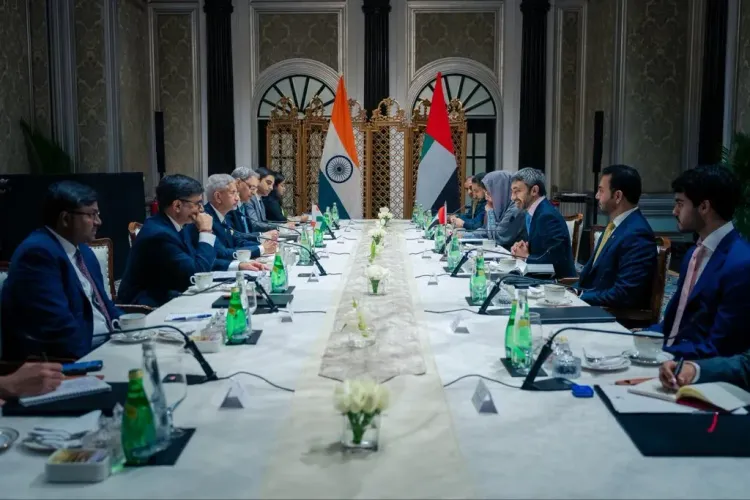
EAM Dr. S. Jaishankar met UAE Deputy PM and FM Sheikh Abdullah bin Zayed Al Nahyan on 20 October 2026, conducting a comprehensive review of the India-UAE Comprehensive Strategic Partnership spanning trade, energy, defence, technology, logistics, education and people-to-people ties.
Key Takeaways
Jaishankar held a bilateral meeting with UAE DPM and FM Sheikh Abdullah bin Zayed Al Nahyan on 20 October 2026 .
The review covered eight domains : trade, investments, energy, technology, logistics, defence, education, and people-to-people ties.
The India-UAE Comprehensive Strategic Partnership was established during PM Modi's 2015 UAE visit — India's first such designation for a Gulf state.
The Comprehensive Economic Partnership Agreement (CEPA) , signed in 2022 , remains the economic centrepiece of the bilateral relationship.
The meeting aligns with India's 'Act West' policy of deepening strategic and economic links with Gulf states.
Follow-up milestones include meetings of the India-UAE Joint Commission and CEPA implementation tracking.
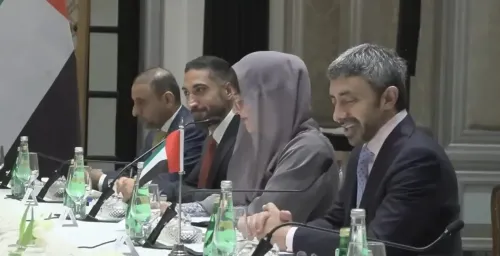
Across trade, energy, defence, and diaspora bonds, the India-UAE partnership is no longer a work in progress — it is a functioning architecture. Union External Affairs Minister Dr. S. Jaishankar held a wide-ranging bilateral meeting with UAE Deputy Prime Minister and Foreign Minister Sheikh Abdullah bin Zayed Al Nahyan on Tuesday, 20 October 2026, conducting what both sides described as a comprehensive review of the relationship.
Eight Domains, One Headline: How Deep the Partnership Now Runs
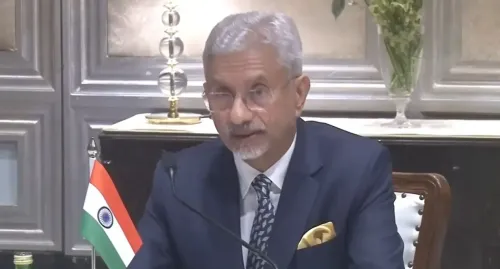
Dr. Jaishankar described the meeting as 'productive,' noting that the scope of bilateral cooperation now stretches visibly across eight distinct domains: trade, investments, energy, technology, logistics, defence, education, and people-to-people ties. That breadth is not accidental — it is the product of a decade-long diplomatic build-up that converted a transactional Gulf relationship into something far more structural. The minister declared that the India-UAE Comprehensive Strategic Partnership is 'living up to its promise.'
That promise was made formal during Prime Minister Narendra Modi's landmark visit to the UAE in 2015, when the bilateral framework was upgraded to a Comprehensive Strategic Partnership — the first such designation India extended to any Gulf state. The upgrade signalled a deliberate strategic choice: to treat the UAE not merely as a remittance corridor or an oil supplier, but as a full-spectrum partner.
The 2022 CEPA: The Economic Engine Behind the Rhetoric
The institutional backbone of this relationship received a major upgrade in 2022, when India and the UAE signed the Comprehensive Economic Partnership Agreement (CEPA) — one of the fastest free-trade negotiations India has ever concluded. The agreement was designed to push bilateral goods trade well beyond existing levels, slash tariffs across hundreds of product lines, and open new channels for services and investment flows.
For Indian exporters — from jewellers in Surat to pharmaceutical manufacturers — the CEPA created a direct, preferential gateway into the Gulf's wealthiest market. For the UAE, it deepened access to one of the world's fastest-growing consumer economies. The October 2026 review meeting between Jaishankar and Sheikh Abdullah is precisely the kind of high-level touchpoint that keeps that agreement from gathering dust — a signal to businesses and bureaucrats on both sides that political momentum remains intact.
India's 'Act West' and the UAE's Irreplaceable Role
The meeting sits within a broader Indian diplomatic calculus. As New Delhi has pushed its 'Act West' policy — deepening ties with Gulf states to diversify energy sources, attract sovereign wealth investment, and build logistics corridors — the UAE has emerged as the undisputed anchor. Over 3.5 million Indians live and work in the UAE, making the diaspora dimension both an economic lifeline and a human dimension that no policy document can fully capture.
Defence and technology cooperation have added a newer, sharper edge to the partnership. These are domains where the two countries are still building frameworks rather than reviewing completed ones — which makes the 'comprehensive review' framing of Tuesday's meeting particularly significant. Senior-level check-ins of this kind set the tempo for working-group meetings, joint commissions, and implementation timelines that follow.
With the India-UAE Joint Commission expected to convene for follow-up discussions, Tuesday's meeting was less a conclusion than a high-altitude course correction — two foreign ministers making sure that the widest bilateral partnership in India's Gulf diplomacy stays on the right heading.
Point of View
Not just declaratively warm. The fact that Jaishankar publicly flagged all eight cooperation domains — including the politically sensitive defence and technology pillars — signals that New Delhi wants the partnership's full breadth acknowledged, not just its economic dimensions. For India's broader Gulf calculus, the UAE remains the irreplaceable anchor: the entry point for sovereign wealth investment, the largest Indian diaspora host in the region, and the most advanced test case for what an 'Act West' partnership can actually look like in practice. The meeting's timing, nearly four years after the CEPA was signed, also suggests a deliberate review of whether the agreement's promise is translating into measurable outcomes — a question that will drive the Joint Commission's next agenda.
NationPress
20 Oct 2026
Frequently Asked Questions
What did Jaishankar and Sheikh Abdullah discuss in their October 2026 meeting?
They conducted a comprehensive review of the India-UAE Comprehensive Strategic Partnership, covering trade, investments, energy, technology, logistics, defence, education, and people-to-people ties.
What is the India-UAE Comprehensive Strategic Partnership?
It is a bilateral framework established during PM Modi's 2015 visit to the UAE, making it India's first Comprehensive Strategic Partnership with a Gulf state, covering political, economic, defence and cultural cooperation.
What is the India-UAE CEPA and when was it signed?
The Comprehensive Economic Partnership Agreement was signed in 2022 to boost bilateral goods trade, reduce tariffs, and expand services and investment flows between India and the UAE.
Who is Sheikh Abdullah bin Zayed Al Nahyan?
Sheikh Abdullah bin Zayed Al Nahyan is the Deputy Prime Minister and Minister of Foreign Affairs of the United Arab Emirates , and a key interlocutor for India-UAE high-level diplomacy.
What is India's 'Act West' policy?
India's 'Act West' policy refers to New Delhi's strategic push to deepen economic, energy, security and people-to-people ties with Gulf states, with the UAE serving as its most advanced bilateral model.