Jaishankar meets SecState Rubio in Mumbai, focuses on trade and defence
Synopsis
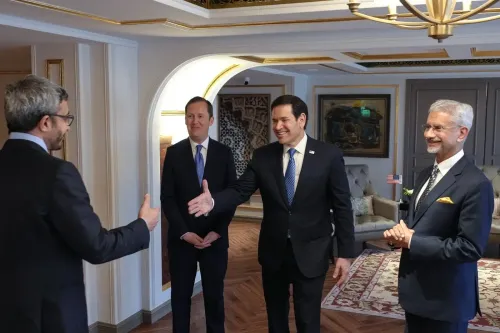
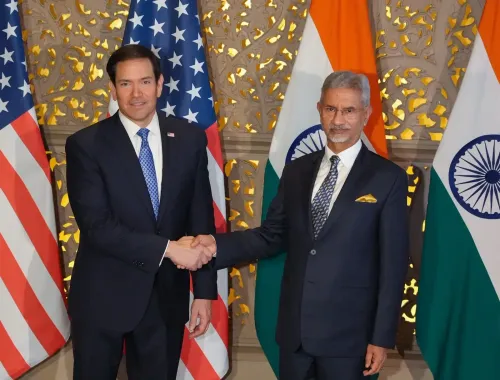
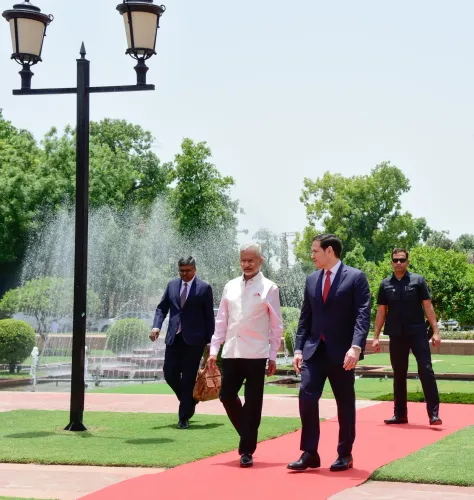
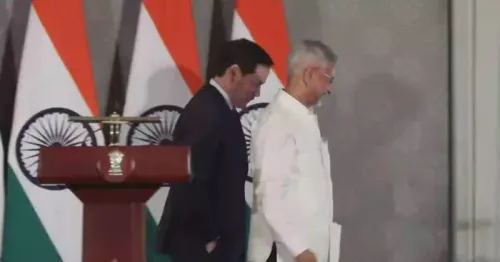
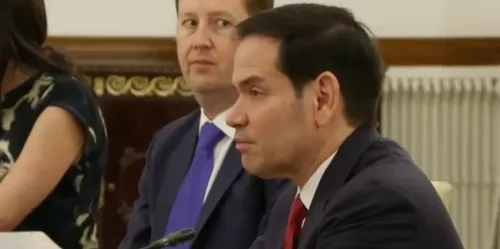
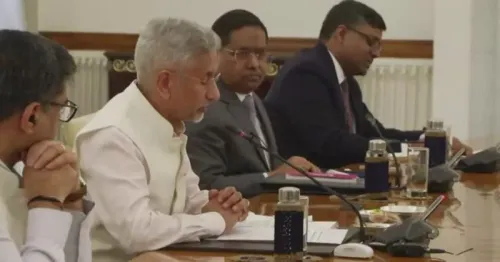
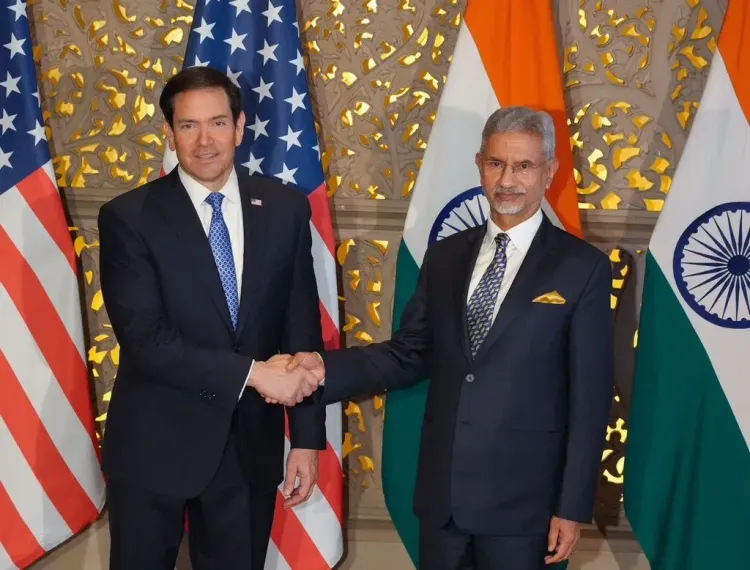
External Affairs Minister Dr. S. Jaishankar met US Secretary of State Marco Rubio in Mumbai on 20 October 2026, discussing trade, energy, technology, defence, people-to-people ties and regional developments — reinforcing a deepening India-US strategic partnership.
Key Takeaways
EAM Jaishankar held talks with US Secretary of State Marco Rubio in Mumbai on 20 October 2026 .
The agenda covered five pillars: trade, energy, technology, defence , and people-to-people ties .
Both ministers also exchanged views on regional developments , signalling strategic-level alignment beyond bilateral housekeeping.
The meeting builds on institutional frameworks including the India-US 2+2 Ministerial Dialogue (est.
2018) and the iCET technology initiative (launched 2023).
Holding the talks in Mumbai — India's financial capital — underscores the economic and commercial dimensions of the bilateral agenda.
Potential follow-up outcomes may emerge at the next 2+2 Ministerial or a Quad Leaders' Summit .
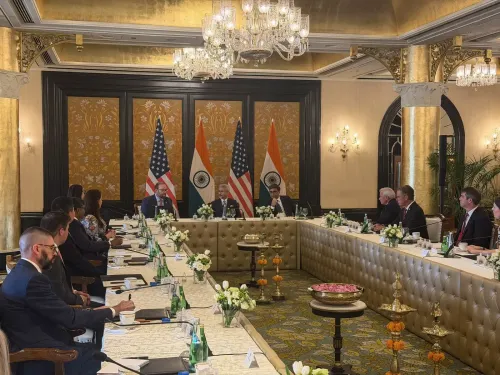
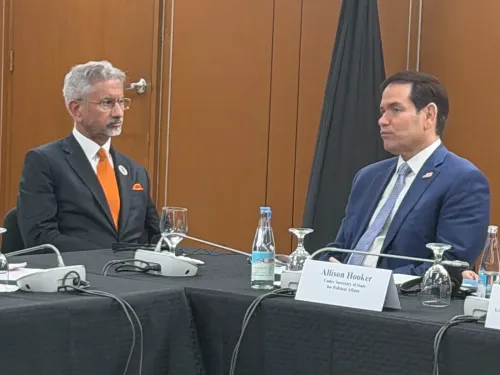
India's top diplomat brought the conversation home — literally. Union External Affairs Minister Dr. S. Jaishankar met US Secretary of State Marco Rubio in Mumbai on Tuesday, 20 October 2026, holding talks that spanned the full width of one of the world's most consequential bilateral relationships: trade, energy, technology, defence, and people-to-people ties.
What the two sides put on the table in Mumbai
Jaishankar described the meeting as an opportunity to 'share views on further advancement of our ties,' with both ministers also exchanging assessments on regional developments — diplomatic shorthand that, in the current Indo-Pacific climate, carries real strategic weight. The choice of Mumbai — India's commercial capital — as venue is itself a signal: this was not a purely protocol-driven Delhi conversation but one with an eye on economic and business dimensions of the partnership.
The five pillars Jaishankar named — trade, energy, technology, defence, and people-to-people links — map almost exactly onto the framework that has defined India-US engagement over the last decade. Each carries live deliverables. On technology, the US-India initiative on Critical and Emerging Technology (iCET), launched in 2023, has been pushing deeper collaboration on semiconductors, AI, and advanced telecom. On defence, the institutionalised India-US 2+2 Ministerial Dialogue — established in 2018 to synchronise foreign and defence policy — has progressively expanded co-production and intelligence-sharing arrangements.
Why a Rubio visit to India matters right now
High-level in-person engagement between the two foreign-policy chiefs keeps political momentum behind an agenda that can easily slow at the bureaucratic level. The fact that both sides felt it necessary to explicitly flag 'regional developments' suggests the conversation went beyond bilateral housekeeping. The Indo-Pacific security architecture — including Quad commitments — the situation in West Asia, and evolving dynamics with China are all live files that a US Secretary of State and an Indian External Affairs Minister would routinely need to align on.
Jaishankar himself brings rare institutional depth to these conversations: a former Indian Ambassador to both Washington and Beijing, he has spent decades navigating precisely the triangular pressures that shape India's foreign policy calculus. His read of 'regional developments' is never casual.
The arc of a deepening partnership
This meeting fits a pattern that has been building for over two decades. When Prime Minister Narendra Modi addressed a joint session of the US Congress in 2023, he called the India-US partnership 'one of the most consequential of this century.' Today's Mumbai talks are the working-level expression of that aspiration — two senior officials, no cameras, grinding through the specifics.
Watch for follow-through at the next India-US 2+2 Ministerial or a Quad Leaders' Summit, where the threads of today's conversation could surface as concrete announcements on defence co-production or technology licensing.
High-level diplomacy rarely moves in straight lines. But when both sides keep showing up — in each other's capitals and commercial cities — the direction of travel is rarely ambiguous.
Point of View
Not a routine protocol visit — signalling that trade and energy deals are as much on the table as defence and geopolitics. By publicly naming all five pillars, Jaishankar is telegraphing to domestic audiences and regional neighbours alike that the India-US partnership remains broad-based and institutionally resilient. The explicit mention of 'regional developments' indicates both sides are actively coordinating postures on flashpoints — likely the Indo-Pacific, West Asia, or both. For New Delhi, sustaining high-frequency, high-level contact with Washington is itself a strategic asset, one Jaishankar has spent his career cultivating.
NationPress
20 Oct 2026
Frequently Asked Questions
Where did Jaishankar meet Marco Rubio in 2026?
The meeting took place in Mumbai , India's financial capital, on 20 October 2026 .
What did Jaishankar and Rubio discuss in Mumbai?
They discussed advancing India-US ties across trade, energy, technology, defence , and people-to-people links , and also exchanged views on regional developments.
What is the India-US 2+2 Ministerial Dialogue?
The India-US 2+2 Ministerial Dialogue was established in 2018 to bring together the foreign and defence ministers of both countries to coordinate on strategic, defence and foreign policy issues.
What is iCET between India and the US?
The US-India initiative on Critical and Emerging Technology (iCET) was launched in 2023 to deepen cooperation on semiconductors, artificial intelligence, advanced telecom and other frontier technologies.
Why does high-level India-US diplomatic engagement matter?
Regular in-person meetings between top officials maintain political momentum on trade, defence and technology deals and allow both sides to align on fast-moving regional developments in the Indo-Pacific and beyond.