Gadkari: Cabinet clears 3% DA hike, rate rises to 63%
Synopsis
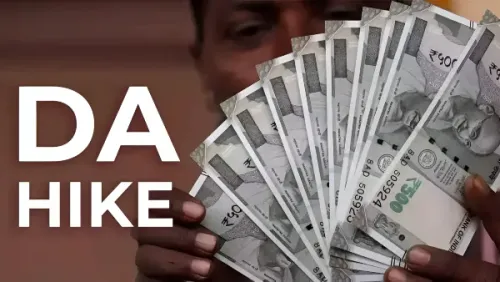
The Union Cabinet has approved a 3% Dearness Allowance and Dearness Relief hike, raising rates from 60% to 63% of basic pay/pension effective 1 July 2026, benefiting approximately 48.54 lakh employees and 68.71 lakh pensioners under the 7th Pay Commission formula.
Key Takeaways
3% DA/DR hike approved by the Union Cabinet chaired by PM Narendra Modi on 28 October 2026 .
Dearness Allowance and Dearness Relief rates rise from 60% to 63% of Basic Pay/Pension.
Decision is effective from 1 July 2026 , implying arrears payment for eligible beneficiaries.
Approximately 48.54 lakh Central Government employees and 68.71 lakh pensioners stand to benefit.
The revision follows the accepted 7th Central Pay Commission formula, linked to the All India Consumer Price Index for Industrial Workers.
DA revisions occur twice yearly — in January and July — as a rules-based mechanism to offset inflation.
Over 1.17 crore Central Government employees and pensioners will see fatter pay-outs this winter — the Union Cabinet, chaired by Prime Minister Narendra Modi, on Wednesday, 28 October 2026 approved a 3% hike in Dearness Allowance (DA) for serving employees and Dearness Relief (DR) for retirees, effective 1 July 2026, pushing the combined rate from 60% to 63% of Basic Pay or Pension. Union Road Transport and Highways Minister Nitin Gadkari shared the decision on X, calling it relief against rising prices.
Who gets what — the 48.54 lakh and 68.71 lakh numbers
The Cabinet decision splits into two distinct tranches of relief. Approximately 48.54 lakh Central Government employees will receive the enhanced DA, while 68.71 lakh pensioners will benefit through the corresponding Dearness Relief revision. Together, they form one of the largest single-decision beneficiary pools in routine government administration. The effective date of 1 July 2026 means the hike carries an arrears component — employees and retirees will receive back-payments for the months since the revision's cutoff.
The 7th Pay Commission formula at work
The increase is not discretionary. It follows the accepted formula rooted in the 7th Central Pay Commission recommendations, implemented from January 2016, which links DA and DR revisions to movement in the All India Consumer Price Index for Industrial Workers (AICPI-IW). Successive governments have adhered to this twice-yearly revision cycle — every January and July — to ensure real wages keep pace with inflation rather than erode silently. The 7th CPC framework replaced ad-hoc adjustments with a rules-based, index-linked mechanism, making each revision a function of data, not deliberation.
From 0% to 63% — a decade of DA accumulation
When the 7th Pay Commission structure took effect in 2016, DA was reset to 0% of the revised basic pay — standard practice at the start of each new pay regime. Since then, successive biannual hikes have steadily rebuilt the rate, now crossing the 60% threshold and landing at 63%. Each percentage point represents a measurable inflation offset for millions of households ranging from junior clerks in district offices to retired joint secretaries drawing pension. Three percent may sound incremental. For a pensioner drawing a modest monthly pension, it is a concrete, recurring addition to every month's cheque.
With CPI-IW data continuing to guide the formula, the next revision — expected around January 2027 — will depend on inflation trends over the coming months. The government has, so far, not signalled any move to constitute an 8th Central Pay Commission, making the 7th CPC formula the operative framework for the foreseeable future.
For the millions waiting on their November pay slips, the arithmetic is already settled — and it reads in their favour.
Point of View
On the surface, routine — but it lands at a politically sensitive moment ahead of state election cycles and amid persistent cost-of-living concerns for fixed-income households. By anchoring the revision firmly to the 7th Pay Commission's index-linked formula, the government insulates itself from charges of either largesse or parsimony — it is presented as math, not munificence. The cumulative climb from zero to 63% since 2016 also quietly makes the case for the 7th CPC framework's longevity, potentially deferring pressure to constitute an 8th Pay Commission. For over 1.17 crore beneficiaries, however, the politics are secondary — what matters is that the monthly transfer goes up.
NationPress
28 Oct 2026
Frequently Asked Questions
What is the new DA rate for central government employees after the October 2026 cabinet decision?
The new Dearness Allowance rate is 63% of Basic Pay , up from 60%, effective 1 July 2026 , following the Union Cabinet's approval on 28 October 2026 .
How many central government employees will benefit from the DA hike?
Approximately 48.54 lakh Central Government employees will benefit from the enhanced DA, while 68.71 lakh pensioners will receive the corresponding Dearness Relief increase.
What is the formula used to calculate DA for central government employees?
DA is calculated using an accepted formula based on the 7th Central Pay Commission recommendations, linked to the All India Consumer Price Index for Industrial Workers (AICPI-IW) . Revisions happen twice a year — in January and July.
Will central government employees get DA arrears for July to October 2026?
Yes. Since the revision is effective from 1 July 2026 but was approved in October, employees and pensioners are entitled to arrears covering the intervening months.
When is the next DA hike expected?
The next DA revision is expected around January 2027 , based on subsequent AICPI-IW inflation data, as DA is revised biannually in January and July each year.