Cabinet Clears ₹1,857 Cr Khelo India Sports Goods Manufacturing Scheme
Synopsis
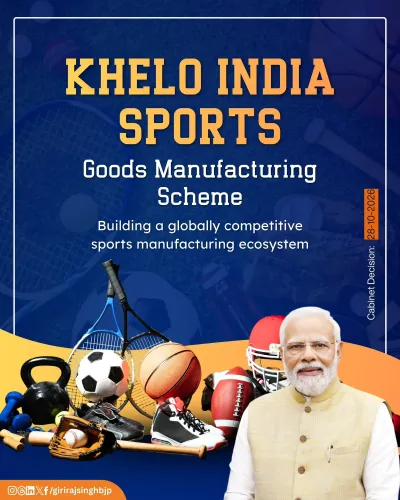
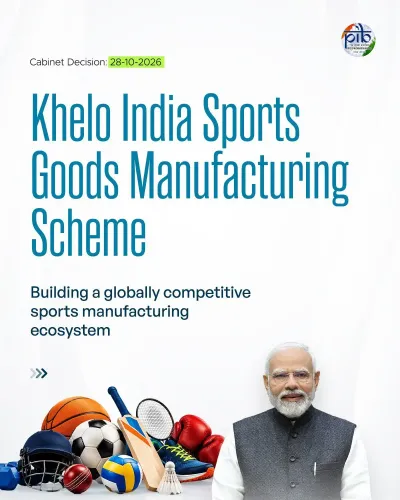
The Union Cabinet chaired by PM Narendra Modi has approved the Khelo India Sports Goods Manufacturing scheme with a total outlay of ₹1,856.67 crore for 2026–2033–34, aiming to build a globally competitive domestic sports equipment ecosystem and reduce India's dependence on imported sporting goods.
Key Takeaways
The Union Cabinet chaired by PM Narendra Modi approved the Khelo India Sports Goods Manufacturing scheme on 28 October 2026 .
The scheme carries a total financial outlay of ₹1,856.67 crore over the period 2026 to 2033–34 .
The goal is to build a 'globally competitive sports manufacturing ecosystem' and reduce India's dependence on imported sports equipment.
The scheme expands the Khelo India programme — launched in 2017 — upstream from talent and infrastructure into domestic manufacturing capacity.
Scheme guidelines, manufacturing cluster identification, and integration with existing Khelo India verticals are expected to follow the Cabinet approval.
India just bet nearly ₹1,856.67 crore on becoming a global force in sports manufacturing — and the Union Cabinet, chaired by Prime Minister Narendra Modi, made it official on Wednesday, 28 October 2026. The approval of the Khelo India Sports Goods Manufacturing scheme is the government's clearest signal yet that it wants India's athletes to train and compete with equipment stamped 'Made in India' — not imported from abroad. Union Minister Sarbananda Sonowal shared the Cabinet decision on X, underlining the scheme's ambition to build 'a globally competitive sports manufacturing ecosystem.'
What ₹1,857 Crore Over Seven Years Actually Means
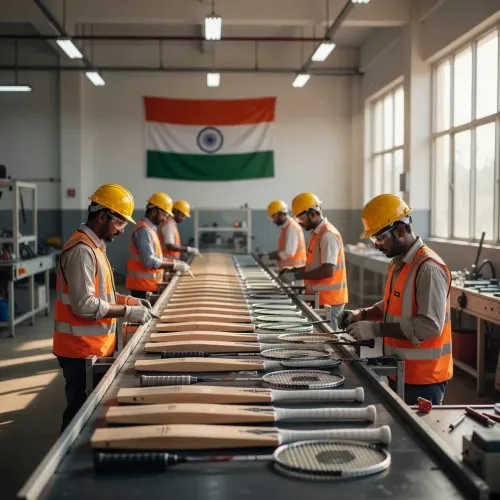
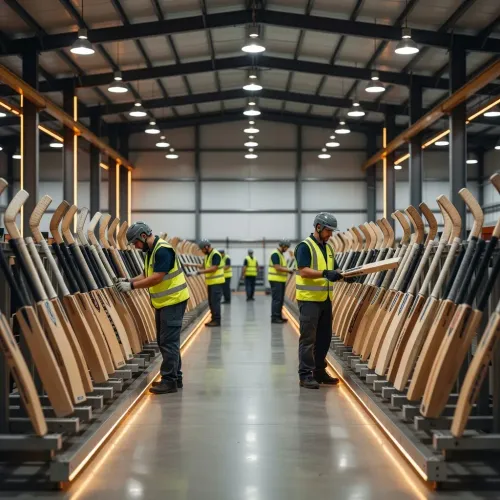
The scheme runs from 2026 to 2033–34 — a seven-year runway designed to give manufacturers the policy certainty needed to invest in plant, machinery, and skilled labour. That long horizon matters: sports goods manufacturing is capital-intensive, and short-burst schemes rarely move the needle on industrial capacity. The financial outlay of ₹1,856.67 crore signals serious intent to build clusters, upgrade technology, and close the quality gap with established exporters in Europe and East Asia.
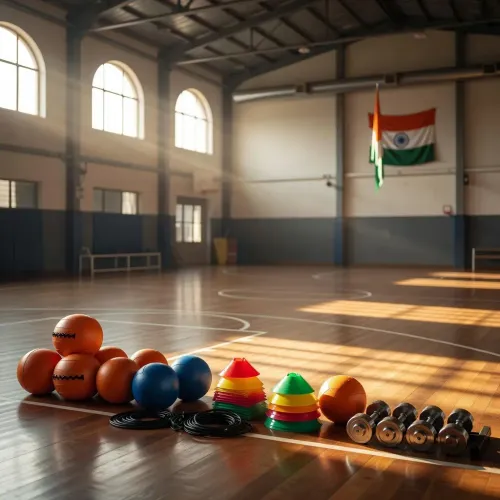
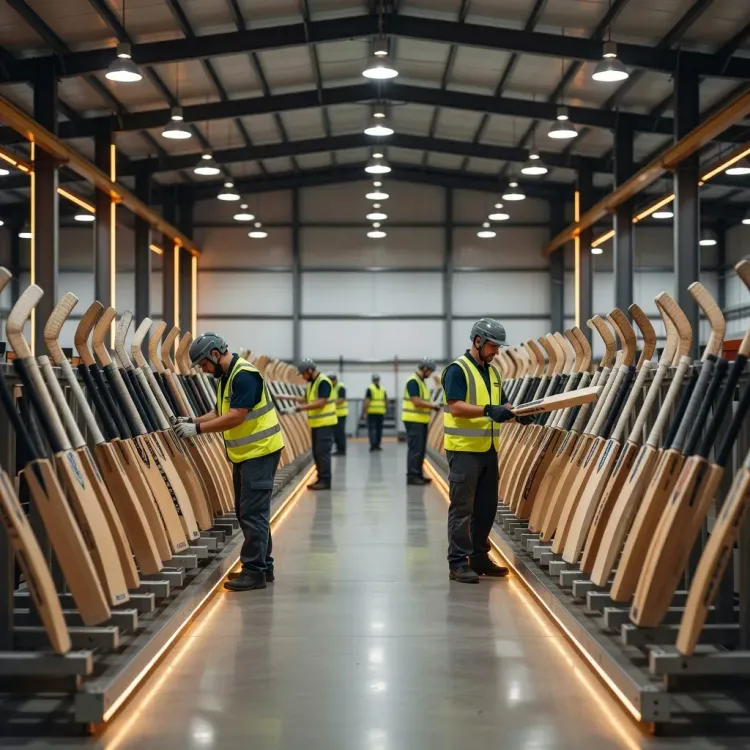
India already has a legacy sporting-goods hub in Jalandhar, Punjab — a city that supplies cricket bats, hockey sticks, and inflatable balls to markets worldwide. But the sector has long struggled with fragmented production, limited R&D, and the perception that high-performance equipment must be sourced overseas. This scheme is structurally designed to challenge that assumption.
Khelo India Grows Its Footprint — From Stadiums to Factories
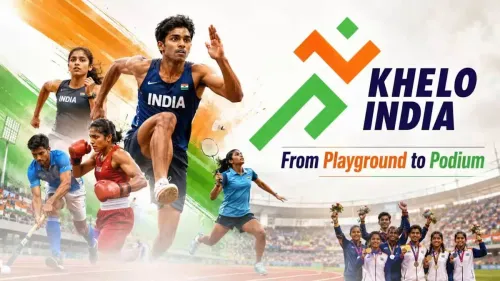
The Khelo India programme, launched in 2017, was originally built around three pillars: grassroots talent identification, sports infrastructure, and annual competitive events for young athletes. It has since become the government's umbrella brand for sports development. The new Manufacturing scheme is a significant expansion of that footprint — moving upstream from nurturing talent to ensuring that talent has world-class equipment to train with.
The strategic logic is straightforward: India has grown its Olympic and Asian Games medal tally steadily over the past decade, but high-performance athletes still rely heavily on imported gear. A robust domestic manufacturing base reduces that dependence, controls costs for athletes and federations, and creates an export opportunity in a global sporting-goods market worth hundreds of billions of dollars.
Sonowal's Post and the Broader Cabinet Signal
It is worth noting that Sarbananda Sonowal holds the portfolio of Ports, Shipping and Waterways — not Youth Affairs or Sports. Senior Cabinet ministers routinely amplify major decisions beyond their own portfolios, reflecting collective ownership of the government's agenda. His post captures the Cabinet's framing: this is not a welfare measure but an ecosystem play — manufacturing capacity, global competitiveness, and long-term self-reliance rolled into one scheme.
Watchers will now look for the release of scheme guidelines, the identification of manufacturing clusters eligible for support, and how the initiative integrates with existing Khelo India verticals on infrastructure and talent development. The clock is running — 2033–34 is the finish line, and the first milestones will set the pace for everything that follows.
Point of View
Make in India) into an integrated industrial strategy. The seven-year horizon and nearly ₹1,857 crore outlay suggest the government views sports manufacturing not as a niche subsidy but as a genuine export and self-reliance play. Whether the scheme delivers will depend on cluster design, private sector participation, and how swiftly guidelines translate ambition into factory floors.
NationPress
28 Oct 2026
Frequently Asked Questions
What is the Khelo India Sports Goods Manufacturing scheme?
It is a newly approved Union Cabinet scheme with a financial outlay of ₹1,856.67 crore, running from 2026 to 2033–34, aimed at building a globally competitive domestic sports goods manufacturing ecosystem in India.
How much money has the government allocated for the Khelo India Sports Goods Manufacturing scheme?
The Cabinet has approved a total outlay of ₹1,856.67 crore for the scheme over the period 2026 to 2033–34.
How is this scheme connected to the original Khelo India programme?
The original Khelo India programme was launched in 2017 to promote grassroots sports, talent identification, and infrastructure. The new manufacturing scheme extends that brand into the industrial domain, focusing on producing sports equipment domestically rather than importing it.
Why did Sarbananda Sonowal post about a sports scheme if he is the Ports Minister?
Cabinet decisions are collective and senior ministers often share approvals across portfolios. Sonowal, as a senior BJP leader and Union Minister, amplified the announcement on social media as part of the government's broader communication of Cabinet outcomes.
What happens next after the Cabinet approval of the scheme?
The next steps include the release of detailed scheme guidelines, identification of sports goods manufacturing clusters eligible for support, and integration with existing Khelo India verticals on infrastructure and athlete development.