CM Shivakumar Issues Nine Governance Directives to Karnataka Officials
Synopsis
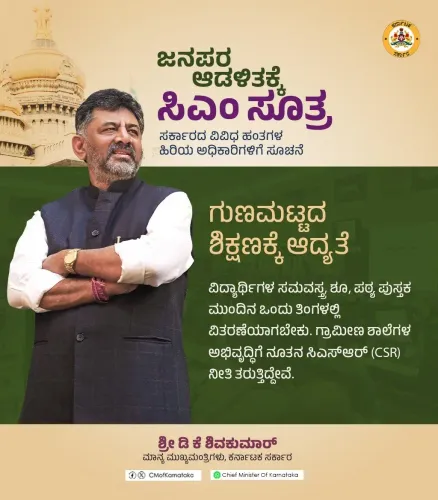
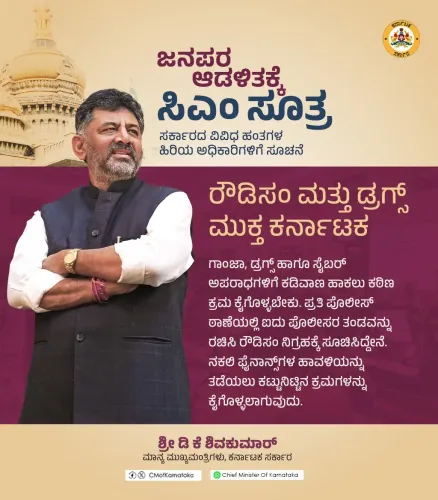
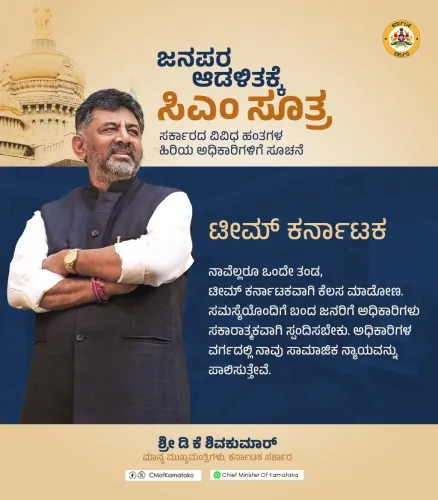
Chief Minister D.K. Shivakumar has issued nine principles for people-friendly governance to Karnataka's senior officials, anchored by a zero-tolerance stance on corruption — declaring that no one should pay even 10 rupees as a bribe in any government office.
Key Takeaways
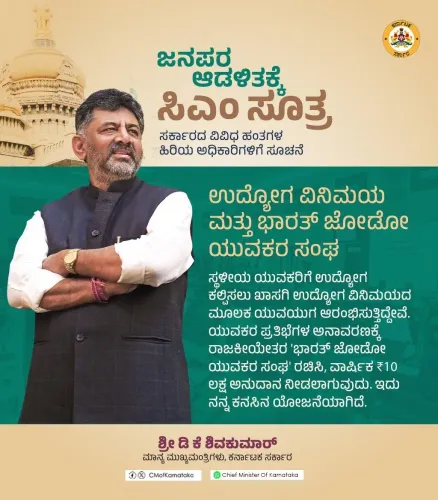
Shivakumar issued nine governance directives ( nava sutragalu ) to senior Karnataka government officials on 15 June 2026 .
The central directive calls for zero corruption : no bribe of even 10 rupees should be paid in any government office.
Shivakumar personally asked officials to report directly to him if pressured to act against the law.
The directives were shared under the #GuaranteeSarkara hashtag, linking them to the Congress government's five-guarantee electoral promise.
The Karnataka Congress government has positioned transparent administration as a core priority since coming to power in May 2023 .
Follow-up enforcement through the Karnataka Lokayukta or formal departmental circulars will determine the practical impact of these directives.
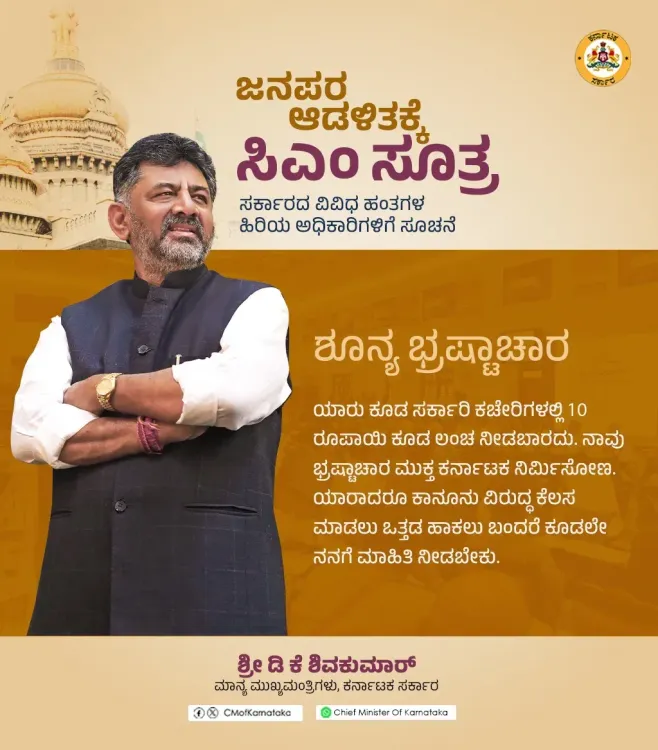
The Chief Minister's Office of Karnataka on Monday, 15 June 2026 shared nine governance principles issued by Chief Minister D.K. Shivakumar to senior officials across departments, with a sharp focus on eliminating corruption at every level of public administration in the state.
What the Post Says
The post, shared in Kannada under the hashtag #GuaranteeSarkara, outlines what it calls 'nava sutragalu' — nine guiding principles for people-friendly governance. The most prominent directive addresses corruption directly: 'Yaaru kooda sarkari kacheerigalalli 10 roopaayi kooda lancha nidabaaradu' — 'No one should pay even 10 rupees as a bribe in any government office.' The Chief Minister added, 'Let us build a corruption-free Karnataka,' and instructed officials to inform him immediately if anyone pressures them to act against the law.
Context
The directive comes as the Congress government in Karnataka — which came to power in May 2023 — continues to position itself as a transparent, delivery-focused administration. The Guarantee Sarkar branding, visible in the hashtag, refers to the five welfare guarantees the Congress party promised during the 2023 Karnataka assembly elections and has been rolling out since taking office.
Petty bribery in government offices — ranging from revenue departments to municipal bodies — has long been a persistent grievance among ordinary citizens in Karnataka and across Indian states. The Chief Minister's invocation of a threshold as low as 10 rupees signals an intent to set a zero-tolerance standard rather than focus only on high-value corruption.
Policy Backdrop
State governments across India have periodically issued administrative circulars to curb corruption, often backed by institutional mechanisms such as state Lokayuktas and vigilance commissions. Karnataka's Lokayukta is one of the older and more active such bodies in the country, with powers to investigate complaints against public servants.
The Chief Minister's personal appeal to officials — to report directly to him if pressured to act unlawfully — is notable for bypassing conventional departmental hierarchy and creating a direct accountability channel at the top of the executive. Such directives, when followed by enforceable circulars and vigilance action, have historically had short-term deterrent effects on petty corruption.
Stakeholders and Impact
The directives are addressed to senior officials across multiple tiers of the Karnataka government, meaning the intended audience spans secretariat-level bureaucrats down to district and taluk offices where citizens most frequently interact with the state. For ordinary Kannadigas, the promise of a bribe-free government office — even for routine services — would represent a meaningful improvement in daily civic life.
Civil society groups and anti-corruption watchdogs in the state are likely to monitor whether the directive translates into measurable action, including trap cases by the Lokayukta or departmental disciplinary proceedings against errant officials.
What's Next
The key test will be whether the Chief Minister's Office follows up with formal circulars, compliance mechanisms, or Lokayukta coordination that give the nine principles institutional weight. Governance directives issued through social media carry political signalling value, but sustained impact typically requires embedding them in departmental performance reviews and accountability frameworks. Karnataka citizens and government employees alike will be watching for concrete follow-through in the weeks ahead.
Point of View
The directive signals absolute zero tolerance rather than a graduated crackdown. However, governance analysts will note that social-media directives without institutional follow-through — Lokayukta trap operations, departmental audits, or whistleblower protections — rarely produce durable change. The directive's real test will come in whether it is backed by enforceable mechanisms or remains aspirational messaging ahead of the next electoral cycle.
NationPress
14 Sept 2026
Frequently Asked Questions
What are the nine principles DK Shivakumar issued for Karnataka governance?
The Chief Minister's Office shared nine directives ( nava sutragalu ) for people-friendly administration, with zero corruption as the headline principle. The full list of all nine points was shared by the CMO on 15 June 2026 via the official X account.
What did CM Shivakumar say about corruption in Karnataka government offices?
Shivakumar directed that no one should pay even 10 rupees as a bribe in any government office, and called on officials to inform him personally if anyone pressures them to act against the law.
What is Guarantee Sarkar in Karnataka?
'Guarantee Sarkar' refers to the five welfare guarantees — including free electricity, cash transfers, and free bus travel for women — promised by the Karnataka Congress party during the 2023 assembly elections and implemented after it came to power in May 2023.
Who is DK Shivakumar and what is his role in Karnataka?
D.K. Shivakumar is a senior Congress leader from Karnataka. The Chief Minister's Office post on 15 June 2026 refers to him as Chief Minister of Karnataka.
How does Karnataka enforce anti-corruption rules against government officials?
Karnataka has the Lokayukta, one of India's more active state anti-corruption bodies, which investigates complaints against public servants and conducts trap operations against those accepting bribes.