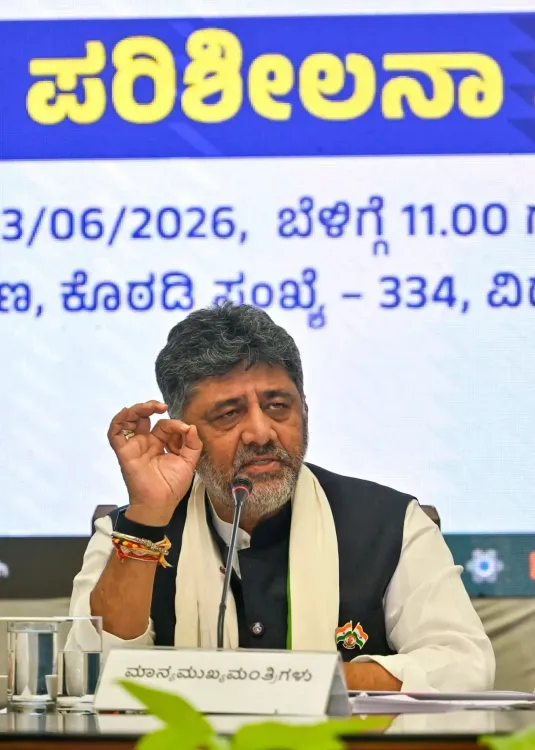
CM Shivakumar Issues 9-Point Governance Directive to Karnataka Officials
Synopsis
Karnataka Chief Minister DK Shivakumar chaired a district-level review on 13 June 2026, issuing nine directives spanning zero-corruption enforcement, five-member anti-rowdy police teams at every station, Gruha Lakshmi re-applications, a Rs 10 lakh Bharat Jodo Yuva Sangh grant, monsoon preparedness and taluk-level circular road grids.
Key Takeaways
Zero-corruption mandate: CM Shivakumar directed that not even Rs 10 should be paid as a bribe in any government office, and officials must report pressure immediately.
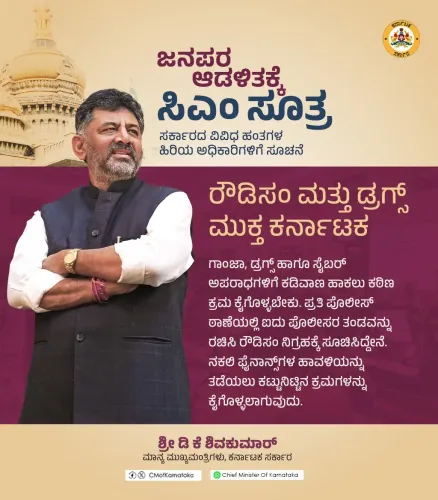
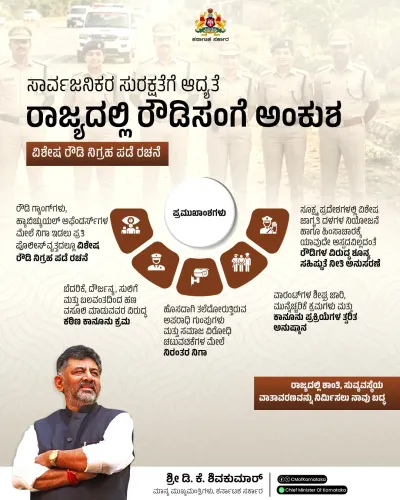
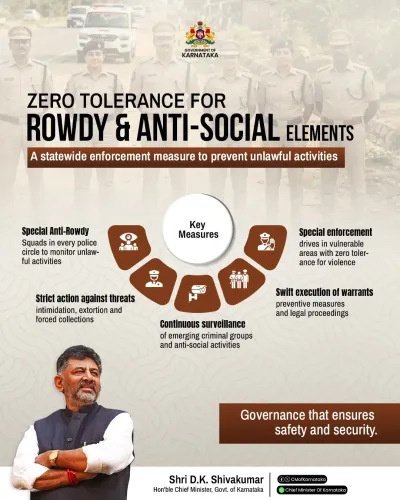
Anti-rowdy teams: A dedicated five-member police team will be formed at every police station to suppress rowdyism, drugs, cannabis and cyber crimes.
Education delivery deadline: Student uniforms, shoes and textbooks must be distributed within one month ; a new CSR policy will fund rural school development.
Gruha Lakshmi revision: The scheme is not scrapped, but a fresh application round will be held to ensure only eligible beneficiaries with correct information receive the benefit.
Youth initiative: A non-political Bharat Jodo Yuva Sangh will be formed with an annual grant of Rs 10 lakh ; a private employment exchange 'Yuva Yuga' will be launched for local youth jobs.
Monsoon preparedness: Officials directed to ensure seed and fertiliser availability and arrange fodder supply amid an anticipated rainfall shortfall and possible El Niño influence.
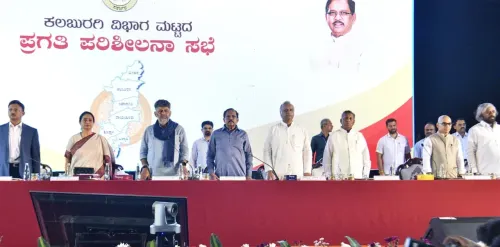
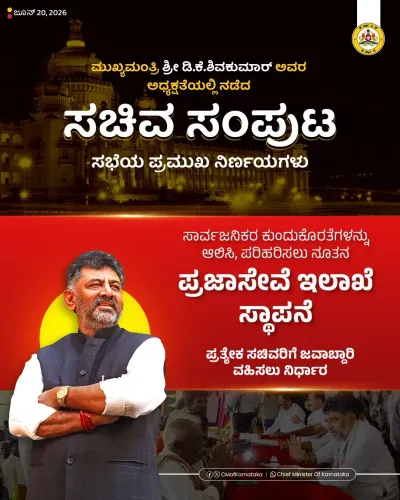
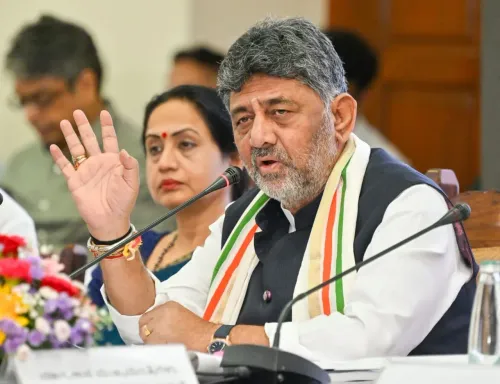
Chief Minister D K Shivakumar of Karnataka chaired a district-level progress review meeting on Saturday, 13 June 2026, issuing nine major administrative directives to District Collectors, Superintendents of Police, Chief Executive Officers, District Forest Officers and senior state officials. The directions — shared at a press conference immediately after the meeting — span anti-corruption enforcement, drug and rowdyism crackdowns, education delivery, monsoon preparedness, welfare scheme rationalisation, voter-right protection, youth employment and infrastructure planning.
Context
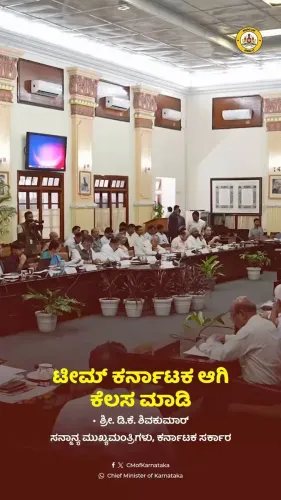
Addressing officials, CM Shivakumar framed the session under the banner of 'Team Karnataka', urging all departments to function as a single unit. 'Naavellaroo ondhe tanda, Team Karnataka aagi kelasa maadona' ('We are all one team — let us work as Team Karnataka'), he said, adding that officials must respond positively to citizens who approach government offices with grievances. He also stressed that social justice would be upheld in all administrative transfers and postings.
On corruption, the Chief Minister drew a hard line: not even Rs 10 should change hands as a bribe in any government office. He called for building a 'corruption-free Karnataka' and asked officials to alert him immediately if anyone pressured them to act against the law.
Policy Backdrop
The directives on law enforcement include a specific structural change: a dedicated five-member police team is to be formed at every police station to suppress rowdyism. Stringent action has been ordered against cannabis, drugs, cyber crimes and illegal finance operations. These steps follow a pattern of periodic anti-narcotics and anti-rowdy drives that Karnataka administrations have undertaken, now given fresh institutional form at the station level.
On education, the Chief Minister directed that student uniforms, shoes and textbooks must be distributed within one month. A new CSR (Corporate Social Responsibility) policy is being formulated specifically to channel private-sector funds into rural school development — a move that signals the government's intent to supplement the state budget with industry partnerships for grassroots infrastructure.
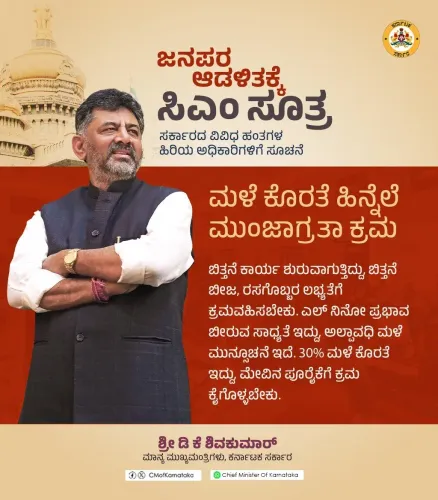
Agriculture received attention in the context of an anticipated rainfall shortfall. The Chief Minister noted that sowing operations have begun and instructed officials to ensure adequate supply of seeds and fertilisers. He flagged the possibility of an El Niño influence and short-range rain forecasts, directing departments to make contingency arrangements for fodder supply to livestock.
Stakeholders and Impact
The revision of the Gruha Lakshmi Yojane — one of the five flagship Congress guarantees that provided monthly financial support to women heads of households — drew particular attention. The Chief Minister clarified that the scheme is not being discontinued and no beneficiary is being removed. A fresh application round will be held to ensure the benefit reaches only 'eligible beneficiaries with correct information', addressing concerns about leakages and duplicate entries that have surfaced since the scheme's launch following the 2023 Karnataka assembly elections.
On voter rights, CM Shivakumar linked electoral enrolment directly to welfare access: citizens without voting rights will not be able to access the five guarantees or pensions. He directed officials to expedite residence certificates for those lacking them and urged all voters to mandatorily submit enumeration forms issued by Booth Level Officers (BLOs).
For youth, the Chief Minister announced the launch of a private employment exchange initiative called 'Yuva Yuga' to generate local jobs. Separately, a non-political body — the 'Bharat Jodo Yuva Sangh' — will be constituted to identify and nurture young talent, with an annual grant of Rs 10 lakh per unit. He described the Yuva Sangh as his 'dream scheme'.
What's Next
District Collectors have been directed to plan and design a circular road grid in every taluk to ease traffic movement — a decentralised infrastructure push that will require coordination between state public works departments and local bodies. The CSR policy for rural schools and the formal notification establishing the Bharat Jodo Yuva Sangh are expected to be the next tangible outputs from this review cycle.
The re-application process for Gruha Lakshmi Yojane and the rollout of taluk-level police anti-rowdy teams will serve as early tests of the administration's ability to translate these directives into ground-level change. With monsoon uncertainty looming and welfare delivery under scrutiny, the government's execution on these nine fronts will shape its administrative credibility heading into the next phase of its term.
Point of View
While projecting administrative rigour ahead of future electoral cycles. The Gruha Lakshmi re-application order is particularly significant — framed as a beneficiary-accuracy exercise, it is also a political risk, since any disruption to payments could alienate the women voters who were central to the party's 2023 mandate. The linkage of voter enrolment to welfare access is a bold administrative move that simultaneously advances electoral roll accuracy and creates a new lever of citizen engagement with the state. The Bharat Jodo Yuva Sangh, described as non-political yet carrying a Congress-aligned name, illustrates the fine line the government is walking between governance programming and political brand-building.
NationPress
27 Oct 2026
Frequently Asked Questions
What is the Gruha Lakshmi Yojane re-application about?
CM Shivakumar clarified that the Gruha Lakshmi Yojane is not being discontinued or any beneficiary removed. A fresh application round will be conducted to ensure the monthly benefit reaches only eligible women heads of households with verified information, addressing concerns about duplicate or incorrect entries.
What is the Bharat Jodo Yuva Sangh Karnataka?
The Bharat Jodo Yuva Sangh is a proposed non-political youth body announced by CM Shivakumar to identify and nurture young talent in Karnataka. Each unit will receive an annual grant of Rs 10 lakh, and the CM described it as his 'dream scheme'.
What anti-drug and anti-rowdy steps has the Karnataka government announced?
CM Shivakumar has directed that a dedicated five-member police team be formed at every police station in Karnataka specifically to suppress rowdyism. Strict action has also been ordered against cannabis, drugs, cyber crimes and illegal finance operations.
How is Karnataka preparing for a possible rainfall deficit in 2026?
With sowing operations under way and an El Niño influence possible, CM Shivakumar directed district officials to ensure adequate availability of seeds and fertilisers and to make contingency arrangements for fodder supply to livestock in drought-prone areas.
What happens if a Karnataka resident does not have voting rights?
CM Shivakumar stated that citizens without voting rights will not be able to access the state government's five guarantee schemes or pensions. He urged all voters to submit enumeration forms from Booth Level Officers and directed officials to quickly issue residence certificates to those who lack them.