CM Shivakumar launches special rowdy suppression squads across Karnataka
Synopsis
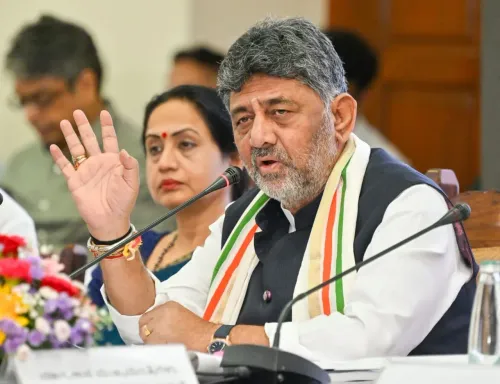
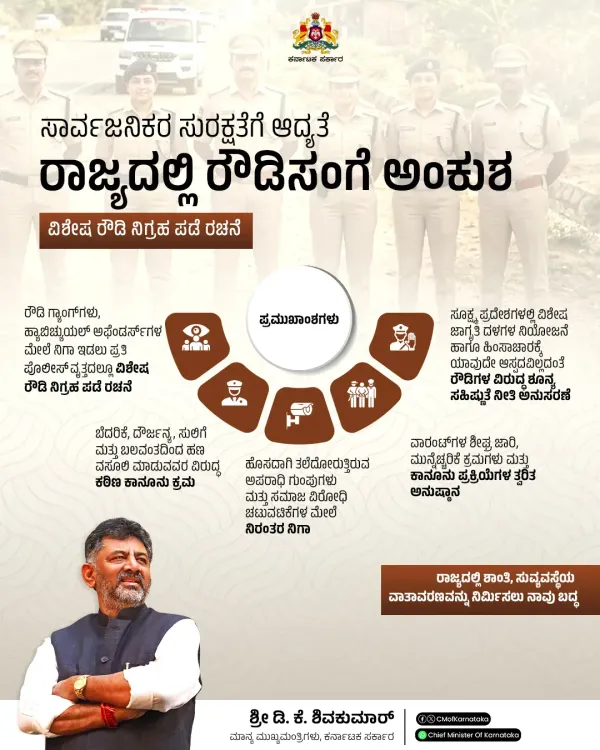
Chief Minister D K Shivakumar has announced a Special Rowdy Suppression Force in every Karnataka police circle, declaring zero tolerance against gangs, extortion, and habitual offenders. The move is described as a historic step in the state's law-enforcement history, with a call for public cooperation to build a safer Karnataka.
Key Takeaways
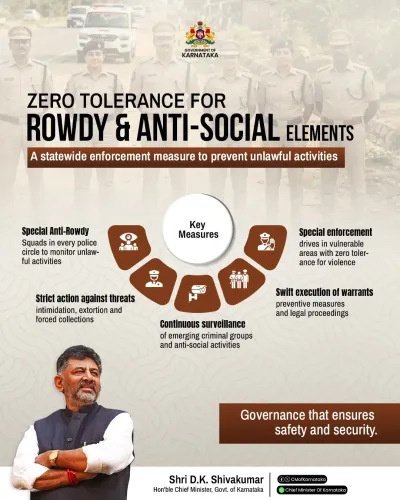
A Special Rowdy Suppression Force will operate in every police circle across Karnataka .
The force will maintain continuous surveillance on rowdy gangs and habitual offenders .
Strict legal action is mandated against threats, violence, extortion, and forced money collection.
The government has declared a zero-tolerance policy against anti-social and unlawful activities.
CM D K Shivakumar described the initiative as a 'novel and bold step' in Karnataka's history.
The announcement calls on citizens to cooperate in building a safe and peaceful state.
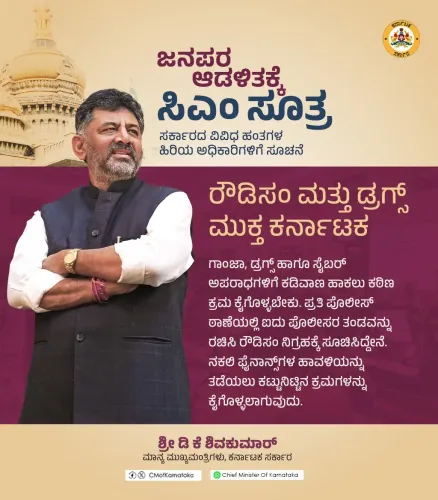
The Chief Minister's Office of Karnataka announced on Monday, 8 June 2026 that a dedicated Special Rowdy Suppression Force will be deployed in every police circle across the state, as part of a declared zero-tolerance policy against organised crime, extortion, and habitual offenders. The announcement was attributed directly to Chief Minister D K Shivakumar, who framed citizen safety as the government's foremost priority.
Context
In the post, CM Shivakumar declared: 'ನಾಗರಿಕರ ಸುರಕ್ಷತೆ ನಮ್ಮ ಪ್ರಥಮ ಆದ್ಯತೆ' ('Citizen safety is our first priority'). He described the move as a 'novel and bold step in the state's history', signalling that the government views the initiative as a structural departure from routine policing rather than a periodic crackdown. The announcement calls for continuous surveillance of rowdy gangs and habitual offenders at the police-circle level.
The post specifically lists threats, violence, extortion, and forced money collection as the primary targets of strict legal action. CM Shivakumar pledged to 'uproot rowdyism from its roots and turn the state into a garden of peace', and sought public cooperation in building a safer society.
Policy Backdrop
Indian states have periodically constituted specialised anti-rowdy or anti-extortion units under existing frameworks such as state Goonda Acts and provisions of the Code of Criminal Procedure. Karnataka itself has a history of invoking the Karnataka Prevention of Dangerous Activities (Goondas) Act against habitual offenders, allowing for preventive detention without immediate trial. The new force appears to build on these existing legal instruments rather than introduce fresh legislation.
Across the country, similar dedicated squads — in states governed by parties across the political spectrum — have been deployed to address organised extortion networks that often operate in urban commercial zones, construction sites, and transport corridors. The effectiveness of such units has historically depended on sustained operational follow-through and accountability mechanisms within the police hierarchy.
Stakeholders and Impact
For Karnataka's roughly 6.5 crore residents, the announcement signals a direct government response to public concerns about street-level extortion and gang activity, particularly in urban centres such as Bengaluru, Mysuru, and Hubballi-Dharwad. Small business owners, traders, and transport operators — groups frequently targeted by extortion networks — stand to be the most immediate beneficiaries if the force is operationalised effectively.
Karnataka Police personnel at the circle level will bear the implementation burden, requiring reallocation of manpower and potentially additional training for officers assigned to the new squads. Civil liberties groups are likely to monitor the zero-tolerance mandate closely, given historical concerns about the misuse of preventive detention provisions against marginalised communities.
What's Next
The state Home Department is expected to issue operational guidelines detailing the composition, jurisdiction, and reporting structure of the new squads in each police circle. Arrest statistics, case registration data, and periodic performance reviews will be the key indicators of whether the initiative moves beyond announcement into sustained enforcement. Public trust in the programme will hinge on transparent reporting and accountability for both the targeted offenders and the force itself.
Point of View
The government is attempting to embed accountability into the policing structure itself, which is a meaningful design choice. However, the initiative's credibility will be tested by whether operational rollout follows the political announcement, given that similar zero-tolerance drives in Indian states have often peaked at the declaration stage. The zero-tolerance framing also invites scrutiny from civil society over the potential for overreach, particularly under preventive detention laws that have a contested history in Karnataka and beyond.
NationPress
22 Oct 2026
Frequently Asked Questions
What is the Special Rowdy Suppression Force in Karnataka?
It is a newly announced dedicated police unit to be deployed in every police circle across Karnataka, tasked with continuous surveillance of rowdy gangs and habitual offenders, and taking strict legal action against extortion, threats, and forced money collection.
Who announced the rowdy suppression force in Karnataka?
Chief Minister D K Shivakumar announced the force through the official Chief Minister's Office of Karnataka account on 8 June 2026.
What crimes will the Karnataka rowdy suppression squads target?
The squads will target rowdy gangs, habitual offenders, extortion networks, intimidation, violence, and forced money collection, operating under a declared zero-tolerance policy.
Does Karnataka have a Goondas Act for dealing with habitual offenders?
Yes, the Karnataka Prevention of Dangerous Activities (Goondas) Act allows for preventive detention of habitual offenders and is among the existing legal tools the new force is expected to use.
How will the effectiveness of the new Karnataka police squads be measured?
Effectiveness will likely be tracked through arrest statistics, case registrations, and performance reviews released by the state Home Department once operational guidelines are issued.