Delhi HC reserves verdict on AISA chief Neha Bora's peace bond plea
Synopsis
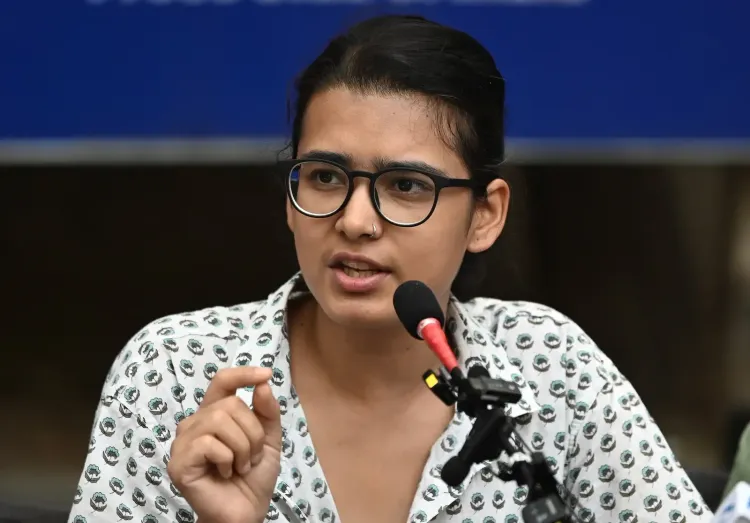
The Delhi High Court has reserved its verdict — due Friday at 6 p.m. — on AISA President Neha Bora's challenge to a peace bond notice issued after her 16 October detention near Mandi House. The case tests a key provision of the new BNSS law: can a magistrate demand a peace bond before completing an inquiry, or only after?
Key Takeaways
The Delhi High Court reserved its verdict on 22 October on AISA President Neha Bora's petition challenging a ₹10,000 peace bond notice.
Bora was detained on 16 October near Mandi House , about 10–15 minutes after arriving, in a crackdown ahead of a proposed CJP 'Tiranga Assembly' at Connaught Place denied permission by the NDMC .
The notice was issued under Sections 126 and 130 of the BNSS ; her counsel argues a bond can only be demanded after an inquiry concludes under Section 136 .
ASG Chetan Sharma cited 12 alleged violations by Bora and remarks she made at a press conference about 'regime change'.
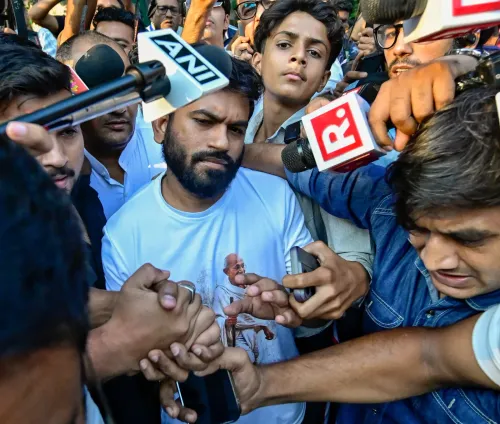
CJP leaders Saurav Das and Ashutosh Ranka were released on Wednesday after furnishing ₹50,000 bonds each and undertaking not to call protests at Jantar Mantar .
The High Court verdict is expected on Friday at 6 p.m.
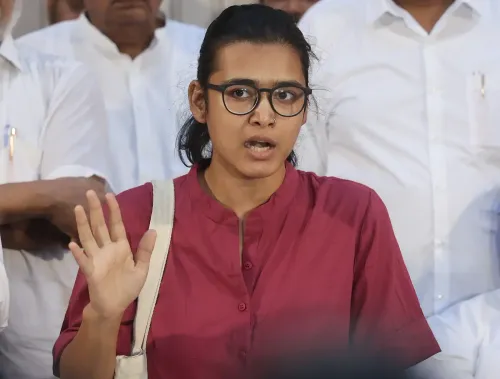
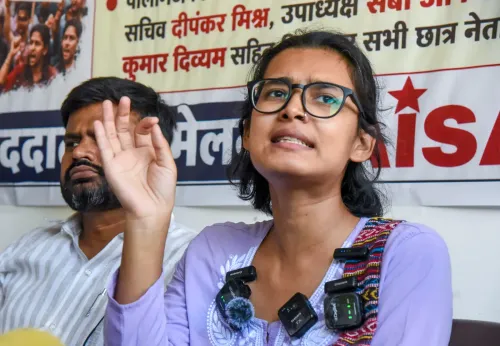
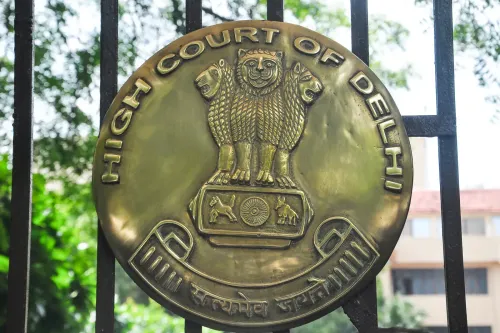
The Delhi High Court on Thursday, 22 October 2026, reserved its judgment on a petition filed by All India Students' Association (AISA) President Neha Bora, who has challenged a notice directing her to furnish a personal bond of ₹10,000 with one surety to maintain peace. The notice was issued after her participation in a protest in New Delhi on 16 October. Justice Subramonium Prasad, sitting as a single-judge bench, announced the verdict would be pronounced on Friday at 6 p.m.
Background: The October 16 Detention
Bora was among several individuals detained by Delhi Police on the evening of 16 October amid a security clampdown across central Delhi. The crackdown preceded a proposed 'Tiranga Assembly' called by the Cockroach Janta Party (CJP) at Central Park, Connaught Place — a gathering that was denied permission by the New Delhi Municipal Council (NDMC).
Senior advocate Gopal Sankaranarayanan, representing Bora, told the court she was detained 10–15 minutes after arriving at Mandi House and had not committed any offence, including any act that could constitute a breach of peace. He also contended that she was not associated with the CJP's separate call to unfurl the national flag and was not allowed to contact her family members or lawyers immediately after being detained.
Legal Arguments: Both Sides
Bora has challenged a notice issued on 17 October by a Special Executive Magistrate (SEM) under Sections 126 and 130 of the Bharatiya Nagarik Suraksha Sanhita (BNSS), read with Section 135(3), requiring her to execute a bond to maintain peace. Her counsel argued that the proceedings were initiated mechanically, without a requisite preliminary inquiry or any material establishing the need for preventive action. Sankaranarayanan further contended that under Section 136 of the BNSS, an SEM can require such a bond only after an inquiry has concluded — not before.
Opposing the plea, Additional Solicitor General (ASG) Chetan Sharma cited 12 alleged violations by Bora, which he said the Magistrate had examined. The ASG also referred to remarks allegedly made by Bora at a press conference regarding 'regime change', arguing that a change of regime takes place through votes and not through, in his words, 'lumpen elements in the nerve of New Delhi.'
Linked Development: CJP Leaders Released
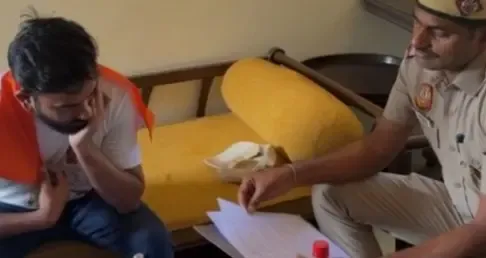
In a separate but connected development, CJP leaders Saurav Das and Ashutosh Ranka were ordered released from judicial custody on Wednesday after submitting written undertakings before an SEM, assuring they would maintain peace and refrain from calling for protests at Jantar Mantar until the site is de-notified in accordance with law. SEM Ritu Raj directed their release after they furnished personal bonds and surety bonds of ₹50,000 each, to remain in force until the conclusion of an inquiry linked to a Jantar Mantar trespassing case.
The two had previously sought to challenge the SEM court's order extending their custody in the Delhi High Court, but Justice Subramonium Prasad asked their counsel to consider withdrawing the petition and await proceedings before the SEM before pursuing further legal remedy. Their undertakings stated: 'We reiterate our undertaking and commitment towards peace, law and order, public tranquillity and further we specifically state that we will not make any calls for protest at Jantar Mantar till such a time that it is de-notified in accordance with law.'
Context: The Jantar Mantar Detentions
Das, Ranka, and fellow CJP member Ajinkya Shinde were among 14 people detained on 13 October after allegedly entering Jantar Mantar through private premises and obstructing police personnel from discharging their official duties. The CJP members were protesting against alleged irregularities in the Special Intensive Revision (SIR) of electoral rolls and had raised slogans against Chief Election Commissioner Gyanesh Kumar.
What Happens Next
All eyes are now on the Delhi High Court's verdict in Bora's case, expected on Friday evening. The ruling could set a significant precedent on the threshold of evidence required before preventive bond proceedings are initiated under the BNSS — a law that replaced the Code of Criminal Procedure (CrPC) and whose preventive provisions are still being tested in higher courts for the first time.
Point of View
Which replaced the CrPC without substantial parliamentary debate on the procedural safeguards. The core legal question — whether a magistrate can demand a peace bond mid-inquiry rather than only at its conclusion — could affect how broadly authorities use these powers against activists and protesters going forward. The government's reference to Bora's 'regime change' remarks as justification for preventive action is a stretch that courts have historically treated with caution, but the 12-violations claim adds complexity. Mainstream coverage has focused on the political optics; the more consequential story is whether BNSS Section 136 will be read narrowly or expansively by a high court for the first time.
NationPress
22 Oct 2026
Frequently Asked Questions
What is the Delhi High Court case involving AISA President Neha Bora?
Neha Bora, President of the All India Students' Association (AISA), has challenged a notice issued by a Special Executive Magistrate on 17 October, requiring her to furnish a ₹10,000 personal bond to maintain peace. The notice followed her detention on 16 October near Mandi House during a security clampdown in central Delhi. The Delhi High Court reserved its judgment on 22 October, with the verdict due on Friday at 6 p.m.
Why was Neha Bora detained on 16 October?
Bora was detained approximately 10–15 minutes after arriving at Mandi House on the evening of 16 October, when Delhi Police tightened security across central Delhi ahead of a proposed 'Tiranga Assembly' by the Cockroach Janta Party (CJP) at Central Park, Connaught Place. Her counsel has stated she was not associated with the CJP event and committed no offence.
What is the key legal question in Bora's petition?
Her counsel argues that under Section 136 of the Bharatiya Nagarik Suraksha Sanhita (BNSS), a Special Executive Magistrate can require a peace bond only after an inquiry has concluded — not before. The petition also contends the notice lacks any material establishing a likelihood of breach of peace, which is a necessary precondition under Section 126 BNSS.
What happened with the CJP leaders Saurav Das and Ashutosh Ranka?
Das and Ranka were released from judicial custody on Wednesday after furnishing personal and surety bonds of ₹50,000 each and submitting written undertakings not to call for protests at Jantar Mantar until the site is de-notified in accordance with law. They were among 14 people detained on 13 October for allegedly entering Jantar Mantar through private premises during a protest over alleged electoral roll irregularities.
What were the CJP protests about?
The Cockroach Janta Party members were protesting against alleged irregularities in the Special Intensive Revision (SIR) of electoral rolls and had raised slogans against Chief Election Commissioner Gyanesh Kumar. A separate CJP event on 16 October — a 'Tiranga Assembly' at Central Park, Connaught Place — was denied permission by the New Delhi Municipal Council.