Delhi Police serves notice to CJP's Abhijeet Dipke, bars 'Tiranga Assembly' at Connaught Place

Synopsis
Delhi Police served a notice on CJP founder Abhijeet Dipke hours before his planned 'Tiranga Assembly' at Central Park, Connaught Place, warning him that neither police nor NDMC permission exists and that BNSS Section 163 prohibitory orders are in force. Dipke hit back on X, calling peaceful protest a democratic right and accusing the government of restricting civil liberties.
Key Takeaways
Delhi Police served a notice on CJP founder Abhijeet Dipke at his Jhandewalan residence on 16 October 2026 .
The notice states that no permission has been granted by the NDMC or police for the 'Tiranga Assembly' at Central Park, Connaught Place , planned for 5 pm Friday .
Prohibitory orders under Section 163 of the BNSS are in effect in the Connaught Place area; violation will attract legal action.
Dipke defended the event on X , asserting that peaceful protest is a democratic right and accusing authorities of restricting citizens' freedoms.
The CJP has previously organised peaceful protests in Mumbai, Pune, Jaipur, Lucknow, Bengaluru , and Nagpur , according to Dipke.
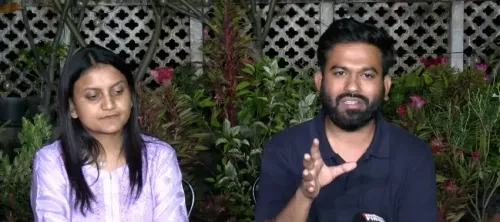
Delhi Police on Friday, 16 October 2026 served a formal notice on Cockroach Janta Party (CJP) founder and convener Abhijeet Dipke at his residence in the Jhandewalan area of New Delhi, informing him that no permission has been granted for the planned 'Tiranga Assembly' at Central Park, Connaught Place, scheduled for 5 pm the same day. Police warned that proceeding with the gathering would amount to a legal violation, with action to follow.
What the Notice Says
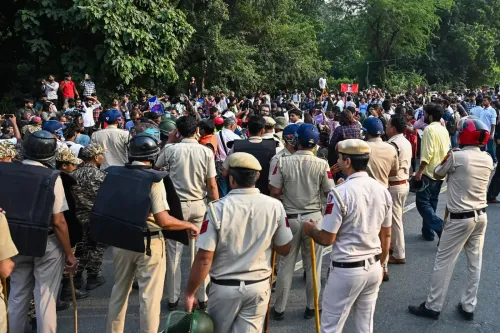
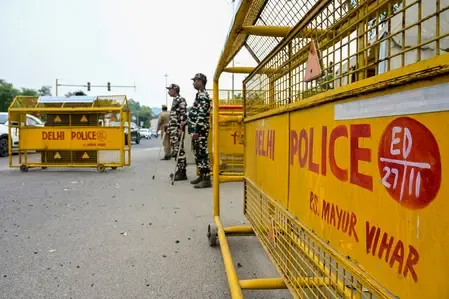
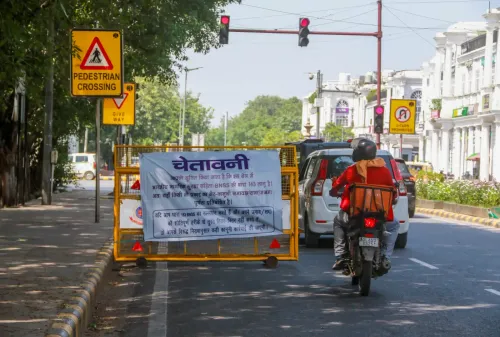
According to officials, the notice explicitly states that prohibitory orders under Section 163 of the Bharatiya Nagarik Suraksha Sanhita (BNSS) are currently in force in the Connaught Place area. Authorities further clarified that the New Delhi Municipal Council (NDMC) has not issued any permission for the proposed 'Tiranga gathering'. Police made clear that any attempt by Dipke or CJP members to assemble at the venue despite the notice would constitute a direct violation of prohibitory orders, and that legal action would be initiated accordingly.
Dipke's Defence: Peaceful Protest as Democratic Right
Earlier on Friday, Dipke pushed back firmly against what he described as an attempt to suppress democratic expression. In a strongly worded post on X, he argued that demanding accountability from the government, protesting against injustice, and questioning public representatives could not be labelled anarchy.
Dipke wrote: 'Businesses do not suffer because of peaceful protests. They suffer when the govt decides to shut down an entire city, suspend Internet services, restrict the movement of its own citizens and turn the city into a war zone.'
He maintained that the CJP remained committed to Mahatma Gandhi's principles of peace and non-violence, even as he accused the government of attempting to provoke its members.
CJP's Track Record of Protests
Dipke cited a series of peaceful demonstrations organised by the CJP across multiple Indian cities, including Mumbai, Pune, Jaipur, Lucknow, Bengaluru, and Nagpur, as evidence of the party's non-violent approach. He noted that he was personally assaulted during a protest in Jaipur but chose not to retaliate, describing restraint as central to the party's founding ethos. 'Since its inception, the Cockroach Janta Party has maintained that we will always follow Gandhi ji's path of peace and non-violence, and we have stood by that commitment,' he said.
Broader Context
The standoff between Delhi Police and the CJP reflects a recurring tension in India's capital over the use of public spaces for political gatherings. Prohibitory orders in high-footfall areas such as Connaught Place are invoked periodically, particularly when multiple groups seek to organise events simultaneously or when security concerns arise. This is not the first time a notice has preceded a CJP-led event; critics argue that such pre-emptive orders disproportionately affect smaller political outfits with limited resources to secure alternative venues. The development will be closely watched as it raises questions about the balance between public order and constitutionally guaranteed rights of assembly.
Point of View
But each invocation tests the constitutional boundary between public-order management and the right to peaceful assembly. The CJP is a fringe outfit by most measures, yet the speed with which police moved — arriving at Dipke's residence hours before the event — signals that authorities are taking no chances. What is missing from the official statement is any explanation of why Section 163 orders are active in Connaught Place today specifically, a transparency gap that critics of heavy-handed policing will not let pass. If the 'Tiranga Assembly' proceeds and arrests follow, the optics of detaining Gandhi-invoking protesters under prohibitory orders could prove more politically costly for authorities than the gathering itself would have been.
NationPress
16 Oct 2026
Frequently Asked Questions
Why did Delhi Police serve a notice on Abhijeet Dipke?
Delhi Police served a notice on CJP founder Abhijeet Dipke on 16 October 2026 because neither the NDMC nor police had granted permission for his planned 'Tiranga Assembly' at Central Park, Connaught Place. Prohibitory orders under Section 163 of the BNSS are in force in the area, making the gathering illegal without prior authorisation.
What is the 'Tiranga Assembly' called by Abhijeet Dipke?
The 'Tiranga Assembly' is a public gathering called by Cockroach Janta Party (CJP) convener Abhijeet Dipke at Central Park in Connaught Place, New Delhi, scheduled for 5 pm on Friday, 16 October 2026. Dipke has framed it as a peaceful democratic protest.
What is Section 163 of the BNSS and how does it apply here?
Section 163 of the Bharatiya Nagarik Suraksha Sanhita (BNSS) empowers a magistrate to issue prohibitory orders restricting assembly or movement in a specific area to maintain public order. In this case, such orders are reportedly in force in the Connaught Place area, meaning any unlawful assembly there can attract immediate legal action.
What did Abhijeet Dipke say in response to the police notice?
Dipke defended the planned gathering on X, arguing that peaceful protests are a democratic right and that businesses suffer not from protests but from government-imposed shutdowns and Internet suspensions. He also cited the CJP's history of peaceful demonstrations in cities including Mumbai, Pune, Jaipur, Lucknow, Bengaluru, and Nagpur.
What happens if Dipke proceeds with the Tiranga Assembly despite the notice?
According to Delhi Police, proceeding with the assembly would constitute a violation of the prohibitory orders under Section 163 of the BNSS, and legal action would be initiated against those who participate. The nature and extent of potential legal action was not specified in the notice.