Goyal Spotlights GI-Tagged Patan Patola This Navratri

Synopsis
Union Minister Piyush Goyal invokes a Gujarati folk lyric to spotlight the GI-tagged Patan Patola double ikat silk this Navratri, praising Gujarat CM Bhupendra Patel and Dy CM Harsh Sanghavi for championing the state's weaving heritage.
Key Takeaways
Piyush Goyal used Navratri to publicly champion the Patan Patola , a GI-tagged double ikat silk from Patan, Gujarat .
The Patola requires both warp and weft threads to be resist-dyed before weaving, making a single saree take months to complete.
GI protection under the Geographical Indications of Goods Act, 1999 shields authentic Patola weavers from market imitations.
Goyal credited Gujarat CM Bhupendra Patel and Dy CM Harsh Sanghavi with efforts to preserve the state's cultural legacy.
The post leverages Navratri — Gujarat's biggest occasion for traditional dress — to drive demand for authentic artisan craft.
As Gujarat pulses with Garba rhythms this Navratri, Union Commerce and Industry Minister Piyush Goyal turned the spotlight on one of the state's most storied crafts — the Patan Patola, a double ikat silk weave that takes months of painstaking labour to produce and centuries of tradition to understand.
Invoking the beloved folk lyric 'પાટણથી પટોળા મોંઘા લાવજો...' ('Bring the precious Patola from Patan...'), Goyal called the fabric 'a cloth so timeless that it is part of Gujarati folk tradition,' and urged that 'every Garba twirl this Navratri celebrate this enduring heritage.'
What makes Patan Patola irreplaceable
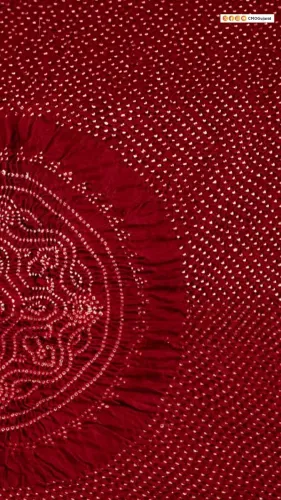
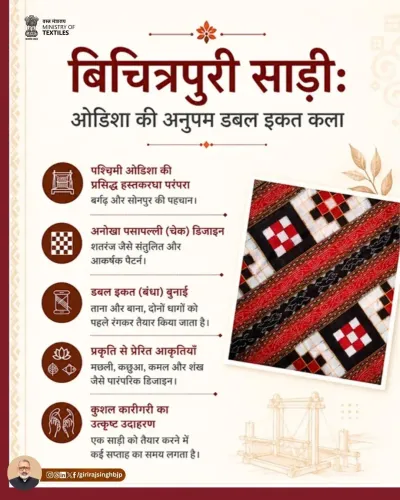
The Patan Patola is not merely silk — it is a double ikat, meaning both the warp and weft threads are resist-dyed before weaving, so the pattern emerges only when the two sets of threads align on the loom. A single saree can take anywhere from four months to a year to complete. The craft is concentrated in Patan, a historic town in northern Gujarat, and has been practised by a handful of families for generations.
Its Geographical Indication (GI) tag — legal protection granted under the Geographical Indications of Goods (Registration and Protection) Act, 1999 — certifies the weave's authenticity and shields weavers from imitation products flooding the market. The GI framework is one of the few legal instruments that directly safeguards artisan livelihoods tied to a specific geography.
Goyal credits Gujarat's leadership
The minister specifically commended Chief Minister Bhupendra Patel and Deputy Chief Minister Harsh Sanghavi for their 'commendable efforts in preserving and promoting Gujarat's rich cultural legacy.' Gujarat has maintained active state-level outreach around its handloom traditions, and festivals like Navratri provide a high-visibility window to direct consumer attention toward authentic crafts.
For Patola weavers — whose numbers remain small and whose craft demands extraordinary skill — such public endorsements by senior ministers carry tangible weight: they signal both pride and market opportunity at a moment when Garba celebrations draw millions across the country and diaspora.
Navratri as a cultural-commerce bridge
Indian ministers periodically highlight GI-tagged textiles during major festivals, effectively using cultural moments as demand-side levers for artisan products. The timing is deliberate — Navratri is the single largest occasion for traditional Gujarati dress, and a nudge toward authentic Patola over imitation silk can mean real orders for real weavers. It is soft diplomacy for domestic handicrafts, delivered at peak audience attention.
The Patan Patola has already outlasted empires. What it needs now is a market that recognises its worth — and this Navratri, the case is being made at the highest levels.
Point of View
Introduced in 1999, are increasingly being wielded as a soft-power instrument — connecting heritage, artisan welfare, and consumer nationalism in a single social media post. Whether the visibility translates to durable market gains for Patola weavers depends on follow-through beyond the festival season.
NationPress
17 Oct 2026
Frequently Asked Questions
What is Patan Patola and why is it expensive?
Patan Patola is a double ikat silk saree woven in Patan, Gujarat, where both warp and weft threads are individually resist-dyed before weaving. The process can take four months to over a year for a single piece, making it one of India's most labour-intensive and expensive handloom products.
Does Patan Patola have a GI tag?
Yes, Patan Patola holds a Geographical Indication (GI) tag under India's GI Act of 1999, which certifies its authenticity and restricts the use of the name to genuine weaves produced in Patan, Gujarat.
What did Piyush Goyal say about Patan Patola?
Union Commerce Minister Piyush Goyal described the Patola as 'a fabric so timeless that it is part of Gujarati folk tradition' and called on people to let every Garba twirl this Navratri celebrate the heritage. He also commended Gujarat CM Bhupendra Patel and Dy CM Harsh Sanghavi for their role in promoting the state's cultural legacy.
What is double ikat weaving?
Double ikat is a weaving technique where both sets of threads — the warp (lengthwise) and the weft (crosswise) — are tie-dyed in precise patterns before they are placed on the loom. The finished design only appears when the two dyed sets of threads are perfectly aligned during weaving, requiring exceptional skill and precision.
Why is Navratri connected to Patan Patola?
Navratri is Gujarat's most prominent festival, featuring Garba dancing over nine nights, during which traditional attire — including silk sarees — is customarily worn. It is the single biggest seasonal occasion for authentic Gujarati textiles, making it a natural platform to highlight heirloom crafts like the Patan Patola.