Bihar CM: Green Cover Doubled, Irrigated Land Doubled
Synopsis
The Chief Minister's Office of Bihar says CM Nitish Kumar has announced that the state's green cover has grown from 6% to 15% and irrigated land has more than doubled to 44 lakh hectares, framing environmental balance and rapid development as twin achievements.
Key Takeaways
Bihar's green cover area has reportedly risen from 6% to 15% , according to the Chief Minister's Office.
Irrigated land in the state has reportedly expanded from 21 lakh hectares to 44 lakh hectares .
Jal Jeevan Hariyali Abhiyan , launched in 2019 , is the flagship programme driving Bihar's afforestation and water conservation push.
CM Nitish Kumar framed the gains as proof that development and environmental balance can advance simultaneously.
The Forest Survey of India's next State of Forest Report will be the key independent benchmark against which these official figures can be assessed.
Bihar's farmlands and forests are telling two different stories — and both are pointing in the same direction. The Chief Minister's Office of Bihar announced on Saturday, October 17, 2026, that the state has simultaneously expanded its green cover and dramatically scaled up irrigation, citing figures that Chief Minister Nitish Kumar presented as proof that development and environmental balance can advance together.
According to the post, the Chief Minister stated: 'Bihar mein paryavaran ka santulan banate hue vikas karyon ko tezi se aage badhaya ja raha hai' — 'Development work in Bihar is being pushed forward at pace while maintaining environmental balance.' The headline numbers are striking: the state's green cover area has risen from 6% to 15%, and irrigated land has expanded from 21 lakh hectares to 44 lakh hectares.
Jal Jeevan Hariyali and Bihar's afforestation push
The figures cited by the Chief Minister's office sit within the arc of Jal Jeevan Hariyali Abhiyan, the state's flagship environmental programme launched in 2019. The scheme was designed to plant trees at scale, restore water bodies, and build check dams — a deliberate effort to lift Bihar's historically low forest and tree cover. Bihar, an eastern-Indian state long associated with agricultural plains rather than dense forest, has used the programme to push afforestation alongside water conservation in a single administrative drive.
Irrigation expansion: what 44 lakh hectares means for farmers
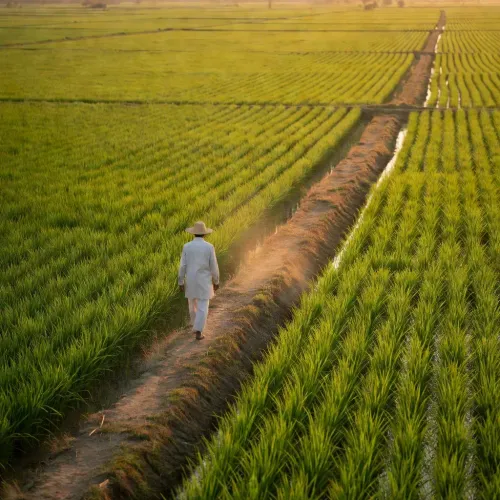
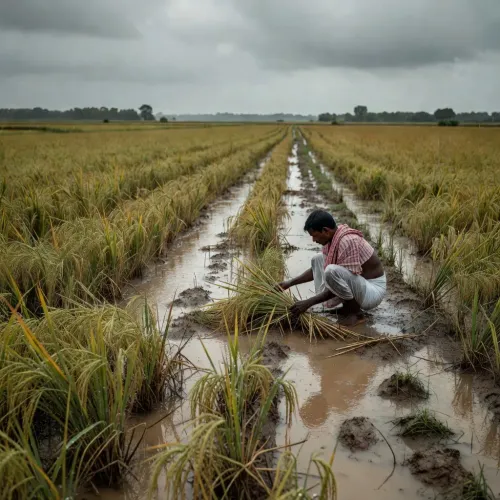
The claim that irrigated area has more than doubled — from 21 lakh hectares to 44 lakh hectares — speaks directly to Bihar's farming communities, who have long depended on monsoon rains and faced crop vulnerability in dry seasons. Bringing more land under assured irrigation reduces that exposure, supports multiple cropping cycles, and underpins the rural income gains the state government has sought to highlight. Bihar has pursued irrigation expansion under both state and centrally-sponsored schemes, and this dual push — more water for crops, more trees for climate resilience — mirrors approaches taken in several other Indian states over the past decade.
Data to watch: the next forest survey and budget signals
The official figures cited in the post have not been independently verified against the Forest Survey of India's published data, which provides the most widely referenced benchmark for state-level green cover. The next State of Forest Report and Bihar's upcoming budget announcements on irrigation projects will be the key moments to test whether these numbers hold up against independent assessment. Nitish Kumar's government has consistently framed environmental stewardship as compatible with — rather than a brake on — its broader growth agenda, and Saturday's post reinforces that political positioning ahead of what remains an active policy calendar.
If the figures are borne out, Bihar's trajectory on both green cover and irrigation would rank among the more dramatic state-level turnarounds in India's recent environmental record. That is the claim on the table — and the data will have the final word.
Point of View
Irrigated area more than doubled — is a politically significant assertion that positions Nitish Kumar's government at the intersection of two of India's most watched state-level agendas: climate resilience and agricultural productivity. If verified by independent data, the numbers would represent one of the sharper environmental turnarounds among large Indian states. The Jal Jeevan Hariyali framing also signals that the Bihar government intends to contest the narrative that rapid infrastructure-led development comes at an ecological cost — a argument with clear resonance both in national politics and in Bihar's rural heartland ahead of future electoral cycles.
NationPress
17 Oct 2026
Frequently Asked Questions
What is Bihar's current green cover percentage according to the government?
The Chief Minister's Office of Bihar has stated that the state's green cover area has grown from 6% to 15%, citing this as a result of afforestation and environmental initiatives under the current government.
How much has Bihar's irrigated land increased?
According to the Chief Minister's Office, Bihar's irrigated land has expanded from 21 lakh hectares to 44 lakh hectares, more than doubling the area under assured irrigation.
What is Jal Jeevan Hariyali Abhiyan?
Jal Jeevan Hariyali Abhiyan is a Bihar government scheme launched in 2019 aimed at large-scale tree plantation, water body restoration, and rainwater conservation to improve the state's environmental health and agricultural resilience.
Who is the Chief Minister of Bihar?
Nitish Kumar is the Chief Minister of Bihar, with a long tenure focused on governance, infrastructure, agricultural development, and environmental programmes.
Where can Bihar's green cover figures be independently verified?
The Forest Survey of India publishes a State of Forest Report periodically, which is the standard independent benchmark for verifying state-level green cover and tree cover data in India.