CM Nitish Orders Swift Crop Damage Assessment for Bihar Farmers
Synopsis
Bihar Chief Minister Nitish Kumar has directed state officials to expedite damage assessment for affected farmers so that adequate relief can be disbursed promptly. The order follows Bihar's established protocol of linking compensation under the State Disaster Response Fund and crop insurance schemes to verified field surveys.
Key Takeaways
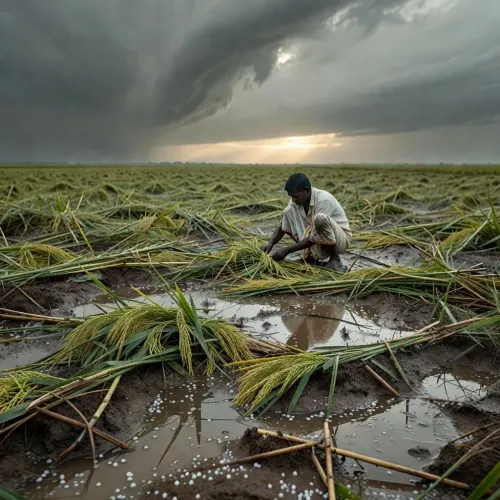
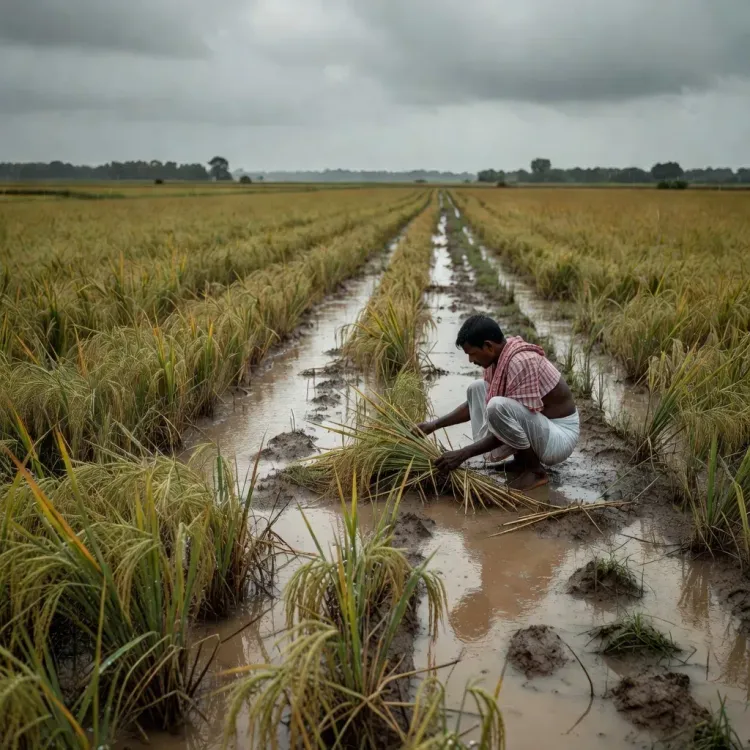
CM Nitish Kumar has ordered swift damage assessment for farmers affected by an unspecified agricultural calamity in Bihar .
The directive was issued by the Chief Minister's Office of Bihar on 29 May 2026 .
Relief disbursement under the State Disaster Response Fund (SDRF) and Pradhan Mantri Fasal Bima Yojana is contingent on verified damage reports.
Bihar has maintained rapid-assessment protocols for farm distress since the landmark 2008 Kosi floods .
District revenue and agriculture officials are responsible for conducting field surveys and submitting loss estimates.
Publication of district-wise assessment reports and subsequent cabinet decisions on compensation timelines are the key next steps to watch.
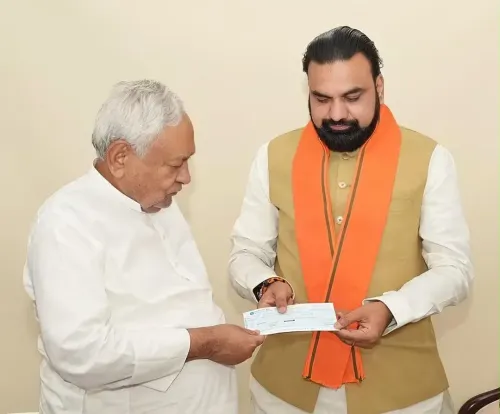
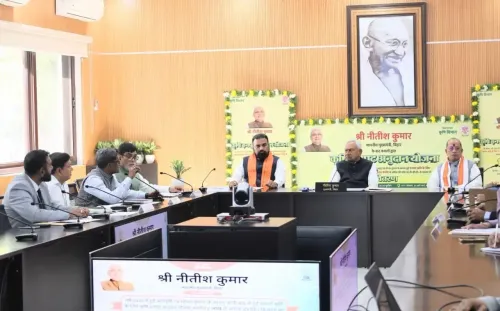
The Chief Minister's Office of Bihar on Friday, 29 May 2026 directed state authorities to conduct an expedited assessment of agricultural damage, with Chief Minister Nitish Kumar instructing officials to ensure that affected farmers receive adequate relief at the earliest. The directive emphasises completing the damage survey swiftly so that necessary financial assistance can be channelled without delay.
The official post from the Chief Minister's Office quoted CM Nitish Kumar as saying: 'prabhavit kisanon ko samuchit rahat uplabdh karane ke liye kshati ka aakalan sheeghra karaya jaye, taki aavashyak sahayata pradan ki ja sake' — meaning, 'damage assessment should be carried out promptly to provide adequate relief to affected farmers, so that necessary assistance can be extended.'
Context
Bihar is one of India's most agrarian states, with a large share of its rural population dependent on crop cultivation for their livelihoods. The state is recurrently vulnerable to weather-related agricultural distress, and the Chief Minister's directive reflects the administration's standing protocol of ordering rapid ground surveys before releasing compensation.
While the specific cause and geographic extent of the current damage have not been officially detailed, the urgency of the Chief Minister's language signals that the situation is being treated as a priority welfare matter requiring immediate administrative response.
Policy Backdrop
Bihar's framework for responding to farm distress has been shaped by decades of flood and weather-related crises. Following the devastating 2008 Kosi floods, the state government formalised mechanisms for rapid damage surveys and ex-gratia payments to farmers, creating a template that has been activated repeatedly since.
From 2016 onwards, Bihar has also implemented the state component of the Pradhan Mantri Fasal Bima Yojana (PMFBY), a crop insurance scheme designed to cushion farmers against losses from natural calamities. Compensation under both the State Disaster Response Fund (SDRF) and PMFBY is contingent on verified damage reports, making the speed of assessment directly linked to how quickly relief reaches farmers.
Stakeholders and Impact
The primary beneficiaries of this directive are Bihar's affected farming communities, whose income and food security are directly tied to standing crop conditions. Any delay in assessment translates into a delay in compensation, prolonging financial hardship for vulnerable rural households.
District-level revenue and agriculture officials are the key implementing actors, as they are responsible for conducting field surveys and submitting loss estimates to the state government. The speed and accuracy of their reports will determine both the scale and the timing of the relief package.
What's Next
The immediate next step is the publication of district-wise damage assessment reports, which will form the basis for any cabinet decision on compensation packages. Observers will watch for official announcements on the quantum of relief, the list of affected districts, and the timeline for disbursement to individual farmers.
If the damage is assessed as widespread, the state government may also convene a special review meeting to fast-track approvals under the SDRF and coordinate with central authorities for additional support. The outcome of this assessment cycle will be a key indicator of the administration's responsiveness to agrarian distress in the current season.
Point of View
Particularly as compensation delays have historically drawn criticism from opposition parties in Bihar. By anchoring relief to a formal assessment process, the administration is also insulating itself from arbitrary disbursement claims while demonstrating visible responsiveness. The directive fits a broader pattern of Bihar governments using administrative announcements to signal intent quickly, with implementation quality determined by district-level execution in the weeks that follow.
NationPress
12 Oct 2026
Frequently Asked Questions
What has Bihar CM Nitish Kumar ordered for affected farmers?
CM Nitish Kumar has directed state officials to conduct a prompt damage assessment of crop losses suffered by affected farmers, so that adequate financial relief can be provided to them without delay.
How does Bihar compensate farmers for crop damage?
Bihar compensates farmers through the State Disaster Response Fund (SDRF) for losses from natural calamities, and through the Pradhan Mantri Fasal Bima Yojana (PMFBY) crop insurance scheme, both of which require verified damage surveys before disbursement.
Why is quick damage assessment important for Bihar farmers?
Compensation under both the SDRF and crop insurance schemes can only be released after field surveys confirm the extent of losses. A faster assessment directly means faster relief payments reaching affected farming households.
Which areas of Bihar are affected by the crop damage in May 2026?
The specific districts and geographic extent of the damage referenced in the 29 May 2026 directive have not been officially detailed in the Chief Minister's announcement.
What is Bihar's history of responding to farm distress?
After the devastating 2008 Kosi floods , Bihar formalised rapid damage-survey mechanisms and ex-gratia payment protocols. The state has since activated these systems repeatedly during monsoon-related agricultural crises.