CM Nitish Kumar: 13 Bihar Districts Hit 33% Crop Loss in March 2026
Synopsis
Chief Minister Nitish Kumar has stated that a March 2026 natural disaster caused crop losses exceeding 33 percent in 13 Bihar districts — including Darbhanga, Muzaffarpur and Saharsa — triggering the state's formal damage assessment and relief process under existing disaster frameworks.
Key Takeaways
The Chief Minister's Office of Bihar on 22 June 2026 confirmed crop damage reports from a March 2026 natural disaster .
13 districts — Saharsa, Samastipur, Muzaffarpur, Madhepura, Araria, Begusarai, Purnia, Darbhanga, Kishanganj, Supaul, Madhubani, Vaishali and Gopalganj — reported losses.
Crop damage in all affected districts exceeded the critical 33 percent threshold required for relief eligibility.
The 33% threshold is the benchmark under Indian disaster frameworks for activating SDRF compensation and PMFBY insurance claims.
All 13 districts are in northern or north-central Bihar , a zone with a long history of natural-disaster-linked agricultural losses.
Possible next steps include invocation of the State Disaster Response Fund and a formal request for central assistance under the NDRF.
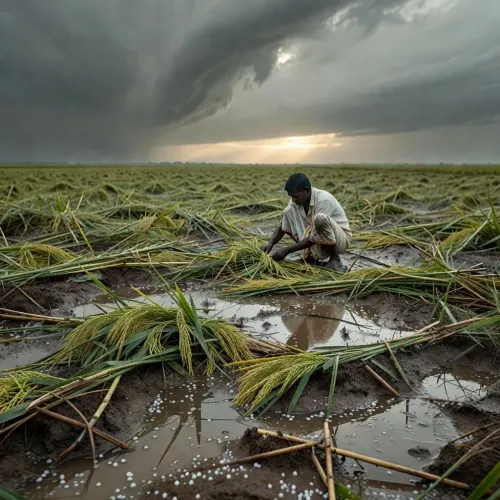
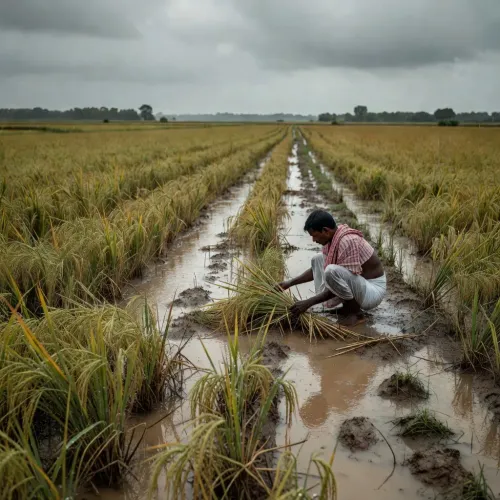
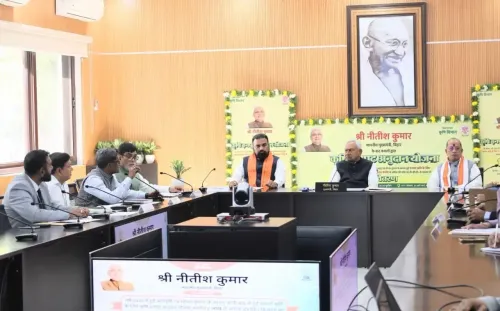
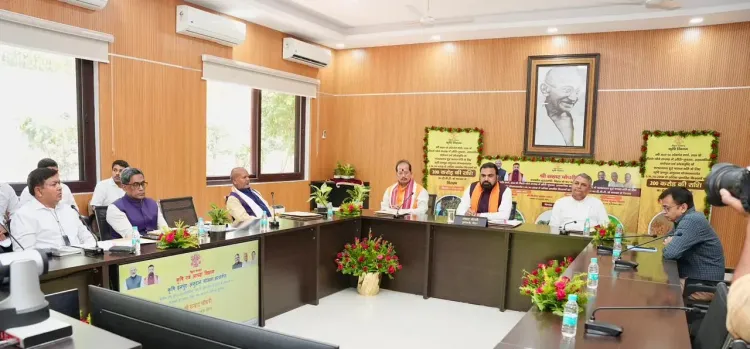
The Chief Minister's Office of Bihar on Monday, 22 June 2026 quoted Chief Minister Nitish Kumar as stating that a natural disaster in March 2026 caused crop damage exceeding 33 percent across 13 districts of the state, triggering a formal damage assessment process.
Speaking on the occasion, the Chief Minister said — 'मार्च 2026 में आई प्राकृतिक आपदा के कारण राज्य के 13 जिलों से 33 प्रतिशत से अधिक फसल क्षति की रिपोर्ट प्राप्त हुई थी' — ('Reports of more than 33 percent crop damage were received from 13 districts of the state due to the natural disaster that struck in March 2026'). The affected districts named are Saharsa, Samastipur, Muzaffarpur, Madhepura, Araria, Begusarai, Purnia, Darbhanga, Kishanganj, Supaul, Madhubani, Vaishali and Gopalganj.
Context
All 13 named districts lie in northern and north-central Bihar, a belt historically vulnerable to riverine flooding from rivers that originate in Nepal. The 33 percent crop-loss threshold is significant under Indian disaster-relief frameworks: it is the minimum damage level required for farmers to become eligible for compensation under state and central relief mechanisms.
The Chief Minister's public statement signals that the state government has completed — or is acting on — ground-level crop surveys conducted by the Bihar Disaster Management Department, which routinely assesses post-disaster agricultural losses across northern districts.
Policy Backdrop
India's Pradhan Mantri Fasal Bima Yojana (PMFBY), launched in 2016, provides crop insurance coverage for losses arising from natural disasters, and Bihar is a participating state. When damage surveys confirm losses above the threshold in notified areas, insurance claims and state compensation can be processed simultaneously.
Beyond insurance, state governments may invoke the State Disaster Response Fund (SDRF) to disburse immediate relief to affected cultivators. A formal request to the Centre for additional assistance under the National Disaster Response Fund (NDRF) can follow if the scale of damage is deemed to exceed state capacity.
Stakeholders and Impact
The primary stakeholders are the farming households across the 13 affected districts, many of whom depend on the kharif and rabi cropping cycles as their principal source of income. Districts such as Darbhanga, Madhubani and Muzaffarpur are among Bihar's most agriculturally active, making crop loss in these areas particularly consequential for rural livelihoods.
Beyond individual farmers, the damage figures will influence district-level food security, rural credit cycles, and the demand for agricultural labour in the affected belt. Agri-input dealers and local cooperative banks are also likely to feel downstream pressure if large numbers of cultivators seek loan restructuring or waivers.
What's Next
The acknowledgement of verified damage reports by CM Nitish Kumar is typically a precursor to formal announcements of compensation packages, revised insurance claim timelines, or special relief camps in the affected districts. Observers will watch for whether the Bihar government submits a memorandum to the Union Ministry of Agriculture or the Ministry of Home Affairs seeking central funds under the NDRF.
With 13 districts simultaneously reporting above-threshold losses, the episode underscores the structural vulnerability of northern Bihar's agrarian economy to natural shocks — and the pressure on state disaster-management systems to respond at scale.
Point of View
Announce, disburse — that the Nitish Kumar administration has refined over successive flood and drought cycles. With 13 districts affected simultaneously, the political stakes are high: northern Bihar's farming communities are a core constituency, and the speed and scale of relief will be closely watched ahead of any future electoral cycle. The episode also renews the broader debate about structural investment in flood mitigation for rivers flowing from Nepal into Bihar.
NationPress
21 Sept 2026
Frequently Asked Questions
Which districts in Bihar suffered more than 33 percent crop damage in March 2026?
The 13 districts that reported over 33 percent crop damage are Saharsa, Samastipur, Muzaffarpur, Madhepura, Araria, Begusarai, Purnia, Darbhanga, Kishanganj, Supaul, Madhubani, Vaishali and Gopalganj, as stated by Chief Minister Nitish Kumar.
What is the significance of the 33 percent crop loss threshold in India?
Under Indian disaster relief rules, a crop loss of 33 percent or more in a notified area is the minimum level required for farmers to qualify for compensation from the State Disaster Response Fund and to file claims under the Pradhan Mantri Fasal Bima Yojana crop insurance scheme.
What natural disaster hit Bihar in March 2026?
The Chief Minister's Office of Bihar referred to a natural disaster that struck the state in March 2026 and caused widespread crop damage across 13 districts; the precise nature of the event was not detailed in the official statement.
What relief measures can Bihar farmers expect after the crop damage report?
Farmers in the 13 affected districts may be eligible for compensation through the State Disaster Response Fund, insurance payouts under PMFBY, and potentially central assistance under the National Disaster Response Fund if Bihar formally requests it.
How often does northern Bihar face agricultural losses from natural disasters?
Northern Bihar has a long history of recurring crop damage from riverine flooding and other natural events, as rivers originating in Nepal regularly inundate the region; the state government conducts damage surveys and issues relief most years following such events.