CM Sai hails ABVP win in Odisha student polls, targets EVM critics
Synopsis
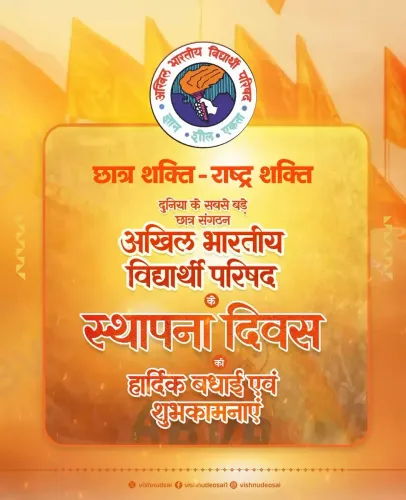
Chhattisgarh CM Vishnu Deo Sai congratulated ABVP on its victory in Odisha's student union elections — held via ballot paper after eight years — and used the result to challenge opposition parties that blame EVMs for electoral losses.
Key Takeaways
Odisha held student union elections for the first time in eight years , conducted by educational institutions, not the Election Commission.
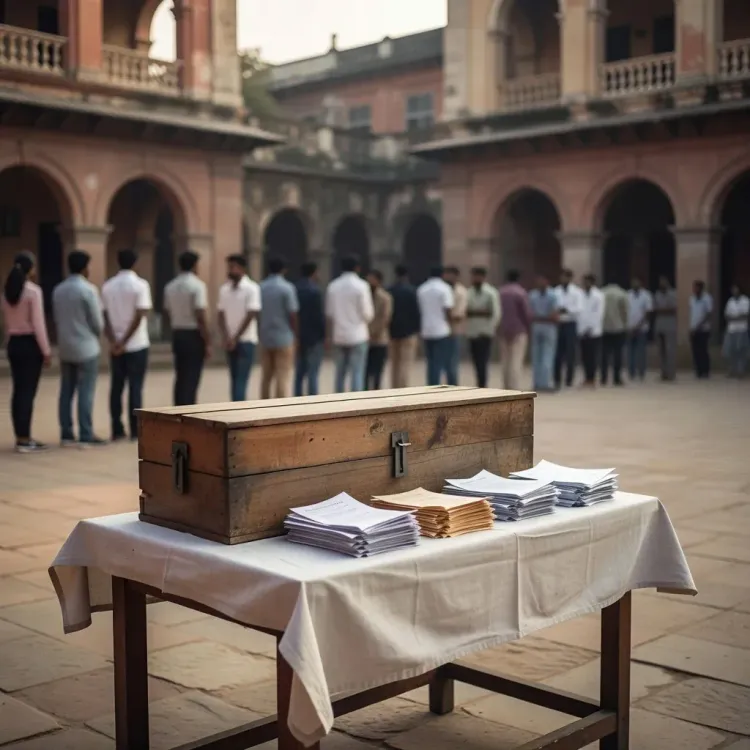
Voting was done via ballot paper , not EVMs — the format opposition parties have long demanded.
ABVP emerged victorious, prompting CM Vishnu Deo Sai to offer congratulations and draw a pointed political contrast.
Sai argued the result is a 'clear message' to those who blame EVMs and constitutional institutions for every electoral defeat.
The post reflects the BJP's broader strategy of using non-EVM organisational poll results to rebut opposition narratives around electoral integrity.
Ballot papers, not electronic voting machines — and the result, says Chhattisgarh Chief Minister Vishnu Deo Sai, speaks for itself. Congratulating the Akhil Bharatiya Vidyarthi Parishad (ABVP) on its performance in Odisha's student union elections — the first held in the state in eight years — Sai used the occasion to fire a pointed broadside at opposition parties who routinely blame EVMs for electoral defeats.
Writing in Hindi on Saturday, 17 October 2026, Sai offered warm congratulations to all winning candidates and young activists before sharpening his message: 'यह परिणाम उन लोगों के लिए भी स्पष्ट संदेश है, जो हर चुनावी पराजय के बाद EVM और संवैधानिक संस्थाओं पर सवाल उठाते हैं' — ('This result is also a clear message for those who, after every electoral defeat, raise questions about EVMs and constitutional institutions.').
Ballot paper, no Election Commission — and still ABVP wins
The structural detail Sai leans on is precise and deliberate. These polls were conducted not by the Election Commission of India but by the educational institutions themselves, and voting was done entirely via ballot paper — the very paper-trail alternative that EVM sceptics have long demanded. For Sai, that combination neutralises the opposition argument at its root: change the machine, change the overseer, the outcome does not change.
It is a messaging device the BJP ecosystem has deployed before — pointing to organisational and cooperative-body elections conducted on ballot paper as proof that ABVP and allied formations win on merit, not machine manipulation. The Odisha student polls hand that argument a fresh, concrete example with unusual symbolic weight: eight years without campus elections is a long silence, and the return of the ballot drew genuine public attention.
The ABVP's Odisha push and what it signals
ABVP, the student wing closely affiliated with the RSS-BJP ecosystem, has long treated campus elections as both a recruitment engine and a real-time political temperature gauge. A strong showing in Odisha — a state where the BJP consolidated power after years of BJD dominance — reinforces that the party's student infrastructure is taking root in terrain it only recently won at the assembly level.
Sai closed his post with a broader generational argument: 'युवा पीढ़ी नारों और आरोपों से आगे बढ़कर नेतृत्व, कार्य और विचार को महत्व देती है' — ('The young generation, moving beyond slogans and accusations, values leadership, work, and ideology.'). It is less a celebration than a verdict — on the opposition's communication strategy as much as on the election itself.
Whether rival student groups contest the narrative or Odisha's university authorities weigh in on the conduct of these polls will determine how far the debate travels beyond BJP-aligned social media. For now, CM Sai has planted a flag: when the machine is removed from the equation, he argues, the mandate stays the same.
Point of View
He preemptively strips the opposition of its standard post-defeat deflection, turning a campus result into a rebuttal of systemic grievance. It also telegraphs that the BJP views its Odisha foothold — recently expanded at the state assembly level — as strong enough to now contest the ground-floor layer of student politics. The generational framing at the close is worth watching: positioning the youth as inherently post-grievance is a long-run narrative investment, not just a one-day congratulation.
NationPress
17 Oct 2026
Frequently Asked Questions
Why were Odisha student union elections held after eight years?
Odisha's student union elections resumed in 2026 after an eight-year gap, according to CM Vishnu Deo Sai's post; the specific reasons for the earlier suspension were not detailed in his statement.
Were Odisha student elections held on ballot paper or EVM?
The elections were conducted entirely via ballot paper, not EVMs, and were managed by the educational institutions themselves rather than the Election Commission of India.
What is ABVP and why did it contest Odisha student polls?
ABVP (Akhil Bharatiya Vidyarthi Parishad) is an RSS-BJP affiliated student organisation that contests university elections across India as both a recruitment and political messaging platform.
What did CM Vishnu Deo Sai say about EVMs after the Odisha student election?
Sai said the ABVP victory on ballot paper is a 'clear message' to those who blame EVMs and constitutional institutions every time they lose an election, arguing that genuine public trust is earned through service, not slogans.
What is the political significance of ABVP winning Odisha student elections?
The win signals that BJP's student-wing infrastructure is consolidating in Odisha, a state where the party only recently ended years of rival political dominance at the state assembly level.