Gujarat CM Office Marks National Handloom Day, Spotlights Patola and Bhujodi Weaves
Synopsis
On National Handloom Day 2026, Gujarat's Chief Minister's Office celebrated the state's iconic Patola and Bhujodi weaving traditions, calling on citizens to embrace indigenous handloom products under the Vocal for Local and Atmanirbhar Bharat frameworks.
Key Takeaways
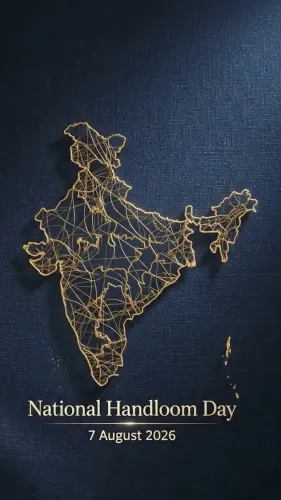
7 August is observed as National Handloom Day , declared in 2015 to mark the 1905 Swadeshi movement launch.
The Chief Minister's Office of Gujarat highlighted Patan's Patola and Kutch's Bhujodi weave as globally recognised textile traditions.
Patola received its Geographical Indication tag in 2009 ; Kutch handloom products have since received similar protection.
The post invoked the Vocal for Local and Atmanirbhar Bharat campaigns, both launched in 2020 , to urge domestic handloom consumption.
India's handloom sector is the country's second-largest rural employer after agriculture.
Gujarat's weaving communities — including the Vankar community of Bhujodi — stand to benefit directly from increased consumer adoption.
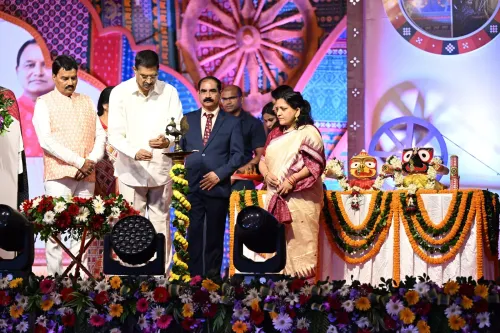
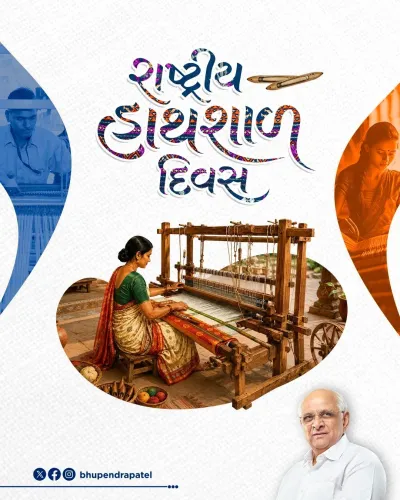
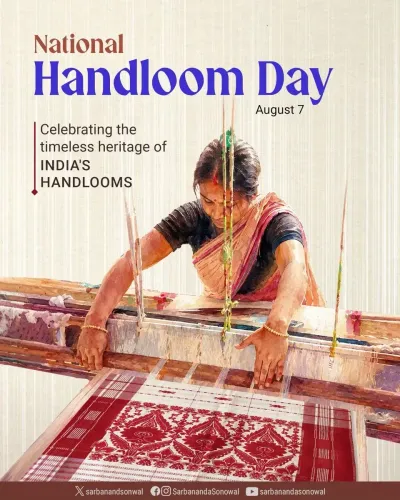
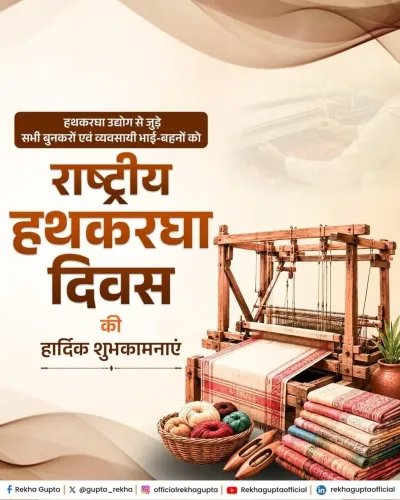
Every year on 7 August, India pauses to honour the hands that keep its most ancient textile traditions alive — and this year, the Chief Minister's Office of Gujarat used National Handloom Day 2026 to remind the country that two of its most celebrated weaves call Gujarat home.
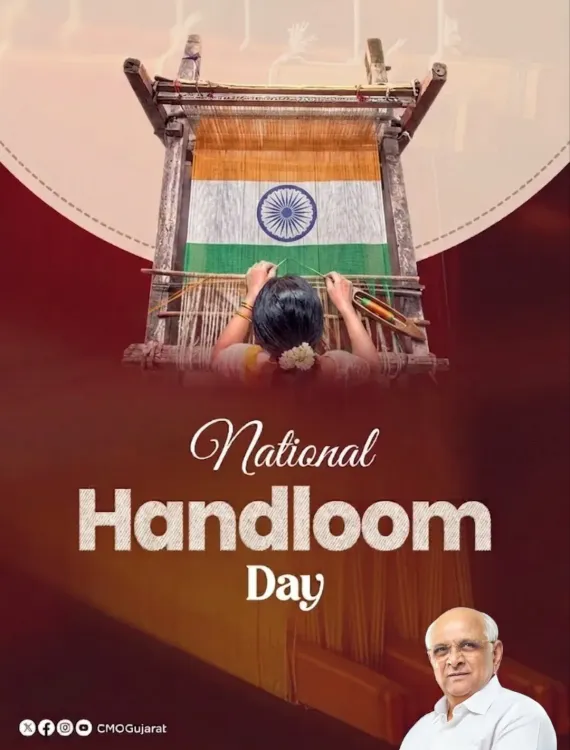
The post, shared on 7 August 2026, called the day one of pride for India's 'bhatigal virasat' — its richly diverse heritage — and for the weavers and artisans whose craft sustains it. Translated from Gujarati, the message reads: 'Today's National Handloom Day is a day to celebrate India's rich heritage and the extraordinary craftsmanship of weavers and handloom artisans. Gujarat's artistic traditions — from Patan's Patola to Kutch's Bhujodi weave — have earned global recognition. Let us adopt indigenous handloom products, realise the vision of 'Vocal for Local' and 'Atmanirbhar Bharat', and bring prosperity into the lives of our artisans.'
Patan's Patola and Kutch's Bhujodi: Gujarat's twin textile crowns
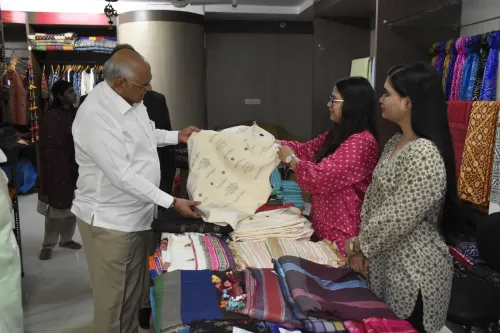
Patola, the double-ikat silk weave produced in Patan in north Gujarat, is among the most technically demanding textiles in the world — each saree can take months to complete and commands prices that reflect that labour. It holds a Geographical Indication (GI) tag granted in 2009, protecting its identity and origin. Bhujodi, a village in Kutch, is home to the Vankar weaving community, whose wool and cotton textiles carry a distinct geometric vocabulary rooted in pastoral life. Kutch handloom products have similarly received GI recognition in subsequent years.
Both traditions have benefited from decades of state and central support — design development programmes, market-access schemes, and export promotion — that have gradually moved them from village looms to international fashion weeks.
Handloom Day's roots in the Swadeshi movement
The date is not arbitrary. The Government of India declared 7 August as National Handloom Day in 2015 to commemorate the launch of the Swadeshi movement on 7 August 1905 — the mass pledge to boycott British goods and revive Indian industry that became one of the first organised acts of economic nationalism in the freedom struggle. Linking handloom promotion to that moment gives the observance a deliberate historical charge.
Since independence, successive governments have supported the sector through bodies such as the All India Handloom Board. The most recent policy umbrella is the National Handloom Development Programme, which channels funds toward cluster development, yarn supply, and weaver welfare across states including Gujarat.
'Vocal for Local' and Atmanirbhar Bharat: the new policy frame
The CMO's message explicitly invokes two campaigns that have shaped central government messaging since 2020: 'Vocal for Local' and 'Atmanirbhar Bharat' (self-reliant India). Both were launched as part of a broader push to boost domestic consumption and reduce import dependence — a frame that handloom, with its entirely indigenous supply chain, fits naturally. For Gujarat's weavers, the policy language translates into a practical ask: that Indian consumers choose a Bhujodi shawl or a Patola dupatta over a machine-made import.
India's handloom sector employs millions of weavers, making it the country's second-largest rural employer after agriculture. Gujarat's share of that workforce — concentrated in Kutch, Patan, Surat, and tribal belt districts — represents both a cultural asset and a livelihood question the state has a direct stake in answering.
The loom has outlasted empires. Whether the next generation of weavers can outlast fast fashion depends on how seriously consumers take days like this one.
Point of View
Where handloom clusters sit at the intersection of tribal welfare, export potential, and tourism, the messaging also serves a domestic political economy purpose — signalling state attentiveness to artisan communities ahead of any policy cycle. The real test, as always, is whether the call to 'Vocal for Local' translates into sustained procurement and market access, or remains an annual social-media moment.
NationPress
21 Sept 2026
Frequently Asked Questions
Why is National Handloom Day celebrated on 7 August?
7 August was declared National Handloom Day in 2015 to commemorate the launch of the Swadeshi movement on 7 August 1905 , when Indians pledged to boycott British goods and revive domestic industry.
What is Patola and why is it famous?
Patola is a traditional double-ikat silk weave from Patan in north Gujarat. It is one of the world's most technically complex textiles, can take months to produce, and holds a Geographical Indication tag granted in 2009 .
What is the Bhujodi weaving tradition?
Bhujodi is a village in Kutch, Gujarat , home to the Vankar weaving community. Artisans there produce distinctive wool and cotton textiles with geometric patterns rooted in pastoral culture, and the products carry GI recognition.
What is Vocal for Local and how does it relate to handloom?
Vocal for Local is a campaign launched alongside Atmanirbhar Bharat in 2020 urging Indians to buy domestically produced goods. Handloom — with its entirely indigenous supply chain — is a natural fit, and the government regularly invokes the campaign to promote traditional textiles.
How many people does India's handloom sector employ?
India's handloom sector is the country's second-largest rural employer after agriculture , supporting millions of weavers and artisans, including large communities in Gujarat's Kutch, Patan, and tribal belt districts.