Gujarat CMO Champions GI-Tagged Patan Patola Craft

Synopsis
Gujarat's Chief Minister's Office on October 17, 2026, reaffirmed the state's commitment to Patan Patola — the GI-tagged double-ikat silk tradition — celebrating the craft's generational artistry and placing it within Gujarat's cultural economy strategy under PM Modi and CM Bhupendra Patel.
Key Takeaways
Patan Patola holds a Geographical Indication (GI) tag , legally protecting the craft's authenticity and origin in Patan, Gujarat .
Each Patola piece can take six months to a year to complete due to the intricate double-ikat weaving technique.
CM Bhupendra Patel has overseen Gujarat's cultural and artisan welfare policies since 2021 .
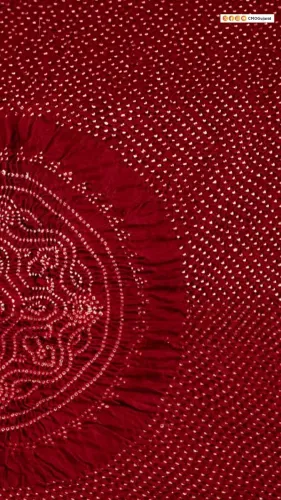
Gujarat links GI-tagged textiles — Patola, Bandhani, Kutch embroidery — to both cultural identity and artisan economic development.
The CMO post credits PM Narendra Modi's national push for traditional crafts as reinforcing state-level preservation efforts.
The weaver community in Patan remains small, making sustained government attention critical to the craft's survival.
Threads that take months to weave and generations to master — Gujarat's Chief Minister's Office on Saturday, October 17, 2026, spotlighted the Patan Patola, the state's legendary GI-tagged silk weaving tradition, reaffirming the government's commitment to preserving one of India's most intricate living crafts.
The craft that defies shortcuts
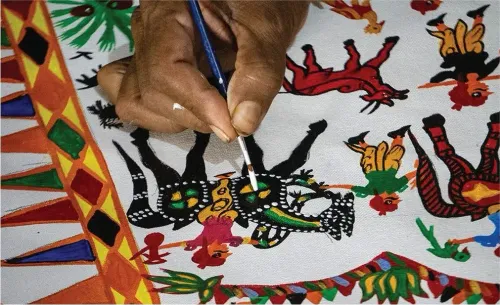
Patan Patola is not ordinary silk. Woven in the town of Patan in northern Gujarat, each sari is produced using the double ikat technique — where both the warp and weft threads are resist-dyed before weaving, demanding extraordinary precision. A single piece can take anywhere from six months to a year to complete, making it among the most labour-intensive textiles in the world. The CMO's post underlined that this craft 'reflects generations of artistry and months of meticulous work by our weavers.'
Patola received its Geographical Indication (GI) tag, which legally protects regional products with a specific geographical origin and special qualities. The tag means only Patola woven in Patan can carry the name, shielding artisans from imitation flooding the market.
Gujarat's cultural economy play
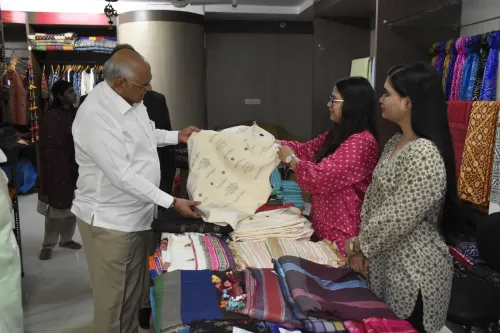
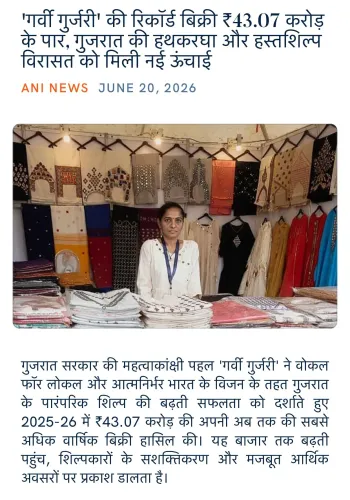
The state's championing of Patan Patola sits within a deliberate broader strategy. Gujarat has consistently positioned its GI-tagged textile crafts — Patola, Bandhani, Kutch embroidery — as anchors of both cultural identity and economic opportunity for artisan communities. Successive state governments under Chief Minister Bhupendra Patel, who has helmed the state since 2021, have linked heritage preservation with artisan welfare and select tourism initiatives built around craft villages and weaving centres in Patan.
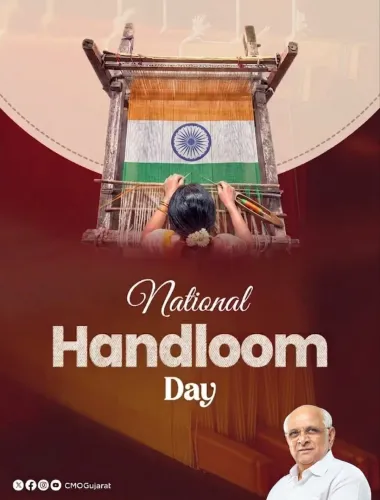
At the national level, Prime Minister Narendra Modi — in office since 2014 — has repeatedly elevated traditional textiles as symbols of India's soft power, through platforms such as national handloom days, gifting heritage fabrics to foreign dignitaries, and promoting 'vocal for local' campaigns. The Gujarat CMO's post explicitly credits this leadership as the foundation for the state's ongoing commitment.
Why the weavers' story matters now
The community of Patola weavers in Patan remains small — a handful of families have historically guarded the double-ikat technique as closely held knowledge. That exclusivity is precisely what makes preservation urgent. Without sustained state attention, artisan welfare support, and market access, such hyper-specialised crafts risk fading within a generation. The GI tag is a legal shield; government visibility is the economic oxygen.
As Gujarat eyes participation in national handloom expos and state budget cycles that could channel fresh funds toward craft clusters, the CMO's public reaffirmation signals that Patan Patola will remain a political and cultural priority — not just a heritage footnote.
Point of View
The post situates a centuries-old craft within present-day political branding — 'vocal for local' recast in silk threads. The GI tag provides the legal architecture, but sustained state visibility and budget allocation are the real determinants of whether the weaving community in Patan grows or quietly shrinks. With handloom expos and state budgets on the horizon, expect this rhetorical commitment to be tested by concrete resource flows.
NationPress
17 Oct 2026
Frequently Asked Questions
What is Patan Patola and why is it special?
Patan Patola is a rare double-ikat silk weaving tradition from Patan in northern Gujarat, where both warp and weft threads are individually dyed before weaving. This hyper-precise technique means a single sari can take six months to a year to complete, making it one of the world's most labour-intensive textiles.
Does Patan Patola have a GI tag?
Yes. Patan Patola holds a Geographical Indication (GI) tag, which means only textiles woven in Patan, Gujarat, can legally carry the name. This protects authentic weavers from cheaper imitations sold under the same label.
Who are the weavers of Patan Patola?
A small number of families in Patan, Gujarat, have historically preserved the double-ikat Patola technique as closely guarded ancestral knowledge. The community is very limited in size, which adds to both the craft's exclusivity and its vulnerability.
What is Gujarat's government doing to preserve traditional crafts?
Gujarat's government has consistently positioned GI-tagged textiles like Patan Patola, Bandhani, and Kutch embroidery as pillars of cultural economy, linking preservation to artisan welfare and tourism initiatives around craft clusters. The CMO's October 2026 post reaffirms this ongoing commitment under CM Bhupendra Patel.
How does PM Modi's leadership connect to Patan Patola promotion?
PM Narendra Modi has championed traditional Indian textiles nationally — through handloom promotion days, gifting heritage fabrics at diplomatic events, and 'vocal for local' campaigns — creating a policy environment that reinforces state-level efforts like Gujarat's support for Patan Patola weavers.