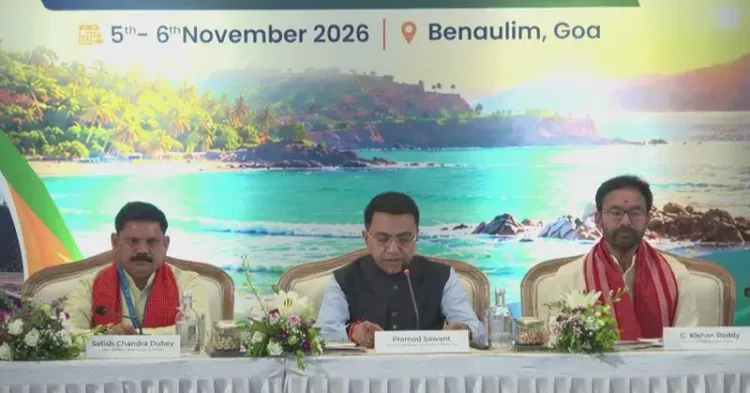
Kishan Reddy chairs 4th Mining Ministers' Conference in Goa
Synopsis
Union Mines Minister G. Kishan Reddy is chairing the 4th Mining Ministers' Conference in Benaulim, Goa on 5 November 2026, bringing together the Centre and states to coordinate mineral policy, lease auctions and critical-mineral supply-chain strategy under the MMDR Act framework.
Key Takeaways
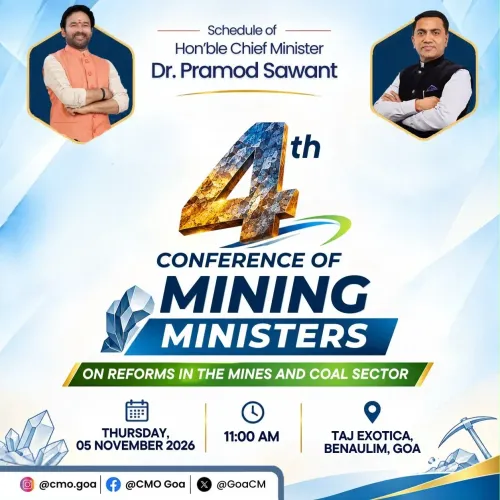
The 4th Conference of Mining Ministers is being held on 5 November 2026 at Benaulim, Goa .
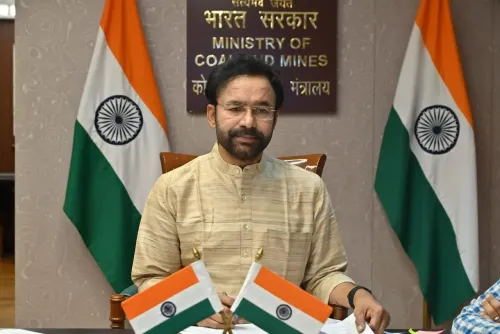
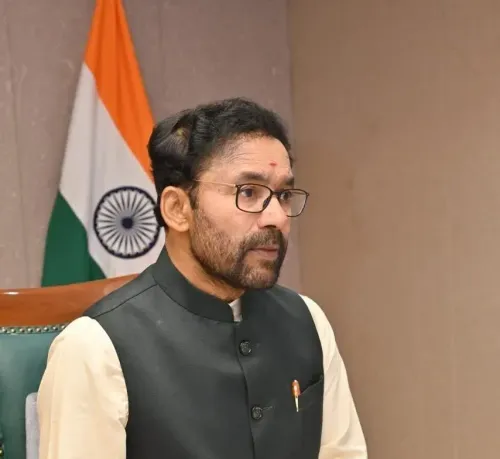
Union Coal and Mines Minister G.
Kishan Reddy is presiding over the conference alongside the Ministry of Mines .
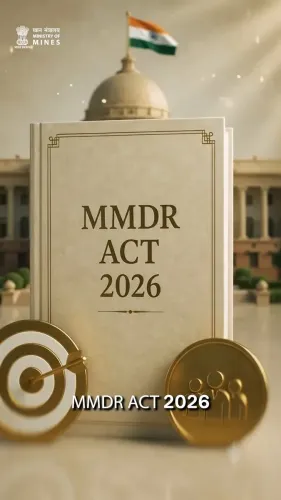
The conference is a periodic federal forum for centre-state coordination on mineral policy, lease auctions and exploration under the MMDR Act .
The National Mineral Policy of 2019 anchors the broader reform arc that these conferences are designed to advance.
India's strategic push to reduce import dependence on critical minerals (lithium, cobalt, graphite) adds new urgency to the ministerial dialogue.
Formal outcomes, agenda details and the full attendance list have not yet been officially disclosed.
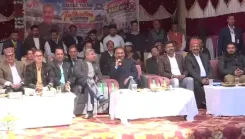
India's mineral governance ecosystem convened in force on Thursday, 5 November 2026, as Union Coal and Mines Minister G. Kishan Reddy presided over the 4th Conference of Mining Ministers at Benaulim, Goa — a gathering that brings the Centre and states to the same table on the future of Indian mining.
Why Benaulim, and what this conference series does
The coastal village of Benaulim in South Goa hosted what has become a critical federal forum: Mining Ministers' Conferences are where the Ministry of Mines and state-level mining departments thrash out the nuts and bolts of lease auctions, exploration pipelines, and regulatory reform. The series sits squarely within the federal architecture of the Mines and Minerals (Development and Regulation) Act — a law that divides mineral governance authority between the Centre and the states.
The forum matters precisely because mineral wealth is unevenly distributed across India's states, and production decisions ultimately rest with state governments. Without active centre-state coordination, even the best-designed national policy risks stalling at implementation.
The 2019 National Mineral Policy and the reform arc
The backdrop to this conference is a reform trajectory that picked up pace after the National Mineral Policy of 2019 reoriented India's approach — prioritising sustainable mining, transparency in auctions, and ease of doing business for the sector. Subsequent years saw successive amendments to the MMDR Act aimed at unlocking mineral blocks faster and reducing India's dependence on imported critical minerals essential for batteries, electronics and defence manufacturing.
Periodic ministerial conferences have served as the pressure valve and coordination mechanism for that agenda: states flag on-ground constraints, the Centre signals upcoming regulatory moves, and both sides align on implementation roadmaps. The 4th edition of the conference carries that mandate forward.
What the sector is watching after the conference
With G. Kishan Reddy at the helm of both the Coal and Mines portfolios, any signalling from Benaulim on fresh exploration initiatives, timelines for stalled mineral block auctions, or state-level reform milestones will be closely read by the mineral sector. India's push to secure domestic supply chains for critical minerals — lithium, cobalt, graphite — has added new urgency to what was once a routine administrative exercise.
The agenda items and formal outcomes of this 4th conference are yet to be officially disclosed — but the mere convening of all state Mining Ministers signals that the Centre is pressing for alignment on priorities that now carry strategic economic weight.
India is sitting on vast untapped mineral reserves. The question coming out of Benaulim is whether this conference turns coordination into acceleration.
Point of View
And state buy-in is non-negotiable. By convening this 4th edition in Goa, Kishan Reddy is signalling that the reform momentum around MMDR Act amendments and critical-mineral exploration must translate into state-level action, not just Central notifications. India's growing competition with China on critical mineral supply chains gives these otherwise technical discussions a sharper strategic edge. The real test, as always, is whether the dialogue at Benaulim produces time-bound state implementation commitments rather than aspirational communiqués.
NationPress
5 Nov 2026
Frequently Asked Questions
What is the 4th Conference of Mining Ministers in Goa about?
The 4th Conference of Mining Ministers, held in Benaulim, Goa on 5 November 2026, is a federal forum where the Union Government and state mining ministers coordinate on mineral policy, lease auctions, exploration strategy, and regulatory reform under the MMDR Act framework.
Who is chairing the Mining Ministers' Conference in Goa 2026?
Union Coal and Mines Minister G. Kishan Reddy is chairing the conference, which is organised by the Ministry of Mines.
Where is Benaulim, the venue for the Mining Ministers' Conference?
Benaulim is a coastal village located in South Goa, chosen as the venue for the 4th Conference of Mining Ministers on 5 November 2026.
What is India's National Mineral Policy and how does it relate to this conference?
India's National Mineral Policy, revised in 2019, prioritises sustainable mining, transparency in lease auctions, and ease of doing business in the mineral sector. The Mining Ministers' Conference series is a key mechanism to advance this policy agenda through centre-state coordination.
Why is India's focus on critical minerals important in 2026?
India is working to reduce its dependence on imported critical minerals such as lithium, cobalt, and graphite, which are essential for batteries, electronics, and defence manufacturing. Conferences like this one are part of the effort to accelerate domestic exploration and production.