HP CM Office Urges Public to Report Chitta Dealers, Vows Rehab
Synopsis
The Chief Minister's Office of Himachal Pradesh called on residents to report chitta drug traders to police on November 5, 2026, citing a building demolition in Nurpur and promising rehabilitation for addicts alongside strict punishment for traffickers.
Key Takeaways
The Chief Minister's Office of Himachal Pradesh issued a public appeal on November 5, 2026 urging citizens to report anyone involved in the chitta drug trade.
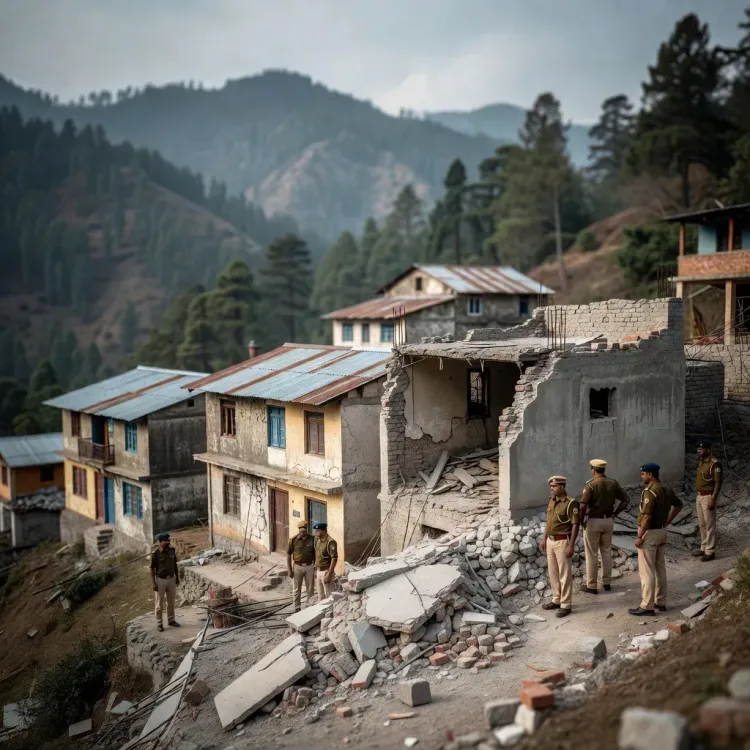
Himachal Pradesh Police demolished a drug smuggler's building in Nurpur, Kangra district the previous day as a show of enforcement action.
The appeal assured residents that informants need not fear retaliation.
The state committed to rehabilitation for drug addicts alongside stringent punishment for traffickers under the NDPS Act, 1985 .
Kangra district , including Nurpur, has been identified as a district facing documented drug-abuse challenges in Himachal Pradesh.
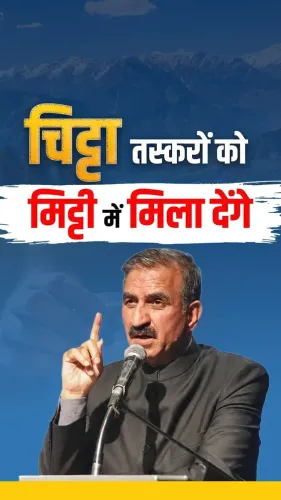
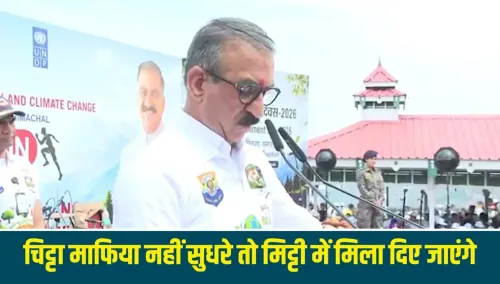
A building belonging to a drug smuggler was demolished in Nurpur, Kangra district, even as the Chief Minister's Office of Himachal Pradesh issued a direct, urgent appeal to residents on Thursday, November 5, 2026 — tip off the police about anyone involved in the chitta trade, and do not be afraid.
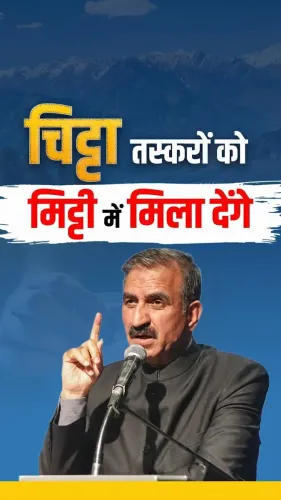
The post, shared in Hindi, carried a pointed message: 'बच्चों, किसी से डरने की जरूरत नहीं है' ('Children, there is no need to fear anyone'). Anyone who knows of a person involved in the chitta business — the street name for white heroin that has ravaged Himachal Pradesh's youth — should inform the police. The payoff is dual: rehabilitation for those trapped in addiction, and stringent punishment for those running the trade.
Nurpur Demolition Sends a Clear Signal
The reference to a smuggler's building being razed in Nurpur the previous day was deliberate — a show of consequence, not just rhetoric. Nurpur falls within Kangra district, one of the districts in Himachal Pradesh where drug abuse has been documented as a serious public-health concern. The demolition follows a pattern seen across Indian states: authorities using property action under law to strip traffickers of the material rewards of the trade.
India's Narcotic Drugs and Psychotropic Substances (NDPS) Act, 1985 provides the statutory backbone for both prosecution of traffickers and rehabilitation provisions for addicts — giving state machinery the legal leverage to pursue both prongs simultaneously.
Community Policing at the Heart of the Strategy
The appeal to ordinary citizens — framed in the intimate, parental register of 'bachon' ('children') — is a deliberate community-policing move. When state enforcement has limits, local knowledge fills the gap. Himachal Pradesh Police has increasingly relied on tip-based intelligence to identify mid-level dealers who might otherwise evade detection. The CMO's post promises that informants will be protected, implicitly addressing the fear of retaliation that most often silences potential sources.
Rehabilitation, not just punishment, features prominently in the message — an acknowledgement that addiction is a public-health failure as much as a law-and-order one. The dual framing of 'punish the trafficker, heal the addict' mirrors the approach recommended under NDPS provisions and adopted in several state drug-de-addiction drives.
With a trafficker's building already rubble in Nurpur, the message from Shimla is unambiguous: the crackdown has moved from announcement to demolition. The next test is whether the tip line rings.
Point of View
Almost pastoral tone ('children, do not be afraid') signals an attempt to lower the social barrier to informing on traffickers, a persistent obstacle in hill-state drug enforcement. Anchoring the message in a concrete, recent demolition rather than a future promise lends credibility to the appeal. If sustained, this dual-track approach — penalising assets, rehabilitating users, crowdsourcing tips — could represent a replicable model for other mountain states grappling with synthetic-drug infiltration.
NationPress
5 Nov 2026
Frequently Asked Questions
What is chitta and why is it a problem in Himachal Pradesh?
Chitta is the street name for white heroin or a heroin-methamphetamine mix widely abused in Himachal Pradesh. Districts including Kangra have seen significant youth addiction, prompting repeated enforcement drives by the state government and police.
What happened in Nurpur related to drugs?
Himachal Pradesh Police demolished a building belonging to a drug smuggler in Nurpur, Kangra district, as part of ongoing anti-narcotics enforcement. The Chief Minister's Office cited this demolition on November 5, 2026, as an example of strict action against traffickers.
How can citizens report drug dealers in Himachal Pradesh?
The Chief Minister's Office urged residents to inform the Himachal Pradesh Police about anyone known to be involved in the chitta trade. The appeal assured that informants would be protected and need not fear traffickers.
What law governs drug trafficking action in India?
The Narcotic Drugs and Psychotropic Substances (NDPS) Act, 1985 is the primary legal framework for prosecuting drug traffickers and enabling rehabilitation of addicts across India, including Himachal Pradesh.
Will drug addicts be punished or rehabilitated under this drive?
The Chief Minister's Office explicitly stated that drug addicts will be rehabilitated, while those running the drug trade will face strict punishment. The approach distinguishes between victims of addiction and those profiting from trafficking.