Goyal hails GI-tagged Gamosa, Assam's handloom pride

Synopsis
Union Commerce and Industry Minister Piyush Goyal celebrated the GI-tagged Gamosa on 16 October 2026, praising CM Himanta Biswa Sarma's efforts to spotlight Assamese weavers and carry the state's handloom heritage to a global audience.
Key Takeaways
Union Commerce Minister Piyush Goyal publicly hailed the Gamosa as 'Assam's OG symbol of pride' on 16 October 2026 .
The Gamosa holds a Geographical Indication (GI) tag under the GI Act of 1999 , protecting it from imitation and enabling premium pricing.
CM Himanta Biswa Sarma was credited for championing Assam's artisans and weavers at a global level.
Assam's GI-tagged textile portfolio includes Muga silk (recognised in 2007 ) alongside the Gamosa.
The GI framework serves as both a cultural protection tool and a market-access mechanism for Northeast handloom artisans.
The Centre and Assam state government are jointly using GI tags to connect heritage crafts with exports, e-commerce, and tourism.
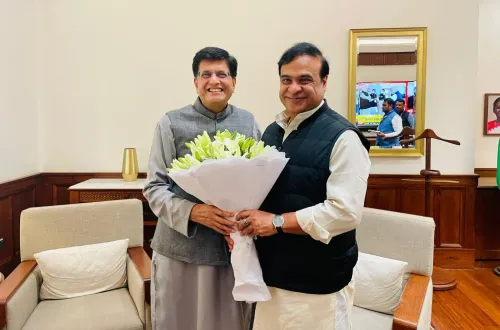
The thread of a single handwoven cloth carries an entire civilisation's memory — and Union Commerce and Industry Minister Piyush Goyal wants the world to know it. On Friday, 16 October 2026, Goyal took to X to celebrate the Gamosa, the iconic Assamese handwoven scarf that holds a Geographical Indication (GI) tag, calling it 'Assam's OG symbol of pride' and applauding Chief Minister Himanta Biswa Sarma for championing the state's weavers on a global stage.
What makes the Gamosa irreplaceable
The Gamosa is far more than a piece of cloth. Traditionally hand-woven in white cotton with distinctive red borders, it is offered as a mark of respect, worn during the harvest festival of Bihu, and draped across the shoulders of honoured guests across Assam. Its GI tag — secured under the Geographical Indications of Goods (Registration and Protection) Act, 1999 — legally anchors the product to its place of origin, protecting Assamese weavers from imitation goods and unlocking premium pricing in both domestic and international markets. Goyal described the Gamosa as being 'woven with tradition, offered with love, and worn with honour' — a formulation that doubles as a neat summary of the GI framework's entire purpose: to preserve cultural meaning while building economic value.Sarma's push to spotlight Assam's artisans
CM Himanta Biswa Sarma has made the promotion of Assam's handloom identity a visible policy priority. The post credits his efforts with giving 'artisans and weavers the spotlight they deserve' and taking Assam's heritage to the global stage — a signal of the increasingly coordinated Centre-state approach to craft promotion in the Northeast. Assam already holds several GI-tagged textile products, including Muga silk, which received its GI recognition in 2007. The broader strategy mirrors a pattern the Commerce Ministry has leaned into across Northeast states: use GI tags as both a cultural shield and a trade tool, linking heritage textiles to export fairs, e-commerce platforms, and tourism circuits.GI tags as economic scaffolding for weavers
For the tens of thousands of handloom weavers in Assam, a GI tag is not a ceremonial honour — it is a market passport. It enables artisan clusters to command higher prices, resist counterfeits, and attract institutional buyers who value provenance. The Commerce and Industry Ministry, which oversees the GI Registry, has steadily expanded the portfolio of Northeast products under this framework, treating cultural preservation and economic uplift as two sides of the same loom. Goyal's public recognition of the Gamosa fits a wider moment in which the Centre is actively signalling that India's craft economy — long underfunded and undermarketed — is a serious export and soft-power asset. For Assam's weavers, the message from the highest levels of the Union government is clear: the thread runs all the way to New Delhi.Point of View
He reinforces the BJP's Northeast consolidation strategy, where cultural pride and governance optics travel together. The Gamosa shoutout also fits a broader Commerce Ministry pattern of using GI tags as a visible, feel-good metric of craft-sector delivery. Watch for this kind of Centre-state coordination to intensify ahead of any international trade fair featuring Indian handlooms.
NationPress
16 Oct 2026
Frequently Asked Questions
What is the Gamosa and why is it significant in Assam?
The Gamosa is a hand-woven white cotton cloth with red borders, central to Assamese cultural life — gifted as a mark of respect, worn during Bihu, and now protected by a Geographical Indication tag that recognises its unique regional identity.
What does the GI tag mean for Gamosa weavers?
A GI tag legally links the Gamosa to Assam, preventing imitation products from undercutting artisans, enabling premium pricing, and opening doors to institutional and export buyers who value authenticated provenance.
Why did Piyush Goyal praise CM Himanta Biswa Sarma?
Goyal credited Sarma for actively promoting Assam's handloom artisans and taking the state's heritage textiles to a global stage, reflecting the coordinated Centre-state approach to craft sector promotion in the Northeast.
Which other Assam products have GI tags?
Assam's Muga silk received a GI tag in 2007 and is among several handloom and textile products from the state recognised under the Geographical Indications of Goods Act.
What ministry oversees GI tags in India?
The Union Ministry of Commerce and Industry, currently led by Piyush Goyal, oversees the GI Registry under the Geographical Indications of Goods (Registration and Protection) Act, 1999.