CM Himanta: Four Assam Products Receive GI Tag
Synopsis
Four Assam products — Bihu Pepa, Karbi Anglong Handloom, Bah Silpa, and Deori Handloom — have received GI tags, CM Himanta Biswa Sarma announced on June 15, 2026, crediting NABARD's support and calling it a milestone for the state's heritage conservation efforts.
Key Takeaways
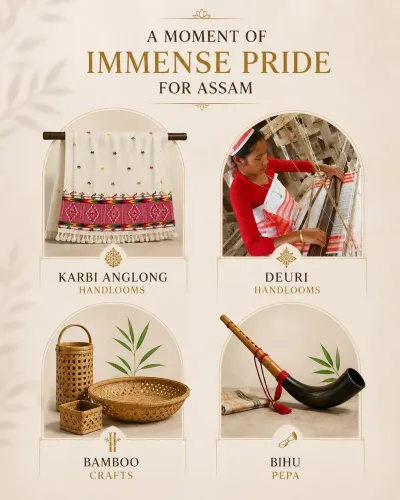
Four products from Assam — Bihu Pepa , Karbi Anglong Handloom , Bah Silpa , and Deori Handloom — have received Geographical Indication (GI) tags.
The announcement was made by Assam Chief Minister Himanta Biswa Sarma on June 15, 2026 .
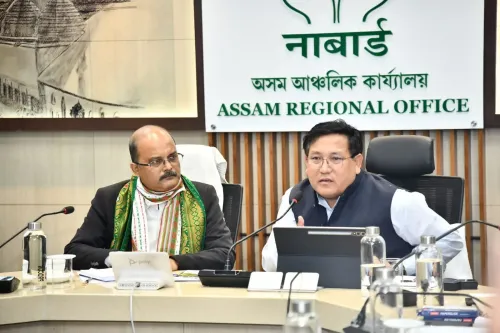
NABARD was tagged in the post, reflecting its facilitative role in the GI registration process for northeastern states.
Assam's earlier GI-tagged products include Muga silk (2007) and Assam Orthodox Tea (2008) .
The registrations protect tribal and artisan communities — including Karbi and Deori peoples — from counterfeiting and enable premium market access.
The GI framework in India is governed by the Geographical Indications of Goods (Registration and Protection) Act, 1999 .
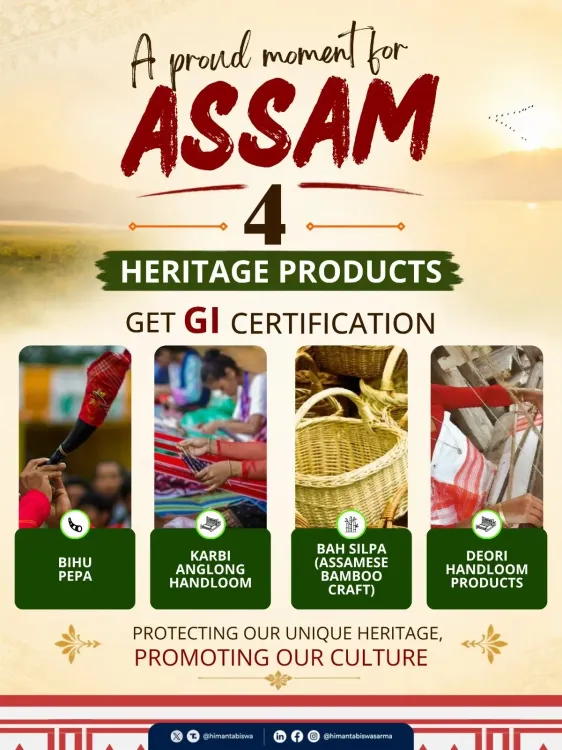
Assam Chief Minister Himanta Biswa Sarma on Monday, June 15, 2026, announced that four traditional products from the state have been awarded the prestigious Geographical Indication (GI) tag, calling it 'a proud moment for Assam.' The four products are Bihu Pepa, Karbi Anglong Handloom, Bah Silpa, and Deori Handloom products. The announcement was made via a post on X that also tagged NABARD, the National Bank for Agriculture and Rural Development.
Context
The GI tag is a legal recognition granted under the Geographical Indications of Goods (Registration and Protection) Act, 1999, which protects region-specific products from imitation and misuse. The tag certifies that a product originates from a particular geographic area and possesses qualities or a reputation attributable to that origin. Chief Minister Sarma described the development as giving Assam's heritage conservation efforts 'another shot in the arm.'
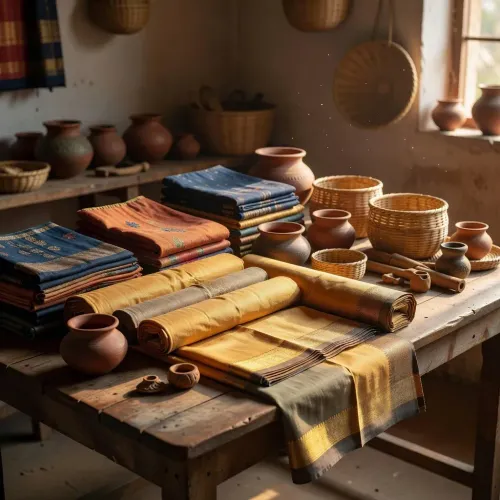
The four newly tagged products span music, craft, and weaving traditions. Bihu Pepa is a buffalo-horn flute intrinsically linked to Assam's iconic Bihu festival. Bah Silpa refers to traditional bamboo craft. Karbi Anglong Handloom and Deori Handloom products represent the weaving heritage of the Karbi and Deori tribal communities respectively.
Policy Backdrop
Assam has a history of securing GI protections for its distinctive products. Muga silk received its GI tag in 2007, followed by Assam Orthodox Tea in 2008, establishing an early precedent for leveraging intellectual property law to protect the state's cultural and agricultural output. These latest four additions continue that trajectory, with a particular emphasis on tribal and handloom traditions.
NABARD has played a facilitative role in GI registration processes across northeastern states, assisting state governments and artisan communities in documenting indigenous products and navigating the registration framework. Indian states have increasingly pursued GI tags as a tool to both preserve cultural knowledge and open premium market channels for rural producers.
Stakeholders and Impact
The most direct beneficiaries of these GI registrations are handloom weavers, tribal artisans, and rural producers associated with these traditions across Assam, particularly in the Karbi Anglong hill district. A GI tag provides legal protection against counterfeit goods and enables producers to command premium prices in domestic and export markets. For communities like the Karbi and Deori peoples, the recognition also carries cultural significance, formally acknowledging their weaving traditions within India's intellectual property framework.
The northeastern region has received sustained policy attention for the documentation and registration of indigenous products. These tags align with a broader national effort to link heritage conservation with economic empowerment, providing artisans with a stronger identity in competitive markets.
What's Next
With the GI tags now in place, the focus is expected to shift toward state-level marketing initiatives and branding campaigns that leverage the new designations for export growth and domestic market expansion. How effectively the Assam government and agencies like NABARD translate legal protection into tangible income gains for weavers and craftspeople will determine the real-world impact of these registrations. Broader promotion of these four products — particularly at national craft fairs and in international markets — will be the key measure of success going forward.
Point of View
Bamboo craft, and two tribal handloom traditions — reflects a deliberate state strategy to convert cultural distinctiveness into intellectual property assets. For Chief Minister Sarma, the announcement reinforces his administration's positioning on northeast identity and tribal welfare ahead of an increasingly competitive political landscape in the region. NABARD's visible role signals that the Centre's rural finance architecture is being consciously deployed as a soft-power instrument in the northeast. The real test, however, lies in whether these registrations translate into measurable income gains for weavers and artisans, or remain largely symbolic milestones.
NationPress
18 Sept 2026
Frequently Asked Questions
What are the four Assam products that received the GI tag in 2026?
The four Assam products that received the GI tag are Bihu Pepa (a buffalo-horn flute), Karbi Anglong Handloom, Bah Silpa (bamboo craft), and Deori Handloom products, as announced by CM Himanta Biswa Sarma on June 15, 2026.
What is a GI tag and why does it matter for Assam's artisans?
A GI (Geographical Indication) tag is a legal certification under India's Geographical Indications of Goods Act, 1999, that protects region-specific products from imitation. For Assam's artisans, it enables premium pricing, prevents counterfeiting, and opens doors to domestic and export markets.
What role did NABARD play in Assam's GI tag registrations?
NABARD, the National Bank for Agriculture and Rural Development, has assisted states in the GI registration process by supporting documentation and facilitation for rural and tribal artisan communities, particularly in northeastern India.
What other Assam products have GI tags?
Prior to these four new additions, Assam had secured GI tags for Muga silk in 2007 and Assam Orthodox Tea in 2008, among others, establishing the state as an active user of India's GI protection framework.