KTR launches Warangal-born ride-hailing startup RUTUR
Synopsis
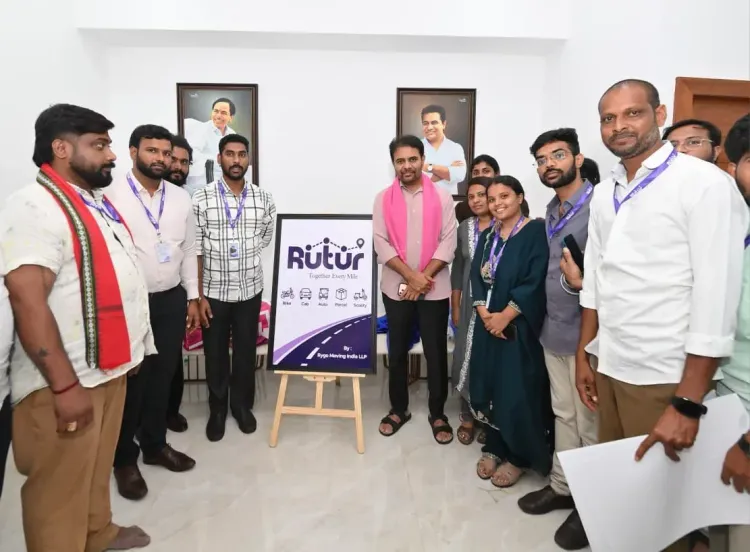
BRS working president K. T. Rama Rao has launched RUTUR, a homegrown ride-hailing startup from Warangal, Telangana. Founded by Ashok, Nikhil, Kranthi, and Akshay, RUTUR offers affordable travel and a no-commission model for drivers, positioning itself within Telangana's growing tier-2 city startup ecosystem.
Key Takeaways
RUTUR is a homegrown ride-hailing platform founded in Warangal, Telangana , launched on October 16, 2026 .
The startup was founded by Ashok (founder), Nikhil (CEO), Kranthi (COO), and Akshay (CFO).
RUTUR's core differentiator is a no-commission model for drivers, aimed at improving earnings for gig-economy workers.
BRS working president K.
Rama Rao formally launched the platform and endorsed its vision of affordable, accessible mobility.
The launch reflects Telangana's ongoing effort to build tech startup activity in tier-2 cities beyond Hyderabad, backed by policies dating to the 2015 Telangana Startup Policy .
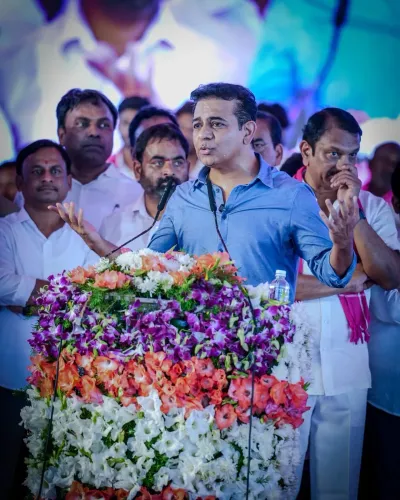
A startup born not in Hyderabad's gleaming tech corridors but in Warangal — Telangana's second city — just got its most prominent endorsement. BRS working president K. T. Rama Rao on Friday, October 16, 2026, formally launched RUTUR, a homegrown ride-hailing platform with a no-commission model for drivers, calling it a step toward transforming everyday mobility through technology and innovation.
A four-founder bet on affordable, driver-first mobility
RUTUR was founded by Ashok, alongside Nikhil as CEO, Kranthi as COO, and Akshay as CFO. The platform's central pitch is straightforward: make travel more affordable for commuters while eliminating the commission cuts that have long squeezed gig-economy drivers on national platforms. No commission means drivers keep what they earn — a model that has gained traction among regional alternatives to the dominant ride-hailing players.
KTR, as he is widely known, expressed his support directly: 'Proud to launch RUTUR, a homegrown mobility platform born in Warangal, Telangana, with a vision to transform everyday mobility through technology and innovation.' He wished the founders and the @RuturApp team success in contributing to India's growing startup ecosystem.
Warangal's quiet rise as a startup address
That RUTUR originates in Warangal — not Hyderabad — is itself a signal. Since Telangana's formation in 2014, successive state IT and innovation policies have aimed to decentralise technology growth beyond the capital. The 2015 Telangana Startup Policy provided incentives for entrepreneurs in emerging sectors including mobility and logistics, part of a broader effort to build technology clusters in tier-2 cities. Warangal has been a quiet beneficiary of that push.
KTR, as the state's former Minister for IT, Industries and Municipal Administration, was the architect of much of that policy momentum. His endorsement of RUTUR carries institutional weight — it signals continuity between his ministerial record and his current role as a political figure championing regional innovation.
The no-commission model in a contested market
India's ride-hailing sector has seen growing friction between aggregator platforms and drivers over commission structures — a tension that has sparked strikes and regulatory debate in multiple states. RUTUR's no-commission promise positions it squarely in that conversation. Regional leaders across India have increasingly endorsed local ride-hailing alternatives precisely on this argument, framing them as employment-first models rather than pure technology plays.
Whether RUTUR can translate that positioning into operational scale — securing state-level pilot integrations, expanding its driver base, or attracting funding — will determine if this launch moment becomes a lasting chapter in Telangana's startup story.
The startup from Warangal has its launch. Now comes the ride.
Point of View
Now extending that identity into the opposition. The no-commission model taps into a live national debate around gig-worker rights, giving a regional startup launch unusual policy resonance. Warangal's emergence as the origin point rather than Hyderabad is deliberate optics: it signals that Telangana's innovation story is decentralising, a narrative KTR has every incentive to own heading into future electoral cycles. Whether RUTUR scales or not, the launch cements his positioning as a voice for grassroots tech entrepreneurship.
NationPress
17 Oct 2026
Frequently Asked Questions
What is RUTUR and where is it based?
RUTUR is a homegrown ride-hailing mobility startup founded in Warangal, Telangana . It offers affordable rides and operates on a no-commission model for drivers, distinguishing itself from national aggregator platforms.
What is the no-commission model in ride-hailing?
A no-commission model means the platform does not deduct a percentage cut from each ride fare earned by drivers — unlike major national platforms — allowing drivers to retain their full earnings.
Why did KTR launch a ride-hailing app from Warangal?
BRS working president K. T. Rama Rao launched RUTUR as part of his broader support for the Telangana startup ecosystem, particularly for tech initiatives emerging from tier-2 cities like Warangal beyond Hyderabad.
What is Telangana's startup policy history?
Since Telangana's formation in 2014 , the state introduced IT and innovation policies including the 2015 Telangana Startup Policy , which provided incentives for entrepreneurs in sectors like mobility and logistics to foster growth outside Hyderabad.