KTR hails Telangana as India's top startup state
Synopsis
BRS working president K. T. Rama Rao has reiterated his claim that Telangana is independent India's most successful startup state, invoking founder KCR's legacy and the party's decade-long governance record — from TS-iPASS to T-Hub — as evidence of transformative economic policy.
Key Takeaways
BRS working president KTR on May 26, 2026 called Telangana 'the most successful startup state of independent India' on X.
Telangana was formed in June 2014 after bifurcation from Andhra Pradesh, with Hyderabad as its capital and primary IT-pharma hub.
The BRS government launched the TS-iPASS single-window clearance system in 2014 to accelerate industrial and startup investment.
T-Hub , a state-backed startup incubator in Hyderabad, helped position the city alongside Bengaluru and NCR as a top innovation destination.
KTR served as Minister for IT, Industries and Municipal Administration in Telangana and is personally linked to these policy outcomes.
The BRS has been in opposition since its defeat in the 2023 assembly elections , and is using the economic legacy narrative to remain politically relevant.
BRS working president K. T. Rama Rao on Tuesday, May 26, 2026, renewed his assertion that Telangana is the most successful startup state in independent India, invoking the legacy of the party's founder and former Chief Minister K. Chandrashekar Rao in a post on X.
Context
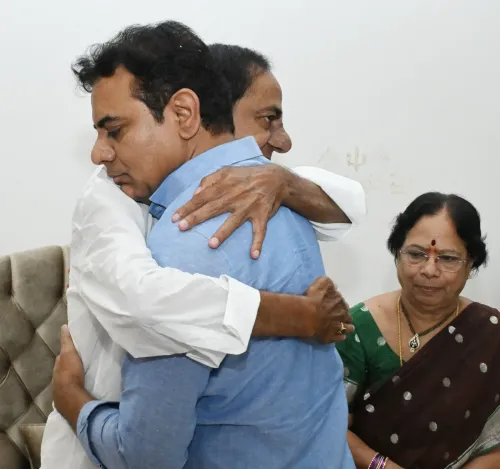
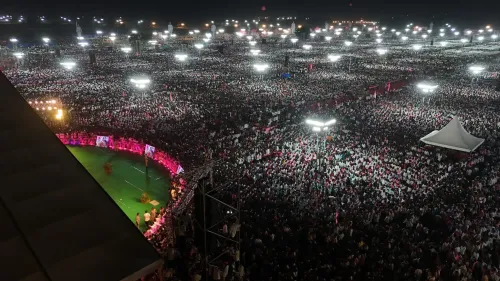
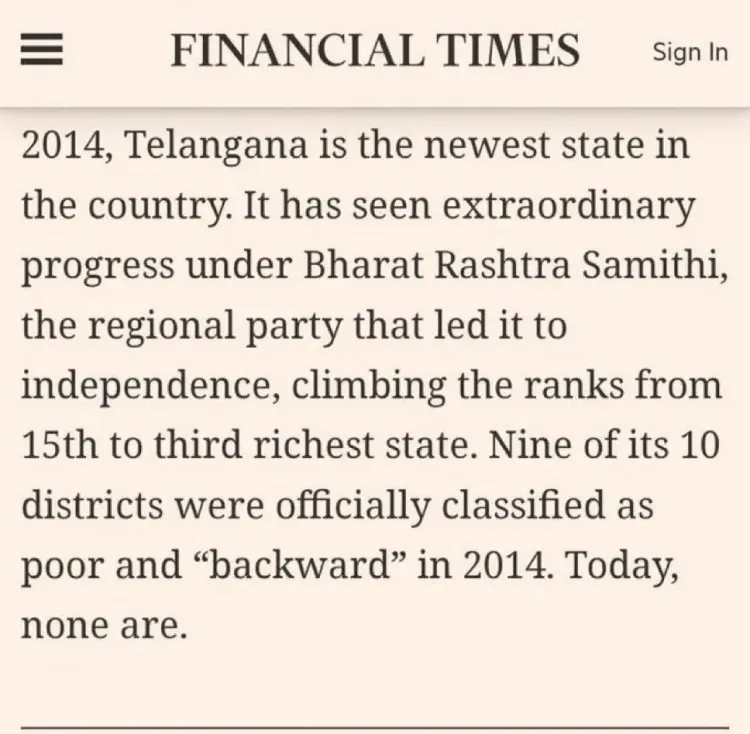
Rama Rao, popularly known as KTR, posted: 'That's why I call it the most successful startup state of independent India — Jai Telangana, Jai KCR.' The message was accompanied by an image and signals a continued effort by the Bharat Rashtra Samithi (BRS) to claim credit for Telangana's economic transformation, even as the party sits in opposition following its defeat in the 2023 assembly elections.
The post is part of a sustained BRS narrative that frames the decade of KCR-led governance — from 2014 to 2023 — as the foundational period for the state's rise as a technology and innovation hub.
Policy Backdrop
Telangana was carved out of Andhra Pradesh in June 2014, and the BRS government moved quickly to distinguish the new state through targeted industrial policy. The TS-iPASS single-window clearance system, launched in 2014, was designed to fast-track investment approvals and reduce bureaucratic friction for businesses and startups.
Hyderabad, the state capital, became the anchor of this strategy. Institutions such as T-Hub — a state-backed startup incubator — helped position the city alongside Bengaluru and the National Capital Region as a leading destination for venture capital and technology talent. The BRS administration consistently cited rankings on ease of doing business and the growth of the IT and pharmaceutical sectors as evidence of policy success.
This regional push also aligned with the central government's Startup India initiative launched in 2016, which provided a national framework that states like Telangana leveraged to build local innovation ecosystems.
Stakeholders and Impact
The primary beneficiaries of Telangana's startup push have been technology entrepreneurs, IT-sector professionals, and pharmaceutical companies concentrated in Hyderabad. The city's growth as a dual IT-pharma hub has created significant employment and drawn investment from both domestic and global firms.
For the BRS, championing this record serves a clear political purpose: reinforcing the party's identity as the architect of Telangana's economic rise and differentiating its governance legacy from the current Indian National Congress administration. KTR, as the former minister who directly oversaw IT and industries portfolios, is personally associated with many of these policy outcomes.
Startup founders and the broader innovation community in Hyderabad remain key constituencies that both the BRS and the ruling Congress are competing to influence ahead of future electoral cycles.
What's Next
With the BRS in opposition, KTR's post is likely the beginning of a broader campaign to keep the party's economic record in public discourse. Telangana's upcoming budget presentations and any revisions to the state's industrial or innovation policies will be closely watched as benchmarks against which the BRS will measure — and publicly critique — the current government's performance. Whether the 'most successful startup state' claim holds up against evolving data will shape the credibility of that political argument.
Point of View
He ties the economic argument directly to the BRS founder's personal brand, reinforcing internal party cohesion at a time when BRS faces pressure. The broader pattern here reflects a wider trend of Indian regional parties using economic metrics — unicorn counts, ease-of-doing-business rankings, investment inflows — as electoral currency, especially in tech-forward states where a young, aspirational voter base is the prize.
NationPress
10 Oct 2026
Frequently Asked Questions
Why does KTR call Telangana the most successful startup state?
KTR credits a decade of BRS governance (2014-2023) for building Telangana's startup ecosystem through policies like TS-iPASS, the T-Hub incubator, and a focused IT-industries push centred on Hyderabad.
What is T-Hub in Hyderabad?
T-Hub is a state-backed startup incubator launched in Hyderabad that became one of India's largest innovation hubs, helping position the city as a rival to Bengaluru and NCR for venture capital and tech talent.
Who is KCR and what is his role in Telangana's startup growth?
K. Chandrashekar Rao (KCR) is the founder of the BRS party and served as Telangana's Chief Minister from 2014 to 2023. His administration initiated the key startup and industrial policies that KTR credits for the state's economic rise.
Is BRS currently in power in Telangana?
No. The BRS lost the 2023 Telangana assembly elections and is currently in opposition. KTR serves as the party's working president and is its most prominent public voice.