Trump Rings NYSE & Nasdaq Bell to Launch Trump Accounts
Synopsis
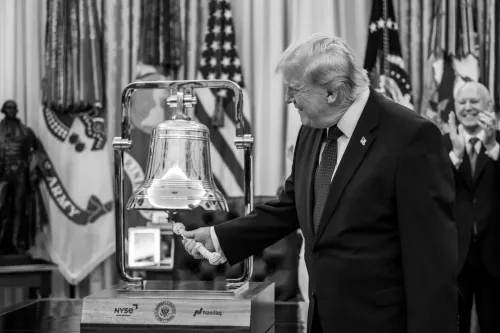
President Donald J. Trump rang the NYSE and Nasdaq opening bells from the Oval Office — a first — on July 7, 2026, to launch Trump Accounts, a new investment initiative the administration says is aimed at expanding capital-market participation among young Americans and households.
Key Takeaways
President Trump rang both the NYSE and Nasdaq opening bells from the Oval Office — described as a first in market history.
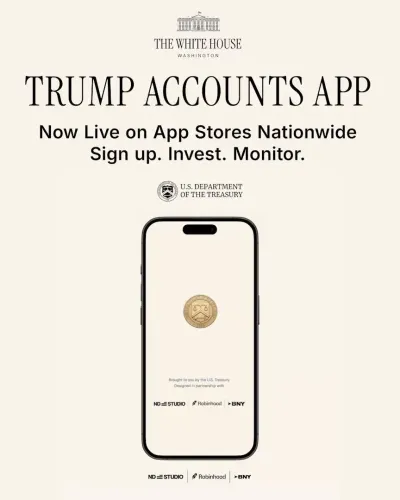
The ceremony marked the official launch of Trump Accounts , with the administration pointing to TrumpAccounts.gov as the programme portal.
The initiative is framed as 'investing in America's next generation,' targeting young Americans and households outside mainstream equity ownership.
Key details — including tax treatment , eligibility, and whether congressional authorisation or SEC rulemaking is required — have not yet been publicly confirmed.
The move continues a Republican policy tradition dating to the 2017 Tax Cuts and Jobs Act of broadening retail access to tax-advantaged investment accounts.
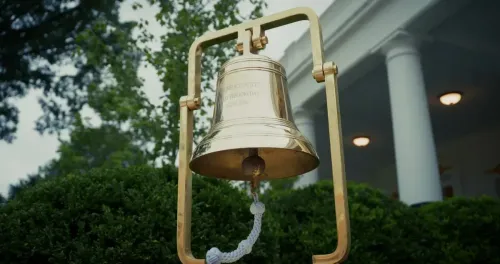
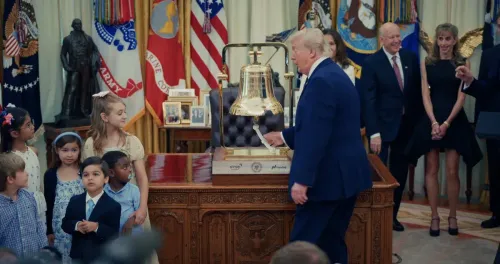
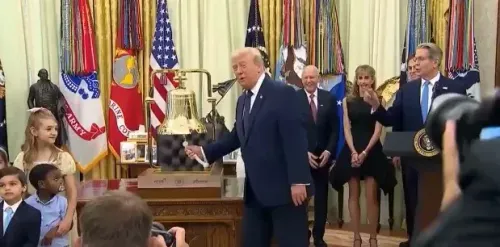
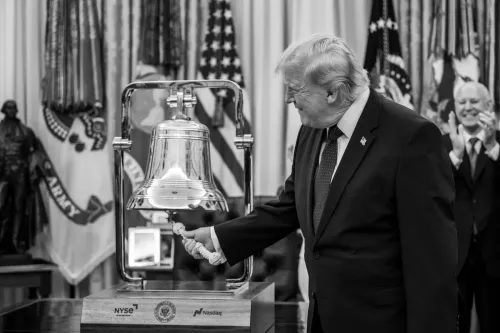
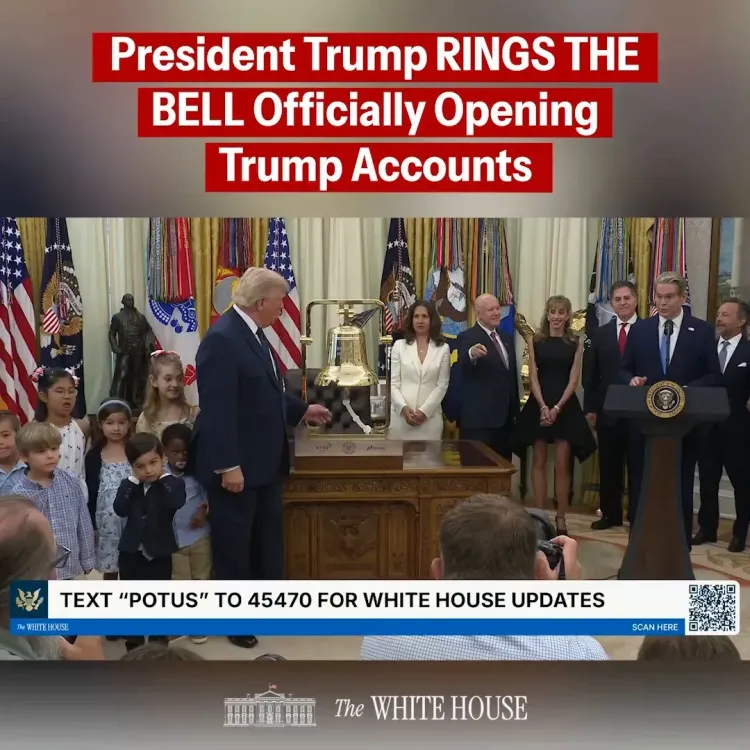
The White House announced on Monday, July 7, 2026, that President Donald J. Trump rang the opening bell of both the New York Stock Exchange (NYSE) and Nasdaq from the Oval Office — a first — to officially launch what the administration is calling Trump Accounts, a new investment initiative aimed at expanding household participation in capital markets.
Context
The White House post declared: 'For the first time from the Oval, President Donald J. Trump rings the NYSE and Nasdaq opening bell to officially launch TrumpAccounts.gov — Investing in America's next generation.' The simultaneous ringing of both exchange bells from the Oval Office is described as unprecedented, marking a deliberate staging choice to underscore the political weight the administration attaches to the initiative.
Traditionally, market-opening ceremonies are conducted on the trading floors in New York City, with guests — ranging from corporate executives to athletes — physically present. Conducting the ceremony remotely from the Oval Office elevates the gesture to a head-of-state act rather than a routine market-promotion event.
Policy Backdrop
The launch of Trump Accounts fits within a broader Republican policy tradition of expanding retail investor access to tax-advantaged savings vehicles. The 2017 Tax Cuts and Jobs Act under Trump's first term included provisions designed to widen participation in retirement and investment accounts, signalling continuity with that legislative agenda.
U.S. presidents have periodically used market-opening ceremonies to project economic optimism, but anchoring a new account programme to such a ceremony — and branding it under the president's own name — is a more direct fusion of executive identity with a financial product than has been typical. Key details, including account eligibility criteria, tax treatment, and whether the programme requires fresh congressional authorisation or SEC rulemaking, have not yet been publicly confirmed.
Stakeholders and Impact
The administration has framed Trump Accounts as an investment in 'America's next generation,' suggesting the primary intended beneficiaries are young Americans and households currently outside the equity-ownership mainstream. Expanding retail equity participation has bipartisan historical support, as broader share ownership is seen as a tool for wealth-building among middle- and lower-income families.
For Indian observers and NRI investors, the initiative is relevant as a signal of the direction of U.S. capital-market policy under the current administration — one that prioritises domestic retail investment and could influence the competitive landscape for global savings products.
What's Next
The administration has pointed to TrumpAccounts.gov as the official portal for the programme, where eligibility and enrolment details are expected to be published. Analysts and lawmakers will be watching closely for the programme's legislative underpinning — whether it rests on existing executive authority or requires a new act of Congress.
The rollout of programme rules, any required SEC rulemaking, and congressional reaction will determine the initiative's practical reach. If the accounts carry meaningful tax advantages, they could reshape household savings behaviour in the United States in ways that ripple through global equity flows.
Point of View
Trump is making household investment a personal political signature, not merely a policy. For the administration, a successful rollout could become a durable legacy item; for critics, the personalisation of a federal financial programme raises questions about governance norms and the blurring of state and brand. The real test will be in the legislative and regulatory details that follow the spectacle.
NationPress
5 Oct 2026
Frequently Asked Questions
What are Trump Accounts?
Trump Accounts is a new U.S. investment initiative launched by President Donald J. Trump on July 7, 2026, aimed at expanding capital-market participation among young Americans and households. Full details on eligibility and tax treatment are expected to be published at TrumpAccounts.gov.
Why did Trump ring the NYSE and Nasdaq bell from the Oval Office?
The White House stated it was 'for the first time from the Oval,' using the ceremony to officially launch Trump Accounts and signal the administration's commitment to household investment. Conducting the bell-ringing from the Oval Office rather than the exchange floors was a deliberate choice to attach presidential authority to the initiative.
How does Trump Accounts relate to earlier U.S. investment policy?
The initiative follows a Republican policy tradition of broadening retail access to tax-advantaged savings vehicles, including provisions in the 2017 Tax Cuts and Jobs Act. U.S. presidents have historically used market ceremonies to project economic optimism and encourage equity ownership.
Does Trump Accounts require approval from the U.S. Congress?
That has not yet been publicly confirmed. Analysts are watching for whether the programme rests on existing executive authority or requires new congressional legislation and SEC rulemaking before it can be fully implemented.
What does the Trump Accounts launch mean for Indian investors and NRIs?
While the programme targets American households, it signals the direction of U.S. capital-market policy under the current administration, which could influence global savings and equity-flow dynamics relevant to NRI investors and those tracking U.S. markets from India.