Trump Rings Opening Bell From White House, Launches Trump Accounts
Synopsis
President Trump rang the market opening bell from the Oval Office on July 10, 2026 — a claimed presidential first — while launching Trump Accounts, a new savings initiative the administration says will deliver economic prosperity to the next generation of Americans.
Key Takeaways
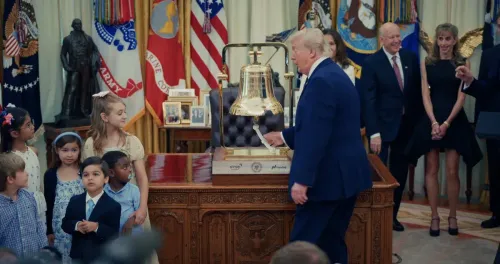
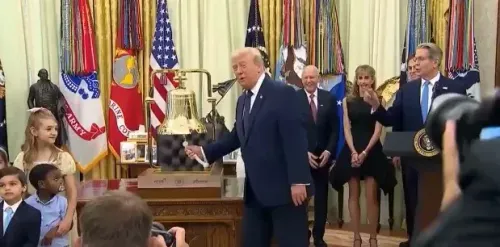
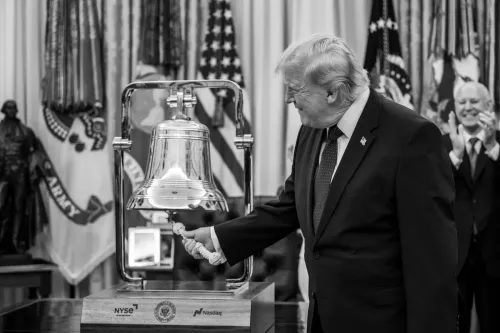
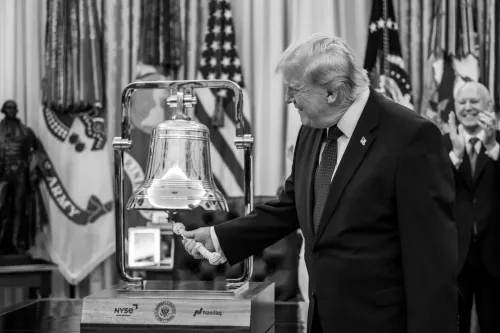
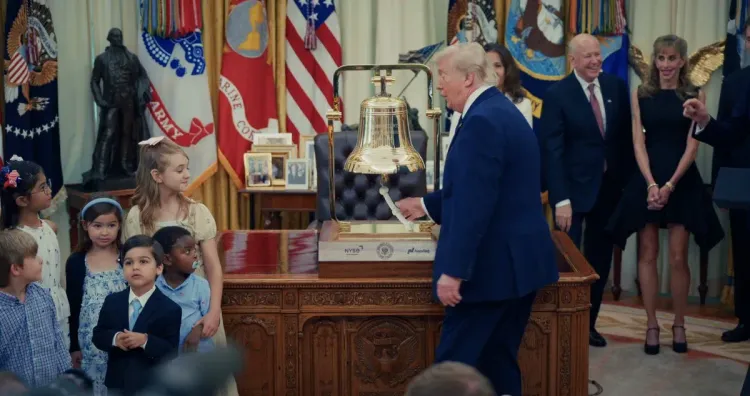
President Trump rang the financial markets opening bell from the Oval Office on July 10, 2026 , which the White House described as a presidential first.
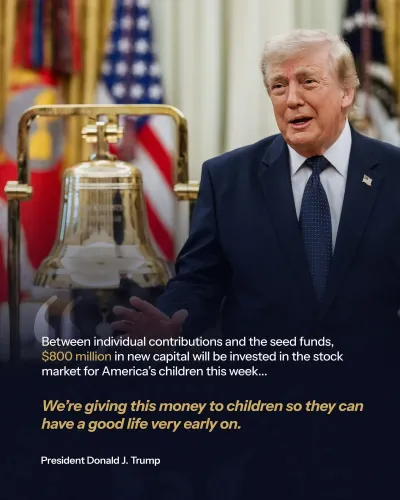
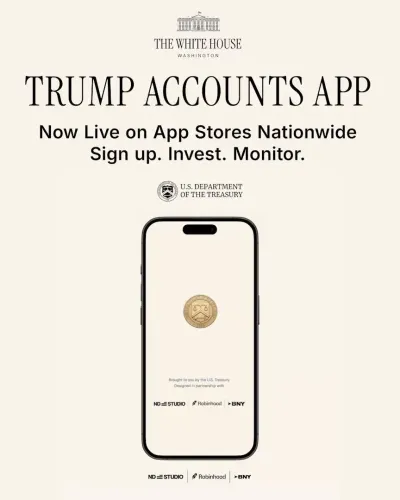
The event marked the official launch of Trump Accounts , a new savings initiative targeting the next generation of Americans.
The administration framed the programme as a tool for 'delivering economic prosperity' to young Americans over the long term.
The White House released a video of the event, giving the announcement broad public visibility.
Regulatory implementation details from the Treasury Department and the SEC are expected to follow as the programme moves toward rollout.
The initiative continues a broader U.S. presidential tradition of using dedicated savings vehicles to promote intergenerational wealth-building.
The White House announced on Friday, July 10, 2026, that President Donald Trump rang the opening bell of the financial markets from the Oval Office, marking what the administration described as a presidential first, and simultaneously launched a new savings initiative called Trump Accounts aimed at building long-term economic prosperity for the next generation of Americans.
Context
The White House posted on X that 'history was made this week in the Oval,' framing the bell-ringing event as a landmark moment in the intersection of presidential power and financial markets. The administration characterised the launch of Trump Accounts as a vehicle for 'delivering economic prosperity to the next generation of Americans.' No prior president had rung a market opening bell directly from the White House, according to the administration's own framing of the event.
The event was accompanied by a video posted by the White House, underscoring the administration's intent to give the announcement wide public visibility. The dual symbolism — the opening bell and the savings account rollout — was clearly designed to connect market confidence with household-level financial policy.
Policy Backdrop
President Trump's economic agenda has consistently centred on market-oriented growth, investment incentives, and the reduction of tax burdens. During his first term, he signed the Tax Cuts and Jobs Act of 2017, which lowered individual and corporate tax rates and was positioned as a catalyst for investment and long-term economic expansion.
The launch of Trump Accounts fits within a broader pattern of U.S. administrations using dedicated savings vehicles to promote intergenerational wealth. Prior administrations have expanded access to retirement and education savings instruments through legislation and executive action, framing such products as tools for financial inclusion and long-term security. The Trump Accounts initiative appears to continue this lineage, with an explicit focus on younger Americans.
Stakeholders and Impact
The primary stated beneficiaries of Trump Accounts are young Americans and, by extension, their families. The administration's messaging positions the accounts as a generational economic tool, suggesting the programme is designed with a long time horizon in mind — likely targeting savings, investment, or both.
Financial markets, regulatory bodies such as the Treasury Department and the Securities and Exchange Commission, and the broader savings and investment industry are all potential stakeholders as implementation details emerge. The scale of public uptake will depend heavily on the programme's structure, eligibility criteria, tax treatment, and ease of access — details the administration has not yet fully elaborated in public communications.
What's Next
Regulatory guidance from the Treasury Department and the SEC will be closely watched as the administration moves from announcement to implementation. Key questions include the contribution limits, tax advantages, eligible investments, and whether the accounts will require congressional authorisation or can be established through executive action alone.
Initial participation data, once available, will serve as the first real measure of the programme's reach and appeal. For Indian-Americans and global investors monitoring U.S. economic policy, the rollout of Trump Accounts adds another dimension to the administration's broader effort to position the United States as a destination for long-term capital formation and household wealth-building.
Point of View
The administration is making a long-term political bet that the programme becomes associated with household prosperity in the public mind. The focus on 'the next generation' signals an effort to build a durable legacy plank beyond the current term. Whether the substance of the programme matches the spectacle of its launch will depend on the implementation architecture that Treasury and the SEC now have to deliver.
NationPress
11 Jul 2026
Frequently Asked Questions
What are Trump Accounts?
Trump Accounts are a new savings initiative launched by the Trump administration on July 10, 2026 , aimed at building long-term economic prosperity for young Americans. Full details on contribution limits, tax treatment, and eligibility are pending regulatory guidance.
What happened at the White House on July 10, 2026?
President Trump rang the financial markets opening bell from the Oval Office , which the White House described as a presidential first, coinciding with the official launch of Trump Accounts .
Who benefits from Trump Accounts?
The administration has identified young Americans and the next generation as the primary beneficiaries, positioning the accounts as a vehicle for long-term wealth-building.
Is Trump Accounts a government savings scheme like a 401(k) or Roth IRA?
The exact structure of Trump Accounts — including whether they function like existing retirement or education savings vehicles — has not yet been fully detailed. Regulatory guidance from the Treasury Department and the SEC is expected to clarify the programme's mechanics.
How does Trump's economic policy in 2026 compare to his first term?
President Trump's first term was defined by the Tax Cuts and Jobs Act of 2017 , which reduced individual and corporate tax rates. The Trump Accounts launch in 2026 extends this market-oriented agenda by targeting household savings and intergenerational investment.