CM Fadnavis Takes Darshan of Sant Tukaram's Padukas in Pune
Synopsis
Maharashtra Chief Minister Devendra Fadnavis visited Nivdunga Vithoba Mandir in Pune on 10 July 2026, took darshan of Sant Tukaram Maharaj's Padukas, performed Palkhi puja, and prayed for the peace and well-being of all Maharashtra residents.
Key Takeaways
CM Devendra Fadnavis visited Nivdunga Vithoba Mandir, Pune on 10 July 2026 at 9.50 pm .
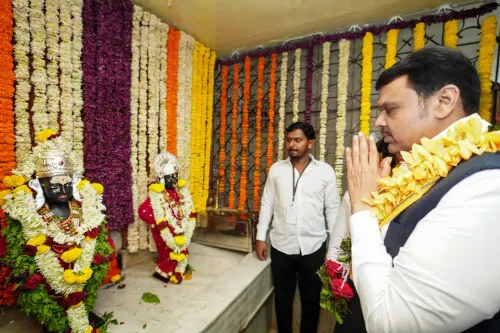
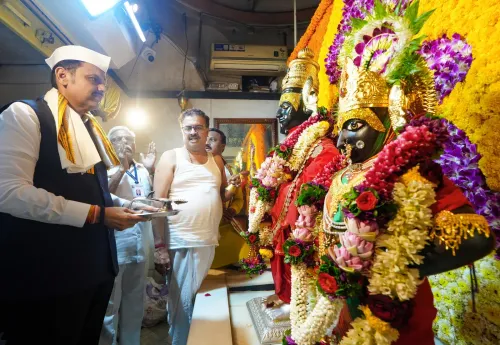
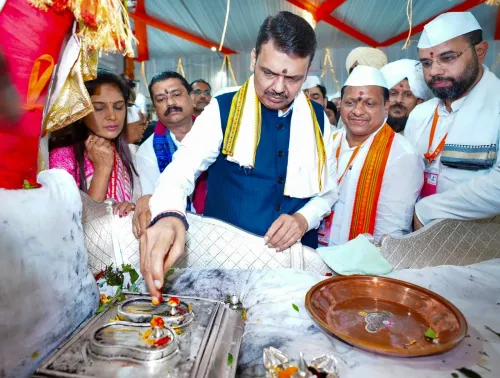
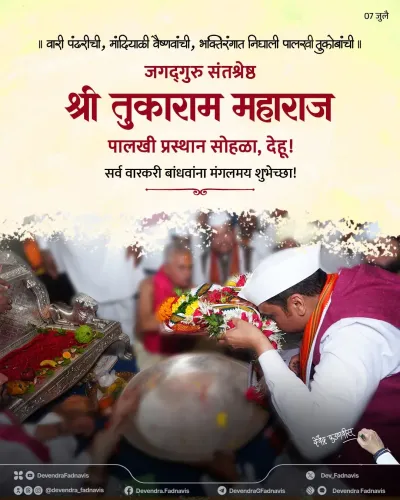
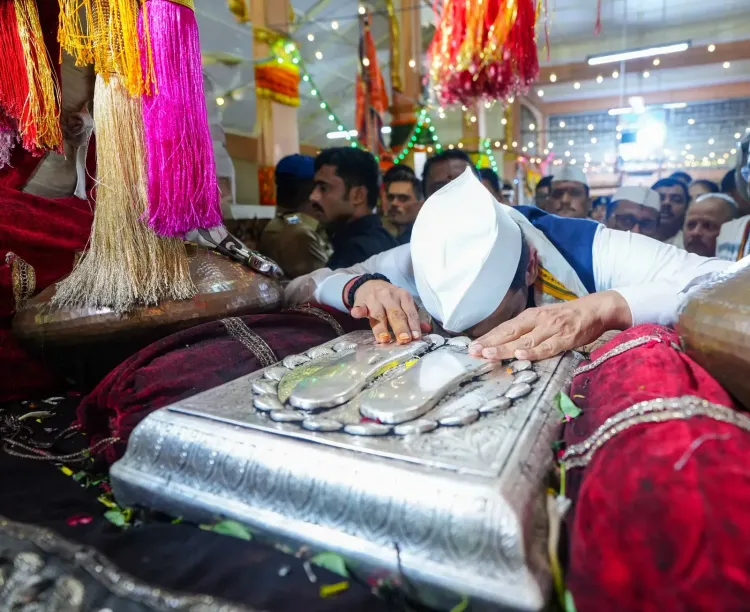
He took darshan of the sacred Padukas of Jagadguru Sant Shri Tukaram Maharaj and performed puja of the Palkhi .
Fadnavis described the experience as one of 'profound spiritual joy and inner peace' and prayed for the happiness and well-being of all Maharashtra residents.
The post opened with a verse from Tukaram Maharaj's abhanga : 'Blessed is this day, for I have had the darshan of a saint.' The message was shared in three languages — Marathi, English, and Hindi — reflecting broad outreach across communities.
The visit aligns with the period of the annual Warkari Palkhi processions ahead of Ashadhi Ekadashi.
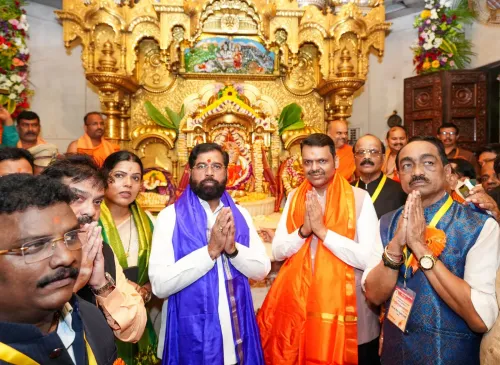
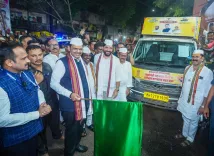
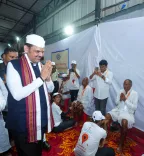
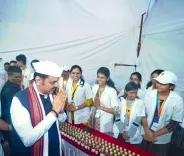
Maharashtra Chief Minister Devendra Fadnavis visited the Nivdunga Vithoba Mandir in Pune on 10 July 2026 to take darshan of the sacred Padukas of Jagadguru Sant Shri Tukaram Maharaj, performed puja of the saint's Palkhi, and prayed for the happiness and well-being of all people of Maharashtra.
What Fadnavis Did and Said
Sharing the visit on social media at 9.50 pm, Fadnavis opened with a celebrated abhanga (devotional verse) by Tukaram Maharaj: 'धन्य आजि दिन । झालें संताचें दर्शन' — 'Blessed is this day, for I have had the darshan of a saint.' He described bowing before the Maharaj and performing puja of the Palkhi, writing that the experience 'filled my heart with profound spiritual joy and inner peace.' He also offered a prayer: 'May all the people of the state be blessed with happiness and peace.'
The post was published in three languages — Marathi, English, and Hindi — underscoring the outreach to diverse audiences across Maharashtra and beyond.
Context: Who Was Sant Tukaram Maharaj?
Sant Tukaram Maharaj was a 17th-century Bhakti saint-poet from Dehu, near Pune, revered as one of the most important figures in the Warkari sampradaya — a devotional tradition centred on the deity Vithoba of Pandharpur. His abhangas (devotional compositions) remain among the most widely sung spiritual verses in Marathi literature and culture.
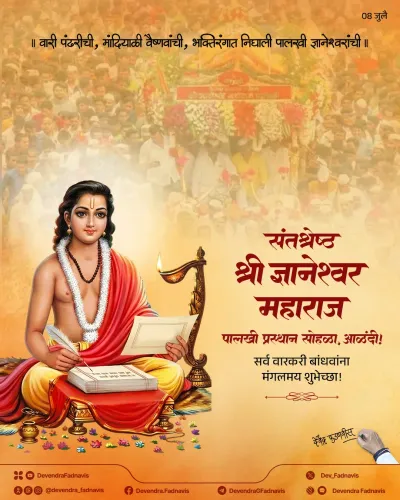
The Nivdunga Vithoba Mandir near Pune is associated with Tukaram's legacy and serves as a site of Palkhi rituals. The Palkhi procession — a palanquin carrying the saint's Padukas (sacred footwear) — is central to the annual Warkari pilgrimage to Pandharpur, drawing millions of devotees each year.
Policy Backdrop: State and the Warkari Tradition
Maharashtra's political leadership has historically maintained close engagement with the Warkari sampradaya, participating in Palkhi processions, temple visits, and Bhakti festivals as a mark of cultural continuity. Such visits often coincide with the period leading up to Ashadhi Ekadashi, one of the most significant dates in the Warkari calendar, when the Palkhi processions from Dehu and Alandi converge on Pandharpur.
The state government has previously extended support for pilgrimage infrastructure — including road improvements, medical facilities, and crowd management — along the Palkhi route, reflecting the tradition's scale and social reach across rural Maharashtra.
Stakeholders and Impact
The visit carries significance for Warkari devotees and the broader Bhakti community across Maharashtra, for whom Sant Tukaram's Padukas represent a living spiritual inheritance. For Maharashtra residents more widely, a chief minister's prayer for collective well-being at a revered site carries both cultural and symbolic weight.
The multilingual post — Marathi first, followed by English and Hindi — signals an intent to communicate the visit to audiences ranging from local Warkari communities to a national readership.
What's Next
Eyes will be on the upcoming Ashadhi Ekadashi Palkhi processions and whether the state announces fresh measures on Warkari pilgrimage infrastructure or cultural tourism linked to the Bhakti saint tradition. Fadnavis's visible engagement with the Warkari heritage suggests continued state-level attention to the sampradaya's role in Maharashtra's public and cultural life.
Point of View
English, Hindi — is not incidental; it maps precisely onto the political geography of Maharashtra's voter base, from Warkari-majority rural belts to urban and Hindi-speaking communities. The choice of a Tukaram Maharaj site, rather than a more generic temple, signals deliberate alignment with the Warkari sampradaya, whose millions of devotees span caste and class lines and have historically been a pivotal constituency in Maharashtra elections. Such visits serve a dual function: they reinforce the BJP's claim to cultural rootedness in Maharashtra's Bhakti tradition, and they provide a softer, devotional register distinct from the government's administrative messaging. With Ashadhi Ekadashi approaching, the timing sharpens that signal further.
NationPress
11 Jul 2026
Frequently Asked Questions
Where did CM Fadnavis visit on 10 July 2026?
CM Devendra Fadnavis visited the Nivdunga Vithoba Mandir near Pune, where he took darshan of the Padukas of Jagadguru Sant Shri Tukaram Maharaj and performed puja of the Palkhi.
Who was Sant Tukaram Maharaj?
Sant Tukaram Maharaj was a 17th-century Bhakti saint-poet from Dehu, near Pune, central to the Warkari sampradaya and renowned for his devotional abhangas dedicated to Vithoba of Pandharpur.
What is the Palkhi associated with Sant Tukaram?
The Palkhi is a traditional palanquin that carries Sant Tukaram Maharaj's Padukas in an annual procession from Dehu to Pandharpur, forming the heart of the Warkari pilgrimage observed around Ashadhi Ekadashi.
What did Fadnavis pray for during the visit?
Fadnavis prayed for the happiness, peace, and well-being of all the people of Maharashtra during his visit to Nivdunga Vithoba Mandir.
What is the significance of Ashadhi Ekadashi for Maharashtra?
Ashadhi Ekadashi is one of the most important festivals in the Warkari calendar, marking the culmination of the annual Palkhi processions from Dehu and Alandi to Pandharpur, drawing millions of devotees across Maharashtra.