CM Fadnavis Takes Darshan at Pune's Nivdunga Vithoba Mandir
Synopsis
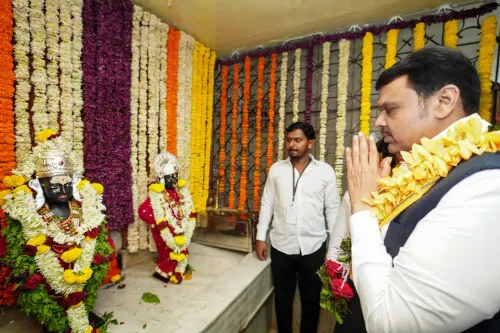
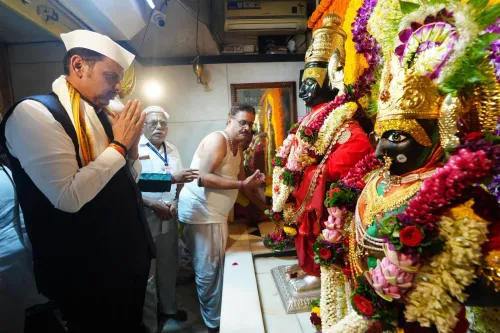
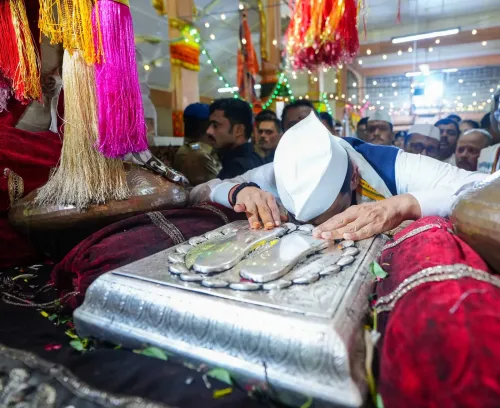
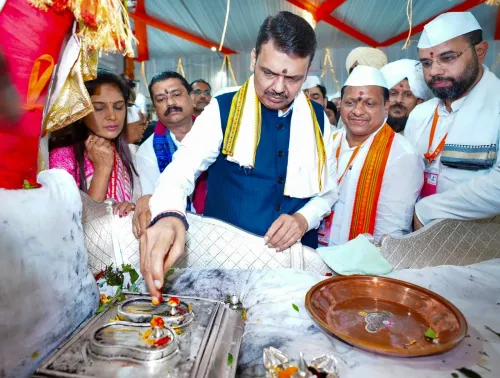
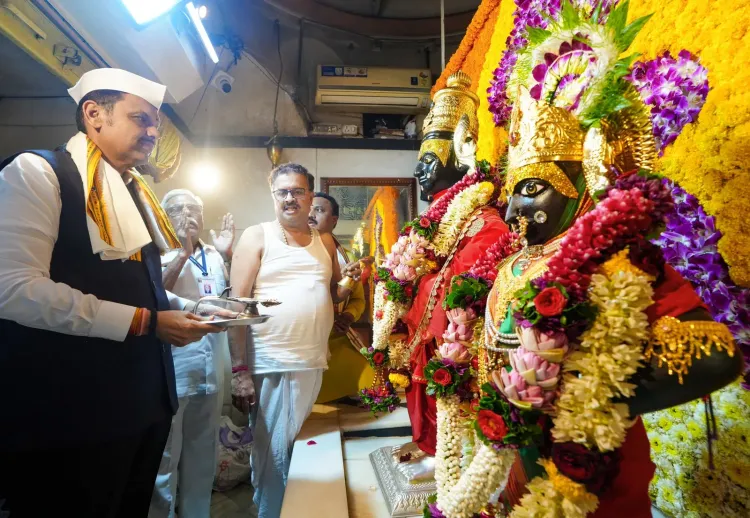
Maharashtra Chief Minister Devendra Fadnavis visited the Nivdunga Vithoba Mandir in Pune on 10 July 2026, taking darshan of Vithoba and Rakhumai and praying for the welfare of all Maharashtra residents during the Ashadhi Wari pilgrimage season.
Key Takeaways
Devendra Fadnavis , Chief Minister of Maharashtra, visited Nivdunga Vithoba Mandir in Pune on 10 July 2026 at 9:50 pm .
He sought blessings of Vithoba and Rakhumai , the central deities of Maharashtra's Varkari tradition.
Fadnavis prayed for the 'happiness, peace, and prosperity of all people of the state.' The visit coincided with the Ashadhi Wari season, which culminates on Ashadhi Ekadashi at Pandharpur .
The Maharashtra state government has long facilitated the Wari through security, health, and transport arrangements.
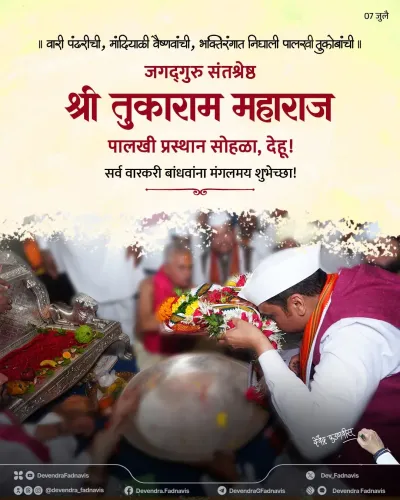
The post was shared in three languages — Marathi, Hindi, and English — reflecting the broad public outreach intended by the visit.
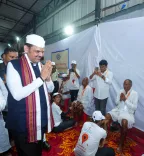
Maharashtra Chief Minister Devendra Fadnavis visited the Nivdunga Vithoba Mandir in Pune on 10 July 2026, taking darshan and seeking blessings of Vithoba and Rakhumai — the presiding deities of the Varkari tradition. The visit, made at 9:50 pm, coincided with the Ashadhi Wari pilgrimage season, one of Maharashtra's most significant devotional events.
Context
Posting in Marathi, Hindi, and English, Fadnavis wrote: 'पुंडलिक वरदा हरी विठ्ठल!' — a traditional Varkari salutation meaning 'Vitthal, who grants boons to Pundalik!' — before describing his visit. He stated he 'prayed for the happiness and prosperity of all people of the state,' a phrase that underscores the public dimension of what is also a personal act of devotion.
The Nivdunga Vithoba Mandir is a historic Pune temple dedicated to Vithoba, a regional form of Vishnu venerated across Maharashtra. The temple draws heightened footfall during the Ashadhi Wari season, when pilgrims converge on associated Vaishnava shrines ahead of the main culmination at Pandharpur.
Policy Backdrop
The Ashadhi Wari is an annual Vaishnava pilgrimage that culminates on Ashadhi Ekadashi, drawing millions of pilgrims across Maharashtra and beyond. The state government has, since at least the 1990s, deployed security, health, and transport infrastructure to facilitate the pilgrimage — making it as much a logistical exercise for the administration as a cultural one.
Fadnavis, as Chief Minister, oversees these state-level arrangements. His temple visit during this period signals continuity with that tradition of official engagement with the Wari, even when the act itself is devotional in character.
Stakeholders and Impact
The Varkari community — a Bhakti movement tradition with deep roots in Maharashtra — numbers in the millions and holds considerable social and cultural influence across the state. Public participation by elected leaders in Wari-adjacent rituals is widely noted within this community.
Pune, as a major urban centre and a key stopover on pilgrimage routes, sees its own concentration of devotional activity during this period. Fadnavis's visit to a Pune temple, rather than the main Pandharpur shrine, reflects the distributed nature of Wari observances across the state.
What's Next
Attention will now turn to the state government's official arrangements for Ashadhi Ekadashi 2026, including security deployment, crowd management, and health facilities along pilgrimage routes. Any formal policy announcements or dedicated allocations tied to the Wari season are expected in the days ahead. Fadnavis's public engagement with the pilgrimage season is likely to continue as the festival approaches its culmination at Pandharpur.
Point of View
Connecting the office of Chief Minister to one of Maharashtra's most mass-participatory devotional traditions. By posting in Marathi, Hindi, and English simultaneously, he signals a deliberate effort to address the Varkari community, the Hindi-speaking population, and a broader national audience in a single gesture. This fits a wider pattern among Maharashtra's elected leaders of treating the Wari not merely as a religious event but as a moment of political and social consolidation. The prayer 'for the happiness and prosperity of all' — framed in the language of public welfare rather than personal piety — reinforces the official, rather than purely personal, register of the visit.
NationPress
11 Jul 2026
Frequently Asked Questions
Where is Nivdunga Vithoba Mandir located?
Nivdunga Vithoba Mandir is a historic temple located in Pune, Maharashtra, dedicated to Vithoba, a regional form of Vishnu central to the Varkari tradition.
What is Ashadhi Wari?
Ashadhi Wari is an annual Vaishnava pilgrimage in Maharashtra that culminates on Ashadhi Ekadashi at the Pandharpur temple, drawing millions of devotees from across the state and beyond.
Why did CM Fadnavis visit the Vithoba temple in Pune?
Fadnavis visited Nivdunga Vithoba Mandir on 10 July 2026 to take darshan of Vithoba and Rakhumai and to pray for the welfare of all Maharashtra residents during the Ashadhi Wari pilgrimage season.
Who are Vithoba and Rakhumai?
Vithoba and Rakhumai are the presiding deities of the Varkari devotional tradition in Maharashtra. Vithoba is a regional form of Vishnu, and Rakhumai is his consort, both enshrined at the principal temple in Pandharpur.
What arrangements does the Maharashtra government make for Ashadhi Wari?
The Maharashtra state government has facilitated the Ashadhi Wari since at least the 1990s through security deployment, health services, and transport infrastructure along pilgrimage routes leading to Pandharpur.