CM Himanta Spotlights Assam Handloom Revival, Cites Gandhi
Synopsis
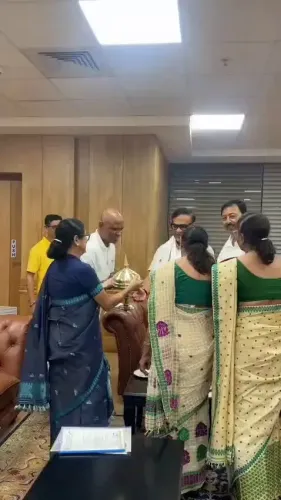
Assam CM Himanta Biswa Sarma invoked Mahatma Gandhi's tribute to Assamese women weavers on 3 July 2026, sharing a video of beneficiary weaver Mausumi to illustrate how state government support is reviving the handloom sector and creating new opportunities for women artisans.
Key Takeaways
Assam CM Himanta Biswa Sarma posted on 3 July 2026 highlighting the state's handloom industry revival.
The post quoted Mahatma Gandhi's remark that Assamese women weavers 'weave dreams on their looms.' A video testimonial from beneficiary weaver Mausumi illustrates the real-world impact of government support on individual artisans.
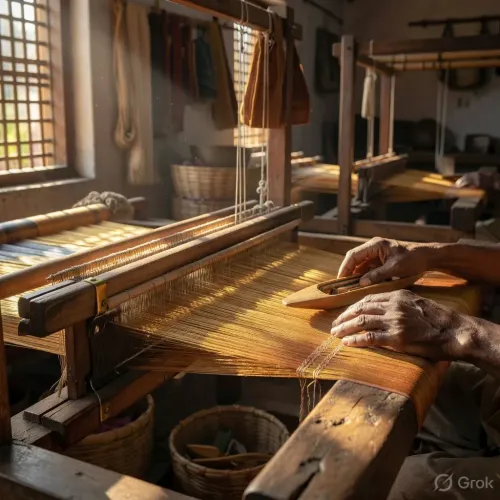
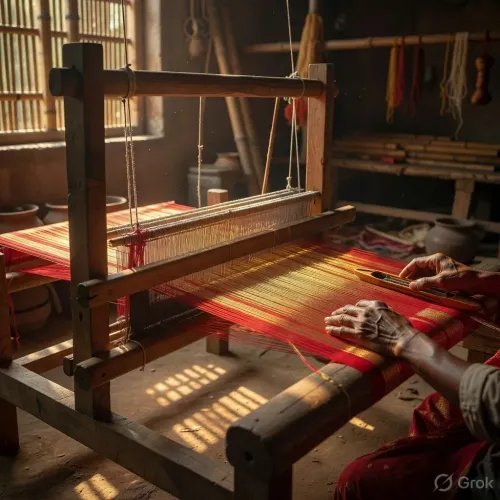
Assam's handloom heritage is anchored in Muga, Eri and Pat silk traditions, long treated as both cultural legacy and rural livelihood.
The National Handloom Development Programme (since 2015 ) provides a national policy framework that complements state-level initiatives.
Observers will track future state budget allocations for handloom clusters and potential new marketing or export tie-ups.
Assam Chief Minister Himanta Biswa Sarma on Friday, 3 July 2026, invoked Mahatma Gandhi's tribute to Assamese women weavers to highlight the state government's ongoing push to strengthen the handloom sector, sharing a video testimonial from a beneficiary weaver named Mausumi who describes how government support has elevated her craft and opened new opportunities.
Context
The Chief Minister's post, written in Hindi, quotes Gandhi's celebrated remark that Assamese women weavers 'weave dreams on their looms' — a phrase Gandhi is said to have used to praise the artistry of the region's women during his visits to Assam. Sarma framed the current administration's handloom initiatives as a continuation of that legacy, stating: 'Aaj Assam sarkar isi virasat ko aage badhate hue Handloom udyog ko nayi shakti de rahi hai' ('Today the Assam government is carrying this heritage forward by giving new strength to the handloom industry').
The post centres on Mausumi, a woman artisan whose first-person video account illustrates how state assistance has translated into tangible recognition and livelihood gains for individual weavers.
Policy Backdrop
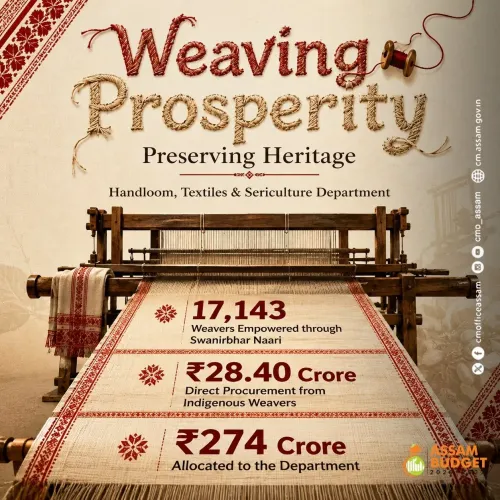
Assam has long treated its handloom sector — anchored in Muga, Eri and Pat silk traditions — as both cultural heritage and a critical source of rural income, particularly for women. State administrations across political cycles have periodically offered loom subsidies, yarn support and cluster development, and the current BJP-led government has continued this approach while adding a sharper focus on individual beneficiary stories to build public awareness.
At the national level, the National Handloom Development Programme, operational since 2015, provides design, marketing and infrastructure backing to weavers across India, creating a policy framework within which state-level initiatives can be layered.
Stakeholders and Impact
The primary beneficiaries of Assam's handloom push are women artisans in rural and semi-urban clusters who depend on weaving as their principal or supplementary income. By spotlighting weavers like Mausumi, the government signals that its schemes are reaching individual households rather than remaining at the institutional level.
The broader handloom ecosystem — yarn suppliers, design institutions, cooperative societies and export intermediaries — also stands to benefit if state support translates into sustained market linkages and cluster upgrades. Consumer awareness of Assam's distinct silk traditions is an additional downstream gain.
What's Next
Observers will watch Assam's state budget allocations for handloom clusters in the coming fiscal cycle, as well as any new marketing partnerships or export tie-ups that the government may announce at regional textile expos. The use of video testimonials from beneficiaries suggests the administration intends to keep the handloom narrative prominent in public communication, likely building toward larger scheme announcements or cluster launches.
Whether the momentum translates into measurable income gains for Assam's weaver communities — and how those gains are tracked and reported — will be the real measure of the revival the Chief Minister has invoked.
Point of View
A technique the BJP has deployed effectively in other states. By centering a named woman beneficiary rather than aggregate statistics, the administration shifts the frame from policy to personal story, a format that travels well on social media and softens criticism about scheme implementation gaps. The move also reinforces Sarma's positioning as a development-first administrator in the Northeast, where handloom is both economic lifeline and cultural identity. The broader pattern points to a government that is increasingly using beneficiary testimonials as a primary mode of scheme validation ahead of the next electoral cycle.
NationPress
2 Oct 2026
Frequently Asked Questions
What did Mahatma Gandhi say about Assamese women weavers?
Gandhi praised Assamese women weavers by saying they 'weave dreams on their looms,' a tribute to the artistry and skill of the region's handloom community that CM Himanta Biswa Sarma cited in his 3 July 2026 post.
What is the Assam government doing for handloom weavers?
The Assam government under CM Himanta Biswa Sarma is providing support to handloom weavers through state schemes covering loom assistance, yarn subsidies and cluster development, and is actively spotlighting individual beneficiaries to demonstrate the impact of these programmes.
What is the National Handloom Development Programme?
The National Handloom Development Programme is a Government of India initiative operational since 2015 that provides design, marketing and infrastructure support to weavers across the country, forming a national framework within which state schemes like Assam's operate.
What silk traditions is Assam known for?
Assam is renowned for three distinct silk traditions — Muga, Eri and Pat silk — which form the backbone of the state's handloom heritage and are central to its rural artisan economy.
Who is Mausumi in CM Himanta's handloom post?
Mausumi is a woman weaver from Assam whose video testimonial was shared by CM Himanta Biswa Sarma on 3 July 2026 to illustrate how government support has given her craft new recognition and livelihood opportunities.