Bihar CM Meets Padma Bhushan Environmentalist Dr. Anil Prakash Joshi
Synopsis
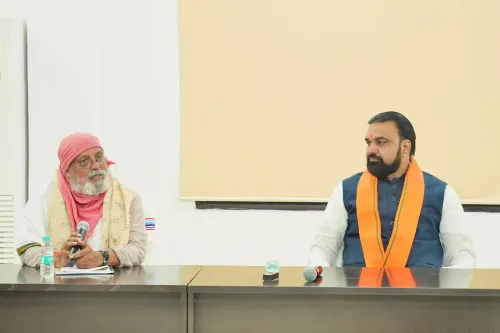
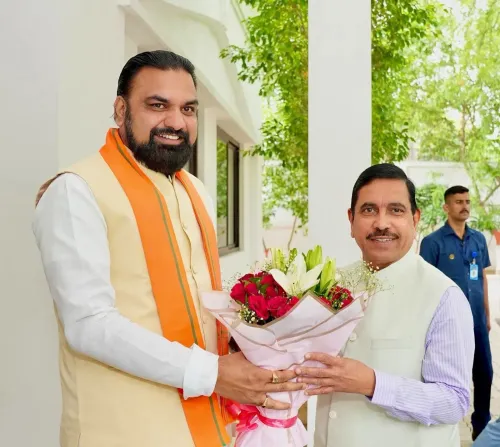
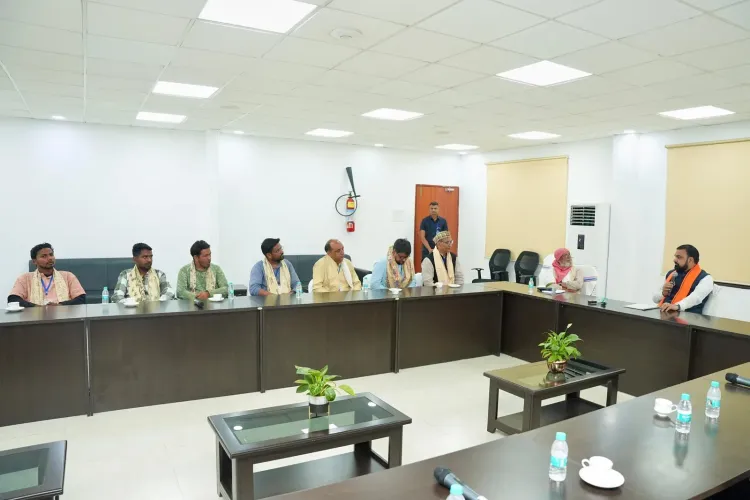
Bihar Chief Minister Samrat Choudhary met Padma Bhushan environmentalist Dr. Anil Prakash Joshi at 'Nek Samvad' in Patna on October 17, 2026. Dr. Joshi leads an environmental initiative originating from Janakpur Dham, Nepal, linking Himalayan ecology to Bihar's Mithila region across the India-Nepal border.
Key Takeaways
Bihar CM Samrat Choudhary hosted Padma Bhushan awardee Dr.
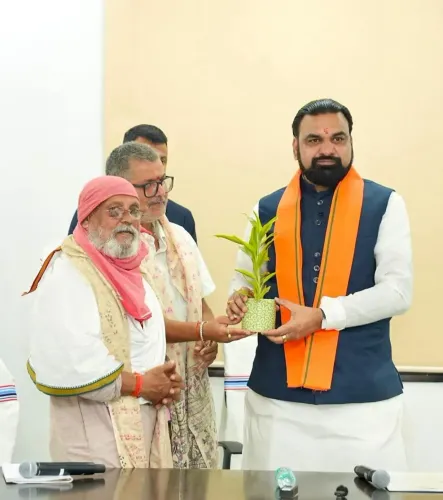
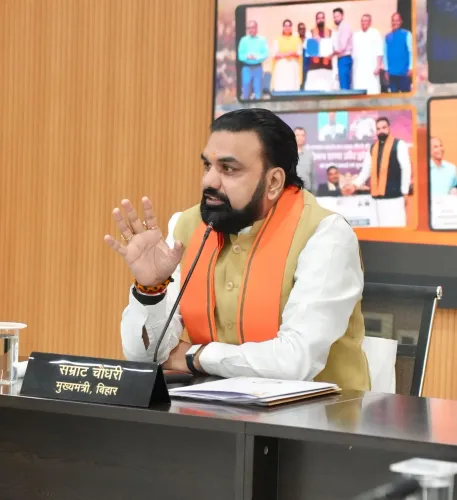
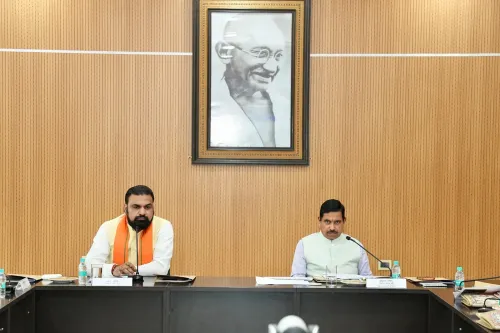
Anil Prakash Joshi at 'Nek Samvad' ( noble dialogue ) at Lok Sevak Avas, Patna on October 17, 2026 .
Joshi's environmental initiative begins at Janakpur Dham in Nepal's Madhesh Province, revered as the birthplace of Sita and a cultural anchor of the Mithila belt.
Joshi is the founder of HESCO and a decades-long champion of river rejuvenation and community-led conservation in the Himalayan region.
Bihar's shared river systems — including the Kosi, Gandak, and Bagmati — make upstream Himalayan conservation directly relevant to the state's flood management and ecology.
The meeting signals potential state-level backing for the cross-border environmental corridor linking Janakpur to Bihar's Mithila plains.
A dialogue rooted in rivers, culture, and cross-border ecology landed at Lok Sevak Avas in Patna on Saturday, October 17, 2026 — when Bihar Chief Minister Samrat Choudhary received Padma Bhushan awardee environmentalist Dr. Anil Prakash Joshi at the 'Nek Samvad' (नेक संवाद, meaning 'noble dialogue') programme. The initiative Dr. Joshi is leading originates from Janakpur Dham, Nepal — the city revered as the birthplace of Sita — tracing a corridor that binds Himalayan ecology to the cultural heartland of Mithila.
Janakpur Dham as the starting point — why it matters
Janakpur Dham, located in Nepal's Madhesh Province, is not merely a pilgrimage site. It sits astride shared river basins and a cultural geography that flows seamlessly into Bihar's Mithila region. By anchoring an environmental initiative at Janakpur, Dr. Joshi signals that conservation in this belt cannot be mapped by national borders — the rivers, the floodplains, and the communities that depend on them do not stop at the India-Nepal frontier.
Dr. Joshi, founder of HESCO (Himalayan Environmental Studies and Conservation Organisation), has spent decades championing river rejuvenation, sustainable agriculture, and community-led ecological restoration across Himalayan states. His Padma Bhushan — India's third-highest civilian honour — reflects the national recognition his grassroots model has earned.
Bihar's recurring stake in cross-border environmental dialogue
Bihar has periodically hosted or endorsed environmental conversations that link local ecology to the Indo-Nepal border belt. The state's vulnerability to Himalayan river systems — particularly the Kosi, Gandak, and Bagmati — makes upstream conservation in Nepal directly relevant to the lives of millions of Bihari farmers and riverine communities. Any initiative tracing the Janakpur corridor towards Bihar carries immediate policy resonance for flood management, groundwater recharge, and biodiversity in the Mithila plains.
The 'Nek Samvad' format — a structured dialogue at the Chief Minister's official residence — suggests the meeting was convened with institutional intent, not merely as a courtesy call.
What the Bihar government signals by hosting this meeting
When a sitting Chief Minister publicly hosts a non-governmental environmentalist leading a cross-border initiative, it typically serves two purposes: lending state-level legitimacy to a civil-society effort, and signalling openness to whatever policy asks or recommendations emerge from the exercise. For Dr. Joshi's initiative, that could translate into Bihar's participation in the route, official support for awareness programmes, or formal endorsement of conservation recommendations tied to the Mithila ecological corridor.
The broader pattern across recent Bihar administrations has been to use cultural diplomacy — the shared Maithili language and Mithila heritage straddling both sides of the border — as a soft lever for environmental messaging, making the pairing of Janakpur Dham with a Patna dialogue a strategically coherent choice.
The rivers remember no borders — whether the Bihar government now backs that sentiment with a concrete programme is the question Dr. Joshi's initiative has placed squarely on the Chief Minister's desk.
Point of View
Given shared rivers, shared culture, and shared flood risk. By lending the Chief Minister's platform to this initiative, the Bihar government stakes a soft-power claim on the narrative of responsible riverine stewardship. The real test will be whether the dialogue produces a concrete programme or remains a well-photographed meeting.
NationPress
17 Oct 2026
Frequently Asked Questions
Who is Dr. Anil Prakash Joshi?
Dr. Anil Prakash Joshi is a Padma Bhushan awardee environmentalist and the founder of HESCO (Himalayan Environmental Studies and Conservation Organisation), known for pioneering community-led river rejuvenation and sustainable agriculture work across Himalayan states in India.
What is Janakpur Dham and why is it significant for Bihar?
Janakpur Dham is a city in Nepal's Madhesh Province revered as the birthplace of Sita. It shares deep cultural and ecological ties with Bihar's Mithila region across the India-Nepal border, making it a natural starting point for any initiative addressing the shared environment and heritage of this corridor.
What is 'Nek Samvad' in Bihar?
'Nek Samvad' (meaning 'noble dialogue') is a structured dialogue programme hosted at Lok Sevak Avas, the Bihar Chief Minister's official residence in Patna, where the CM engages with notable civil society figures, experts, and leaders.
Why does upstream conservation in Nepal matter for Bihar?
Bihar's major river systems — including the Kosi, Gandak, and Bagmati — originate in the Himalayan belt and flow through Nepal before entering the state. Conservation and ecological health upstream directly affects Bihar's flood risk, groundwater levels, and agricultural stability.
What is the Mithila cultural corridor?
The Mithila cultural corridor refers to the shared linguistic, cultural, and ecological zone straddling the India-Nepal border, encompassing Bihar's Mithila plains and Nepal's Madhesh Province. It has been a recurring theme in cross-border environmental and cultural diplomacy between the two countries.