China's tech minister calls for AI cooperation at G20 ahead of Xi-Trump talks
Synopsis
China’s science and technology minister publicly called for global AI cooperation at the G20 — even as Washington weighs new restrictions on Chinese data centre equipment and open-weight AI models — just weeks before a planned Xi-Trump summit.
Key Takeaways
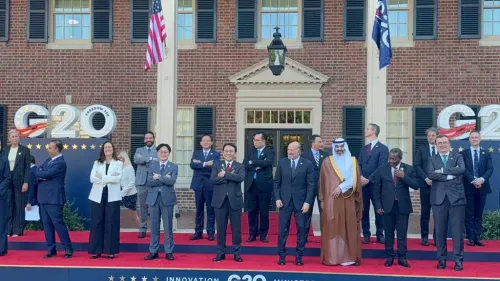
Yin Hejun , China’s Minister of Science and Technology, called for international AI cooperation at the G20 Innovation Ministerial Meeting held in the United States on Monday–Tuesday, September 1–2, 2026 .
Yin described AI development as entering an “unprecedentedly active” period and said “there is an urgent need for countries to work together to address” its opportunities and challenges.
Washington has already imposed restrictions on foreign-made advanced drones, robots, and connected power inverters; Beijing has responded with tighter export controls on dual-use drone technology.
Citi Research analysts led by Yu Xiangrong assessed last month that the latest tech tensions were “unlikely to materially disrupt China’s AI exports,” citing already-suppressed bilateral trade volumes.
Washington is mulling further restrictions on Chinese data centre equipment and open-weight AI models, moves that could deepen the technology divide.
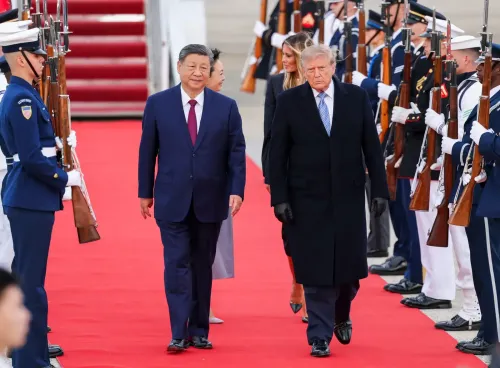
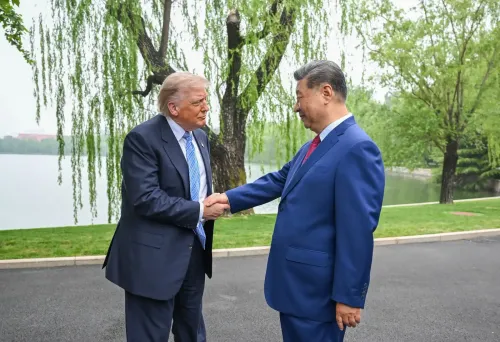
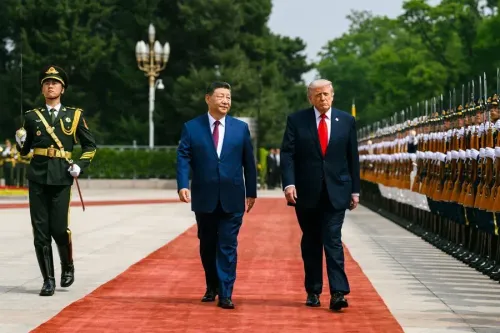
A planned summit between Xi Jinping and Donald Trump later in September 2026 is expected to put AI and tech trade at the centre of diplomatic discussions.
China's Minister of Science and Technology, Yin Hejun, called on nations to pursue collective governance of artificial intelligence rather than competitive rivalry, speaking at the G20 Innovation Ministerial Meeting held in the United States on Monday and Tuesday. The appeal, published on the website of China's Ministry of Science and Technology on Wednesday, September 2, 2026, arrives as Beijing and Washington prepare for a high-stakes leadership summit later this month.
Yin's call for multilateral AI governance
At the G20 ministerial gathering, Yin Hejun described the current trajectory of AI and other emerging technologies as entering an “unprecedentedly active” period, with opportunities and challenges existing side by side. “There is an urgent need for countries to work together to address them,” he was quoted as saying in the official ministry statement. The remarks signal Beijing’s preference for framing AI as a shared global challenge rather than a domain of zero-sum competition.
The competitive backdrop
AI and advanced technology have become deeply entangled in the broader strategic contest between the world’s two largest economies. Washington has already enacted restrictions on foreign-made advanced drones, robots, and connected power inverters affecting Chinese tech products. Beijing has responded by tightening export controls on dual-use drone technology. The cycle of tit-for-tat measures has raised concerns about further decoupling across the tech supply chain.
Why it matters
Despite the escalating rhetoric, analysts at Citi Research, led by Yu Xiangrong, wrote in a research note last month that the recent flare-up was “unlikely to materially disrupt China’s AI exports.” The analysts noted that direct US-China trade in the sector was “already suppressed at the aggregate level, limiting the potential first-order impact of further restrictions.” That assessment suggests markets may be pricing in more disruption than the underlying trade flows justify.
Washington weighs further restrictions
Washington is currently considering potential restrictions on Chinese data centre equipment and open-weight AI models, moves that could have wider implications for the global AI ecosystem. If enacted, such measures would extend the technology cold war beyond chips and semiconductors into software and cloud infrastructure. The deliberations underscore how AI governance has become inseparable from geopolitical strategy.
What’s next
All eyes now turn to the planned meeting between Xi Jinping and Donald Trump later in September 2026, where AI and technology trade are expected to feature prominently on the agenda. Whether Yin’s multilateral cooperation framing gains traction — or is overtaken by new unilateral restrictions from either side — will set the tone for global AI governance for the remainder of the year.
Point of View
Because the absence of one will accelerate fragmentation into rival AI ecosystems.
NationPress
17 Oct 2026
Frequently Asked Questions
What did China’s tech minister say at the G20 about AI?
Yin Hejun , China’s Minister of Science and Technology, called for international cooperation to manage the opportunities and risks of artificial intelligence at the G20 Innovation Ministerial Meeting in the United States . He described AI development as entering an “unprecedentedly active” phase and said countries must work together urgently.
Why is China pushing for AI cooperation now?
The call comes directly ahead of a planned summit between Xi Jinping and Donald Trump in September 2026 , as Washington weighs additional restrictions on Chinese data centre equipment and open-weight AI models. Beijing’s multilateral framing positions it as a constructive global actor while keeping pressure on the US to justify unilateral curbs.
What US restrictions on Chinese technology are already in place?
Washington has enacted restrictions on foreign-made advanced drones, robots, and connected power inverters that affect Chinese tech products. Beijing has retaliated by tightening export controls on dual-use drone technology, and further US restrictions on Chinese data centre equipment and open-weight AI models are under consideration.
Will US-China tech tensions disrupt China’s AI exports?
Citi Research analysts led by Yu Xiangrong concluded last month that the latest flare-up was “unlikely to materially disrupt China’s AI exports.” They noted that direct US-China trade in the AI sector was “already suppressed at the aggregate level,” which limits the first-order impact of any new restrictions.
What should we watch for at the Xi-Trump summit on AI?
The summit, planned for later in September 2026 , is expected to feature AI and technology trade prominently. Key indicators will be whether any binding AI governance framework is agreed upon and whether Washington proceeds with restrictions on Chinese data centre equipment and open-weight models — moves that would signal deeper tech decoupling.