China's token economy: AI token use hits 140 trillion/day in 2026

Synopsis
China's daily AI token consumption has surged more than 1,000-fold in just over two years to exceed 140 trillion tokens per day by March 2026 — roughly 100,000 tokens per person — prompting experts at a Beijing conference to declare the arrival of a fully-fledged 'token economy' that redefines AI as a measurable production factor.
Key Takeaways
Daily AI token consumption in China surpassed 140 trillion tokens in March 2026 , up from 100 billion at the start of 2024 — a more than 1,000-fold increase in just over two years, according to the National Bureau of Statistics .
Yin Hao , academician at the Chinese Academy of Sciences , declared at the China Internet Conference in Beijing on 9 July 2026 that a 'token economy' is now emerging as the next stage of China's digital economy.
At current consumption levels, China's AI token use equates to roughly 100,000 tokens per person per day based on a population of approximately 1.4 billion .
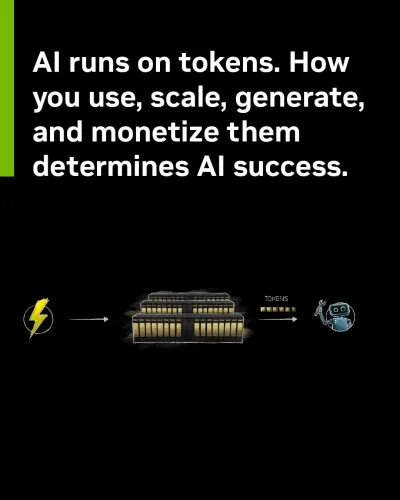
Tokens are described as a new production factor connecting AI model capability, computing resources, and commercial value — elevating them beyond a purely technical metric.
Infrastructure players including Huawei and China Unicom are central to the computing networks sustaining this token throughput.
The Internet Society of China , with figures such as Qiu Baohua and Wang Lei , is actively shaping policy and standards around large-scale AI deployment.
China's artificial intelligence sector is giving rise to what experts are calling a token economy — a new commercial paradigm in which AI tokens, the fundamental units powering AI models, have evolved from a technical benchmark into the primary basis for delivering and pricing AI services. The shift was highlighted at the China Internet Conference in Beijing on Wednesday, 9 July 2026, where leading technologists outlined the scale and implications of the country's surging AI adoption.
What is the token economy?
Yin Hao, an academician at the Chinese Academy of Sciences, delivered a keynote address framing the emergence of the token economy as the next evolutionary stage of China's digital development. 'The [Chinese] digital economy has gone through the stages of the data economy and the computing economy. Today, the token economy is emerging,' he said. Yin argued that tokens are more than just a technical metric, describing them as 'a new production factor that connected AI model capability, computing resources and commercial value.'
The numbers behind the surge
The scale of China's AI token consumption is striking. According to the National Bureau of Statistics, daily AI token usage surged more than 1,000-fold in just over two years — climbing from roughly 100 billion tokens per day at the start of 2024 to 100 trillion by end-2025. By March 2026, daily consumption had exceeded 140 trillion tokens, equivalent to approximately 100,000 tokens per person based on China's population of about 1.4 billion.
Why it matters
Tokens underpin virtually every AI-driven task — from chatbot conversations to image generation and film-quality video production. As enterprises across China increasingly deploy AI to automate business operations and boost productivity, token consumption is becoming a direct proxy for economic activity in the digital sector. The framing of tokens as a 'production factor' places them alongside land, labour, capital, and data in classical economic terms — a significant conceptual shift with potential regulatory and commercial consequences.
The competitive backdrop
China's rapid token consumption growth reflects a broader race among domestic tech giants and cloud providers to capture enterprise AI workloads. Companies including Huawei and China Unicom are among the key infrastructure players whose computing networks underpin this token throughput. The Internet Society of China, represented at the conference by figures including Qiu Baohua and Wang Lei, has been actively shaping the policy and standards framework around AI deployment at scale.
What's next
With daily token consumption already exceeding 140 trillion and enterprise AI adoption still accelerating, analysts expect the token economy framework to influence how cloud providers, regulators, and enterprises structure AI contracts and pricing. The next inflection point to watch is whether token-based pricing models become standardised across China's cloud sector — and whether the concept gains traction in global AI markets beyond China's borders.
Point of View
Independent of Western cloud paradigms. A 1,000-fold surge in two years is extraordinary even by AI-hype standards, and the National Bureau of Statistics' involvement in tracking token data suggests Beijing views this metric as a core macroeconomic indicator. What mainstream coverage misses is the infrastructure leverage this creates for Huawei and state-backed carriers like China Unicom: as tokens become the unit of commercial exchange, whoever controls the compute fabric controls the margin. Globally, if token-based pricing becomes the norm in China's vast enterprise market, it could pressure Western hyperscalers to follow suit — reshaping how AI services are monetised worldwide.
NationPress
8 Oct 2026
Frequently Asked Questions
What is China's token economy?
China's token economy refers to an emerging commercial and economic framework in which AI tokens — the fundamental units AI models use to process and generate information — serve as the primary basis for pricing, delivering, and measuring AI services. The concept was articulated by Yin Hao of the Chinese Academy of Sciences at the China Internet Conference in Beijing on 9 July 2026 , who described tokens as a new production factor connecting AI capability, computing resources, and commercial value.
How fast is AI token consumption growing in China?
AI token consumption in China has grown more than 1,000-fold in just over two years. According to the National Bureau of Statistics , daily usage rose from around 100 billion tokens at the start of 2024 to 100 trillion by end-2025 , and exceeded 140 trillion tokens per day in March 2026 .
Why does the token economy matter for businesses?
For businesses, the token economy matters because it transforms AI from a subscription or usage-based service into a measurable, tradeable production input — similar to electricity or bandwidth. As enterprises across China adopt AI to automate operations and boost productivity, token consumption becomes a direct indicator of economic activity, and token-based pricing could reshape how AI contracts are structured across industries.
Which Chinese companies are central to the AI token infrastructure?
Huawei and China Unicom are among the key infrastructure players whose computing networks underpin China's AI token throughput. The Internet Society of China , with figures including Qiu Baohua and Wang Lei , is also playing an active role in shaping policy and technical standards around large-scale AI deployment.
Could China's token economy model influence global AI pricing?
It is possible. If token-based pricing becomes standardised across China's large enterprise AI market, it could create competitive pressure on global cloud providers and AI platforms to adopt similar frameworks. China's scale — over 140 trillion tokens per day consumed by a population of 1.4 billion — gives it significant leverage to set de facto industry norms in AI service delivery and monetisation.