CM Fadnavis: UCC Bill likely in Maharashtra Winter Session
Synopsis
Maharashtra Chief Minister Devendra Fadnavis announced on 9 July 2026 that a committee for the Uniform Civil Code has been constituted and a Bill is expected to be introduced at the upcoming Winter Session in Nagpur, signalling a major legislative push in India's wealthiest state.
Key Takeaways
CM Devendra Fadnavis announced on 9 July 2026 that a Uniform Civil Code committee has been constituted in Maharashtra.
A UCC Bill is expected to be introduced during the Winter Session of the Maharashtra Legislature in Nagpur .
The announcement was made at the Vidhan Sabha in Mumbai during the Monsoon Session 2026 .
Uttarakhand became the first state to enact a UCC law in February 2024 , providing a legislative template.
The BJP has pledged UCC implementation in its national manifestos since 2014 , making this part of a long-standing party commitment.
Key stakeholders including religious communities, women's rights groups, and legal experts are expected to closely watch the committee's report and subsequent debates.
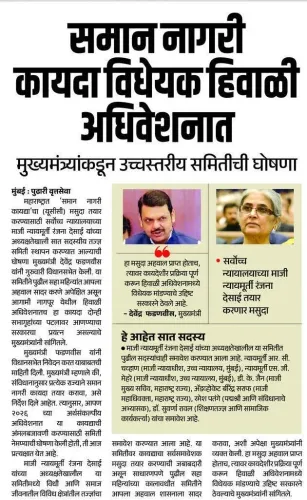
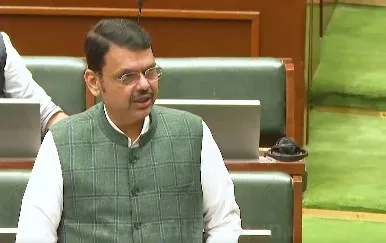
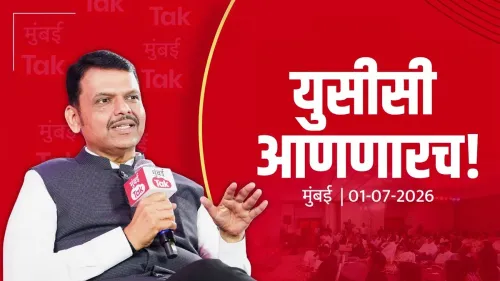
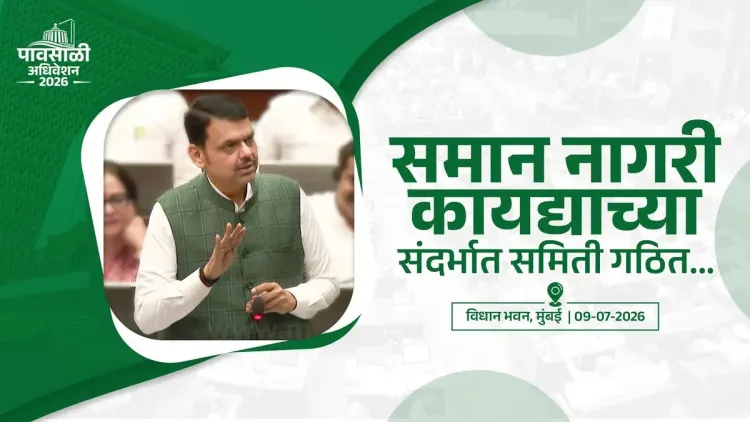
Maharashtra Chief Minister Devendra Fadnavis announced on Thursday, 9 July 2026, that a committee has been constituted for the Uniform Civil Code (UCC) and that a Bill based on the committee's report is expected to be introduced during the upcoming Winter Session of the Maharashtra Legislature in Nagpur.
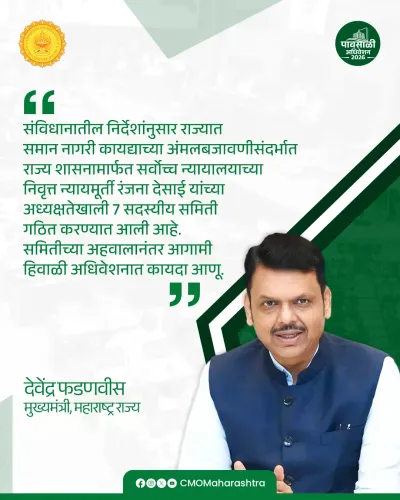
Speaking from the Vidhan Sabha in Mumbai during the Monsoon Session 2026, Fadnavis stated in both English and Marathi: 'समान नागरी कायद्यासंदर्भात समिती गठित केली असून, या समितीच्या अहवालाच्या आधारे संबंधित विधेयक नागपूर येथे होणाऱ्या हिवाळी अधिवेशनात मांडण्याचा प्रयत्न आहे' — meaning, 'A committee has been constituted regarding the Uniform Civil Code, and based on the committee's report, an effort will be made to table the related Bill at the Winter Session to be held in Nagpur.'
Context
The announcement came on the floor of the Maharashtra Vidhan Sabha and signals that the state government is actively moving toward codifying a uniform set of personal laws applicable to all citizens regardless of religion. The Winter Session of the Maharashtra Legislature is traditionally held in Nagpur, the state's winter capital. The Chief Minister's statement indicates that the committee's work is sufficiently advanced for legislation to be placed before lawmakers in the coming months.
Policy Backdrop
The Uniform Civil Code is enshrined as a directive principle under Article 44 of the Constitution of India, which calls on the state to endeavour to secure a common civil code for citizens. The Bharatiya Janata Party (BJP) has included UCC implementation in its national manifestos since 2014, making it one of the party's long-standing ideological commitments. Uttarakhand became the first state in India to enact a UCC statute in February 2024, following a similar committee-driven process, setting a legislative template that BJP-governed states have since studied closely.
Maharashtra's move follows the broader pattern of state-level experimentation with uniform personal laws, with expert committees being used to build legal and consultative groundwork before a Bill is tabled. A UCC would replace religion-specific personal laws governing marriage, divorce, inheritance, and adoption with a common framework applicable to all communities.
Stakeholders and Impact
Religious communities, women's rights groups, and legal experts are among the principal stakeholders who have engaged with the UCC debate nationally. Proponents argue that a uniform code would advance gender equality by replacing personal laws that, in some communities, place women at a disadvantage in matters of marriage and inheritance. Critics, including several minority community organisations and constitutional scholars, contend that such legislation must be preceded by wide consultative processes to protect religious freedoms guaranteed under the Constitution.
If the Bill is introduced during the Winter Session, it would mark a significant legislative milestone for Maharashtra — India's second-most-populous state — and could intensify the national conversation around UCC ahead of future electoral cycles.
What's Next
The immediate watch-point is the release of the committee's report and its recommendations, which will shape the content and scope of the proposed Bill. Legislative debates, committee scrutiny in the Vidhan Sabha, and potential legal challenges are all expected once the Bill is formally tabled. The Chief Minister's framing — 'an effort will be made' — suggests the timeline is conditional on the committee concluding its work before the Winter Session convenes in Nagpur.
Maharashtra's UCC Bill, if passed, would make it the second state after Uttarakhand to enact such legislation, adding significant political and legal weight to the national push for a common civil code.
Point of View
India's economic powerhouse. By anchoring the Bill to the committee's report, the government is borrowing the procedural credibility that Uttarakhand deployed in 2024 — insulating the legislation from early legal challenges on grounds of arbitrariness. The timing, mid-Monsoon Session with a Winter Session target, gives the government roughly five months to manage stakeholder consultations and build political consensus. For the BJP, a Maharashtra UCC would be a far larger symbolic and demographic achievement than Uttarakhand, given the state's religious diversity and its weight in national politics.
NationPress
8 Oct 2026
Frequently Asked Questions
What is the Uniform Civil Code and why is Maharashtra planning to introduce it?
The Uniform Civil Code (UCC) is a proposed common set of personal laws — covering marriage, divorce, inheritance, and adoption — applicable to all citizens regardless of religion, as envisioned under Article 44 of the Constitution. Maharashtra CM Devendra Fadnavis announced on 9 July 2026 that a committee has been constituted and a Bill is expected in the upcoming Winter Session in Nagpur, in line with the BJP's long-standing manifesto commitment.
When will the Maharashtra UCC Bill be introduced?
CM Fadnavis stated the Bill is expected to be tabled during the Winter Session of the Maharashtra Legislature, which is traditionally held in Nagpur. The exact dates of the 2026 Winter Session have not been officially announced, but it typically takes place toward the end of the calendar year.
Which state was the first to pass a Uniform Civil Code law?
Uttarakhand was the first state in India to enact a UCC statute, doing so in February 2024 after a committee-driven process. Maharashtra is now following a similar approach.
What will the Maharashtra UCC committee's report contain?
The specific composition of the committee and the content of its report have not yet been made public. The report is expected to form the legislative basis for the Bill to be introduced in the Winter Session, per CM Fadnavis's announcement on 9 July 2026.
How does a state-level UCC affect citizens of different religions in Maharashtra?
A state UCC, if enacted, would replace religion-specific personal laws with a single common framework for all residents of Maharashtra in matters such as marriage, divorce, inheritance, and adoption. Supporters argue it advances gender equality; critics raise concerns about religious autonomy and constitutional protections for minority communities.