Nvidia Shifts to Revenue-Sharing Model for AI Factory Deployments
Synopsis
Nvidia announced on 2 July 2026 a new revenue-sharing and credit-support model with AI cloud partners to deploy large-scale, multi-tenant AI factories. The move targets startups, enterprises, model builders, and regional AI players, reflecting the industry's shift from model training to always-on token production.
Key Takeaways
Nvidia announced on 2 July 2026 a revenue-sharing and credit-support model with AI cloud partners for large-scale AI factory deployments.
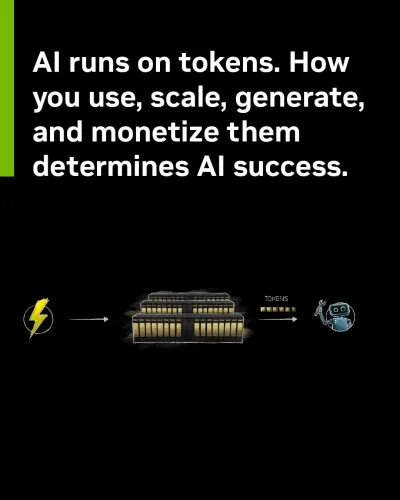
The company described the shift as a move from episodic model training to 'always-on token production' requiring a new business model.
Target beneficiaries include AI startups, model builders, enterprises, research organisations, and regional AI players .
Nvidia launched DGX Cloud in 2023 with Microsoft, Google, and Oracle as its first step toward cloud-delivered AI infrastructure.
The Blackwell GPU architecture , unveiled in 2024 , underpins Nvidia's inference efficiency strategy.
Specific partner names and financial terms for the new arrangements have not yet been publicly disclosed.
Chip giant Nvidia Corporation announced on Thursday, 2 July 2026 that it is partnering with AI cloud providers to deploy large-scale, multi-tenant AI factories through a revenue-sharing and credit-support model, marking a structural shift in how the company monetises its compute infrastructure.
Context
In its post, Nvidia stated that 'AI is shifting from model training to always-on token production, and that shift demands a new business model.' The company said it would work with AI clouds to open up compute access to 'startups, model builders, enterprises, research organisations and regional AI players' — a broad coalition spanning the full AI value chain.
The announcement reflects a fundamental change in how AI workloads are structured. Where earlier cycles were dominated by episodic, large-scale model training runs, the industry is now moving toward continuous inference workloads — systems that generate tokens in production around the clock, requiring persistent, always-available compute capacity.
Policy Backdrop
Nvidia has been building toward this model for several years. In 2023, the company launched DGX Cloud — its full-stack AI supercomputing service — in partnership with Microsoft, Google, and Oracle, delivering high-performance training infrastructure through major cloud intermediaries rather than direct hardware sales.
In 2024, Nvidia unveiled its Blackwell GPU architecture, engineered for efficiency across both training and inference workloads. The revenue-sharing and credit-support model announced in July 2026 extends that trajectory: instead of requiring upfront capital expenditure from customers, Nvidia and its cloud partners absorb the infrastructure cost and recover it through usage-linked revenue arrangements.
This mirrors a pattern seen in earlier high-performance computing transitions, where specialised infrastructure — once accessible only to well-capitalised institutions — was progressively democratised through service models.
Stakeholders and Impact
AI startups and regional AI players stand to benefit most directly. Access to large-scale GPU clusters has historically required either significant capital or existing relationships with hyperscale cloud providers. A revenue-sharing structure lowers that barrier, allowing smaller organisations to deploy production inference workloads without front-loading infrastructure costs.
Enterprises and research organisations gain flexibility to scale token production capacity in line with demand, rather than committing to fixed hardware procurement cycles. For model builders — companies and teams developing foundation or fine-tuned models — the multi-tenant factory model offers a path to production deployment without owning dedicated clusters.
For Nvidia itself, the shift diversifies revenue beyond one-time hardware sales into recurring, usage-linked income streams tied to the growth of AI inference at scale.
What's Next
Specific partner names and revenue-sharing terms for the July 2026 arrangements have not yet been publicly disclosed. Detailed disclosures are expected in Nvidia's upcoming quarterly filings, which will clarify the financial structure and the identity of participating cloud partners.
Observers will also watch whether Nvidia expands the programme's scope at future GTC events, its principal developer conference, where major infrastructure and partnership announcements have historically been made. As the AI sector's centre of gravity shifts from training to inference, Nvidia's ability to capture recurring revenue from always-on token production could reshape its long-term business profile significantly.
Point of View
Nvidia is positioning itself to capture value from the inference boom that follows the training era. For the broader AI ecosystem, particularly in emerging markets and among capital-constrained startups, this model could meaningfully accelerate access to frontier compute. The key policy question is whether revenue-sharing arrangements will face regulatory scrutiny as Nvidia's market power in AI accelerators is already under examination in multiple jurisdictions.
NationPress
1 Oct 2026
Frequently Asked Questions
What is Nvidia's new AI factory revenue-sharing model?
Nvidia is partnering with AI cloud providers to deploy large-scale, multi-tenant AI factories where compute access is offered through revenue-sharing and credit-support arrangements rather than direct hardware purchases, lowering the barrier for startups, enterprises, and research organisations.
Why is Nvidia shifting from model training to token production?
The AI industry is moving from large, episodic training runs to continuous, always-on inference workloads that generate tokens in production. Nvidia says this shift demands a new business model that supports persistent compute capacity rather than one-time training clusters.
Who benefits from Nvidia's multi-tenant AI factory model?
AI startups, model builders, enterprises, research organisations, and regional AI players are the primary beneficiaries, as the model removes the need for large upfront capital expenditure to access high-performance GPU infrastructure.
What is Nvidia DGX Cloud and how does it relate to this announcement?
DGX Cloud is Nvidia's full-stack AI supercomputing service launched in 2023 with Microsoft, Google, and Oracle. The July 2026 revenue-sharing model extends that cloud-delivery strategy to a wider range of partners and use cases focused on inference at scale.
Which cloud partners is Nvidia working with for AI factories?
Specific partner names for the July 2026 AI factory programme have not yet been publicly disclosed. Nvidia has said it is working with AI cloud providers broadly, with detailed disclosures expected in upcoming quarterly filings.