China's 17-measure 'AI Plus Consumption' plan targets smart homes and robots
Synopsis
China has unveiled a 17-measure 'AI Plus Consumption' plan backed by eight ministries, targeting robots, AI companions, smart homes, and connected cars — aiming to plant AI in millions of households and shops as a new engine of domestic demand.
Key Takeaways
China's Ministry of Commerce and seven other ministries jointly released the 'AI Plus Consumption' plan on 19 June 2026 .
The plan contains 17 new measures covering smart products, robots, subsidies, infrastructure, and industry standards.
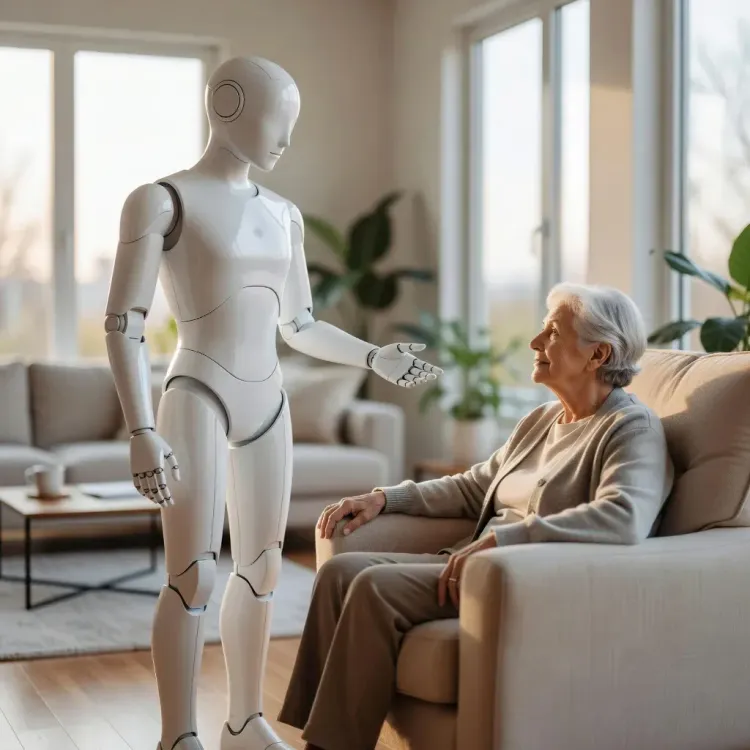
Priority segments include humanoid, quadruped, and bionic robots , as well as elderly-care and companion robots .
Consumer device categories targeted include AI phones, smart homes, connected cars, wearables, and AI glasses .
Products will be showcased at the World AI Conference and through a nationwide 'AI into Millions of Homes' campaign.
The stated goal is AI penetration into 'millions of households and millions of shops' across China .
China's Ministry of Commerce, alongside seven other ministries, released a sweeping 'AI Plus Consumption' plan on Thursday, 19 June 2026, outlining 17 new measures designed to embed artificial intelligence across consumer goods, retail, and services — with robots and AI life assistants at the centre of the push.
What the plan covers
The joint ministerial directive aims to generate fresh drivers of consumption growth by integrating AI into everyday products and commercial infrastructure. The stated goal is to bring AI into 'millions of households and millions of shops', according to a statement from the Ministry of Commerce. Measures span smart products, subsidies, new infrastructure buildout, and the establishment of industry standards.
Robots and AI companions take centre stage
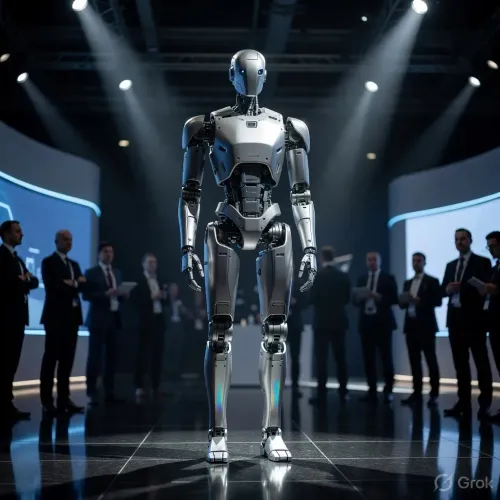
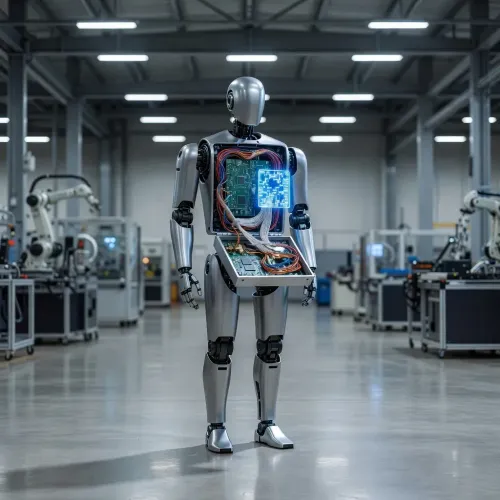
At the heart of the initiative are next-generation robots — including humanoid, quadruped, and bionic machines — alongside dedicated elderly-care and companion robots. The plan promises capabilities ranging from emotional companionship and health monitoring to mobility assistance and automated housework. This signals a deliberate policy push to accelerate consumer-facing robotics beyond industrial applications.
Smart products and retail infrastructure
The plan also targets a new generation of connected consumer devices: AI phones, smart homes, connected cars, wearables, and AI glasses. These products are slated for showcase at high-profile venues including the World AI Conference, major trade expos, and a nationwide 'AI into Millions of Homes' campaign. The retail and e-commerce sectors are explicitly included as deployment targets, broadening the initiative beyond hardware alone.
Why it matters
'Accelerating the development of AI Plus Consumption helps create new consumption growth points, promote the improvement of consumption quality and the expansion of consumption capacity,' the Ministry of Commerce said in its official statement. The plan arrives as Beijing intensifies efforts to stimulate domestic demand amid persistent economic headwinds. Funnelling AI adoption through consumption — rather than purely through industrial or defence channels — reflects a strategic pivot toward boosting household spending.
What's next
Implementation will be tracked through the 'AI into Millions of Homes' campaign and a series of trade expos, giving policymakers visible milestones to point to. The involvement of eight ministries signals cross-government coordination at a scale that typically precedes significant regulatory follow-through, including possible procurement subsidies and cybersecurity standards for AI-enabled consumer devices. Manufacturers in the AI glasses, humanoid robotics, and smart home segments are most immediately exposed to both the opportunity and the compliance requirements this framework will generate.
Point of View
Suggesting the state intends to use procurement subsidies and standards to pick winners fast. What mainstream coverage tends to underplay is the cybersecurity dimension — any framework mandating AI in 'millions of homes' will require device-level data governance rules, creating compliance moats that favour established domestic incumbents over foreign entrants. Investors in humanoid robotics and AI wearables should watch the subsidy schedules and standards documents that follow, not just the headline announcement.
NationPress
19 Sept 2026
Frequently Asked Questions
What is China's 'AI Plus Consumption' plan?
China's 'AI Plus Consumption' plan is a joint policy directive released on 19 June 2026 by the Ministry of Commerce and seven other ministries , containing 17 measures to embed AI into consumer goods, retail, and services. The goal is to drive new consumption growth by bringing AI products into millions of households and shops across the country.
Which types of robots does China's AI consumption plan promote?
The plan promotes humanoid, quadruped, and bionic robots , as well as dedicated elderly-care and companion robots . These machines are designed to provide emotional companionship, health monitoring, mobility assistance, and smart housework capabilities for everyday consumers.
What consumer products are included in China's AI plan?
The plan targets AI phones, smart homes, connected cars, wearables, and AI glasses . These products are set to be showcased at the World AI Conference , major trade expos, and a nationwide 'AI into Millions of Homes' campaign.
Why is China pushing AI into consumer markets now?
According to the Ministry of Commerce , accelerating 'AI Plus Consumption' is intended to 'create new consumption growth points, promote the improvement of consumption quality and the expansion of consumption capacity.' The move aligns with broader government efforts to stimulate domestic demand amid economic headwinds.
Which companies or sectors are most affected by this plan?
Manufacturers in AI glasses, humanoid robotics, smart home devices, and connected cars are most directly exposed to both the commercial opportunity and any compliance requirements the plan generates. The involvement of eight ministries suggests subsidy programmes and technical standards will follow, favouring companies already operating within China's domestic regulatory ecosystem.