China targets 9,800 eflops AI computing capacity by 2030
Synopsis
China's MIIT has set a target of 9,800 eflops of AI computing capacity by 2030 — more than four times the June 2026 level — backed by a staggering 3.8 trillion yuan ($532 billion) investment plan, with a mandate to build 100,000-card GPU clusters and shift to homegrown chips.
Key Takeaways
China's MIIT released a five-year industry plan on 8 September 2026 targeting 9,800 eflops of intelligent computing capacity by 2030 .
The plan calls for cumulative information infrastructure investment of 3.8 trillion yuan (US$532 billion) over the 2026–2030 period.
Intelligent computing clusters with 100,000 or more accelerator cards are to be 'orderly deployed', alongside a push to adopt home-grown chips .
China's AI computing capacity stood at 2,185 eflops at end- June 2026 , up 177 per cent year-on-year, with 52 facilities each housing more than 10,000 accelerator cards.
By end- July 2026 , capacity had already risen to approximately 2,450 eflops , according to the National Data Administration .
The plan extends the 'East Data, West Computing' project launched in 2022 , which underpins a national network of eight computing hubs and 10 data-centre clusters.
China's Ministry of Industry and Information Technology (MIIT) has unveiled a sweeping five-year plan targeting 9,800 eflops of intelligent computing capacity by 2030, backed by a cumulative information infrastructure investment of 3.8 trillion yuan (US$532 billion) — signalling Beijing's most ambitious AI infrastructure push to date. The plan, released on Monday, 8 September 2026, calls for the deployment of massive AI computing clusters and a sharper focus on domestically produced chips.
What the plan mandates
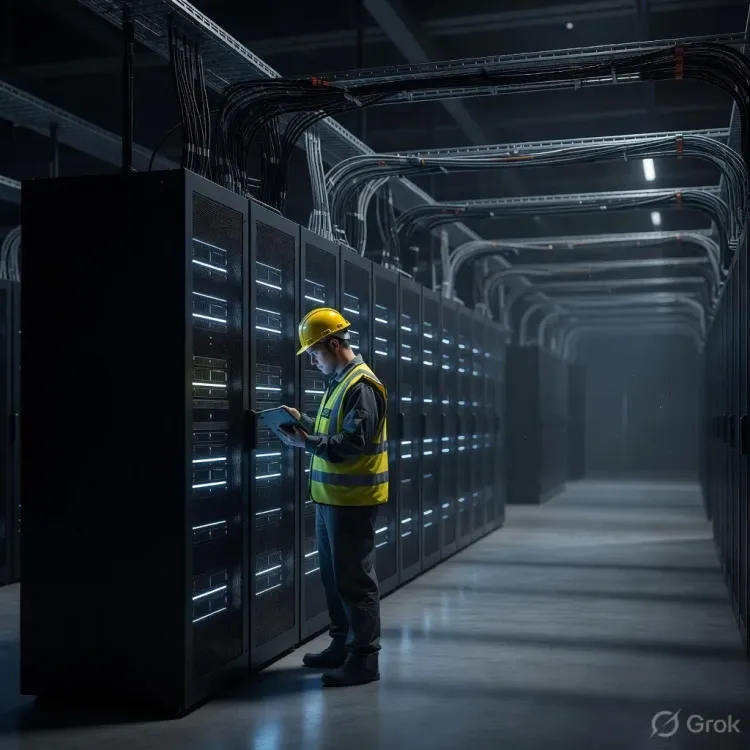
The MIIT blueprint calls for the 'orderly deployment' of intelligent computing clusters equipped with 10,000 graphics processing cards, as well as larger installations using 100,000 or more accelerator cards. It also mandates the build-out of inference computing facilities tailored to specific application scenarios. Critically, the plan pushes for greater adaptation of computing infrastructure to home-grown chips, a direct response to ongoing US export restrictions on advanced semiconductors.
The 3.8 trillion yuan investment envelope covers the full 2026–2030 period and spans broader information infrastructure, not just AI compute. This positions the plan as one of the largest state-directed technology infrastructure programmes in history.
Where China stands today
According to MIIT, China's intelligent computing capacity reached 2,185 eflops by the end of June 2026, representing a 177 per cent year-on-year increase. The country had already built 52 intelligent computing facilities each equipped with more than 10,000 accelerator cards. By the end of July 2026, capacity had climbed further to approximately 2,450 eflops, according to the National Data Administration, an agency overseen by the National Development and Reform Commission.
To meet the 2030 target of 9,800 eflops, China would need to more than quadruple its June 2026 capacity level — a formidable but not unprecedented pace given the 177 per cent annual growth rate already recorded.
Building on East Data, West Computing
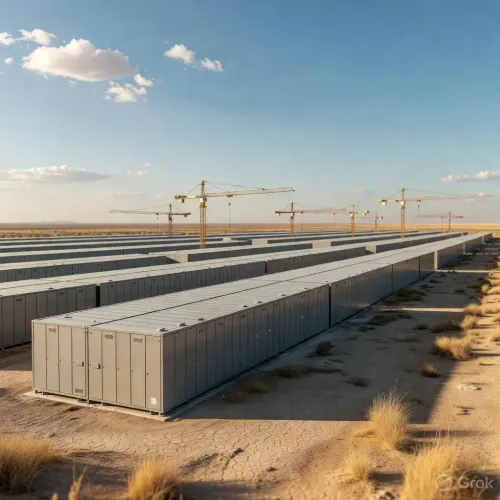
The new targets extend the momentum of the 'East Data, West Computing' project launched in 2022, which redirects power-intensive computing workloads from densely populated eastern regions to western areas offering cheaper land and abundant energy. China has since built a national network anchored by eight national computing hubs, 10 data-centre clusters, and three regions dedicated to coordinating computing resources with power supplies.
The western pivot is strategic: it reduces pressure on eastern power grids while enabling large-scale, energy-hungry GPU clusters to operate at lower cost — a necessary condition for the 100,000-card deployments the plan envisions.
Why it matters
The plan arrives as China races to close the gap with the United States in AI infrastructure, even as chip export controls limit access to the most advanced foreign accelerators. By explicitly calling for infrastructure adaptation to domestic chips, Beijing is effectively mandating a parallel compute ecosystem — one that could insulate its AI sector from future supply shocks. Industry analysts note that the 9,800 eflops target, if achieved, would represent one of the largest concentrations of AI compute capacity anywhere in the world.
What's next
Execution will hinge on the pace of domestic chip development, grid expansion in western provinces, and whether private cloud and telecom operators — including China Mobile — align their own capex cycles with state targets. The trajectory of US–China semiconductor restrictions will also determine how much of the new capacity can be built with leading-edge hardware versus domestically engineered alternatives. Investors and policymakers alike will be watching quarterly capacity updates from the National Data Administration as the clearest near-term signal of whether the 2030 goal remains on track.
Point of View
Beijing is engineering a parallel AI compute stack that can survive further US export escalation. What mainstream coverage underplays is the demand-side risk — 9,800 eflops of raw capacity is meaningless without a commensurate ecosystem of AI models, developers, and enterprise workloads to consume it, and China's software layer remains thinner than its hardware ambitions. The 177 per cent year-on-year growth figure is striking, but it reflects a low base and a buildout cycle that will become progressively harder to sustain as the easiest sites and grid connections are absorbed. The real test arrives around 2028, when the gap between installed capacity and utilisation rates will either validate or expose the plan's underlying assumptions.
NationPress
25 Oct 2026
Frequently Asked Questions
What is China's AI computing capacity target for 2030?
China's Ministry of Industry and Information Technology has set a target of 9,800 eflops of intelligent computing capacity by 2030. This is more than four times the 2,185 eflops recorded at the end of June 2026, implying a sustained, rapid expansion over the next five years.
How much is China investing in AI infrastructure under the new plan?
The MIIT five-year plan calls for 3.8 trillion yuan (US$532 billion) in cumulative information infrastructure investment over the 2026–2030 period. This envelope covers broader digital infrastructure, with AI computing clusters forming a central pillar of the spending programme.
What is the 'East Data, West Computing' project and how does it relate to this plan?
'East Data, West Computing' is a national initiative launched in 2022 that redirects power-intensive computing workloads from China's densely populated eastern regions to western areas with cheaper land and more abundant energy. The new MIIT plan builds directly on this framework, expanding a network of eight national computing hubs, 10 data-centre clusters, and three power-coordinating regions.
Why is China pushing for domestic chip adoption in its AI infrastructure?
The MIIT plan explicitly calls for adapting computing infrastructure to home-grown chips, a response to US export restrictions that limit China's access to advanced foreign accelerators such as Nvidia's high-end GPUs. By mandating domestic chip compatibility, Beijing aims to reduce supply-chain vulnerability and sustain its AI buildout regardless of future semiconductor trade restrictions.
How fast has China's AI computing capacity been growing?
China's intelligent computing capacity grew 177 per cent year-on-year to reach 2,185 eflops by the end of June 2026, according to MIIT. By the end of July 2026, the National Data Administration reported capacity had already risen further to approximately 2,450 eflops, suggesting the buildout pace remains rapid heading into the second half of the year.