Chinese AI firms ride global boom as MiniMax earns 73% revenue abroad

Synopsis
Shanghai-based MiniMax earned 73% of its 2025 revenue — US$57.7 million — from outside mainland China, while its M2 model became the first Chinese foundation model to cross 50 billion daily token consumptions on OpenRouter, underscoring how domestic AI rivalry is turbocharging Chinese firms' global ambitions.
Key Takeaways
MiniMax generated US$57.7 million , or 73 per cent of total revenue, from outside mainland China in 2025 , up from US$21.3 million in 2024 .
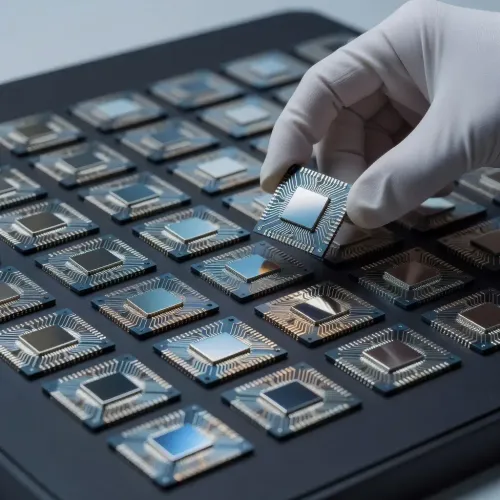
China 's integrated-circuit exports surged 96 per cent year-on-year to US$177.3 billion in the first half of 2026 , driven partly by global chip price inflation.
Automatic data-processing equipment exports rose over 41 per cent to US$138.1 billion ; industrial-robot shipments climbed over 18 per cent to US$929 million across 141 countries and regions .
MiniMax 's M2 model became the first Chinese model on OpenRouter to exceed 50 billion daily token consumptions.
By end- 2025 , MiniMax had served more than 214,000 enterprise customers and developers across over 100 countries and regions .
Chinese technology companies are aggressively expanding their global footprint in 2026, leveraging both physical exports and cloud-based AI software to capture a disproportionate share of the worldwide artificial intelligence spending surge — even as domestic rivalry intensifies. Shanghai-based AI lab MiniMax exemplifies this shift, generating US$57.7 million, or 73 per cent of its total revenue, from outside mainland China in 2025, up from US$21.3 million the year prior, according to its financial statements.
Hardware exports surge on chip price tailwinds
Customs data for the first half of 2026 reveals a dramatic acceleration in China's physical tech exports. Integrated-circuit exports nearly doubled in value to US$177.3 billion, a 96 per cent year-on-year surge, heavily inflated by global chip price hikes. Exports of automatic data-processing equipment climbed over 41 per cent to US$138.1 billion, while industrial-robot shipments rose more than 18 per cent to US$929 million across 141 countries and regions.
Software and foundation models: the less visible expansion
Beyond physical goods, corporate disclosures point to a deeper structural shift: mainland Chinese firms are securing positions across both the software and hardware layers of the global AI stack. MiniMax's flagship M2 model became the first Chinese model on OpenRouter to cross 50 billion in daily token consumption, according to the company. By the end of 2025, MiniMax had cumulatively served more than 214,000 enterprise customers and developers from over 100 countries and regions.
Why it matters
The dual-track expansion — hardware exports boosted by commodity price inflation alongside rapidly internationalising AI software revenue — signals that Chinese tech firms are not relying on any single vector of global growth. Fierce competition at home is accelerating the push abroad, with companies that cannot win dominant domestic market share instead targeting the Americas, Europe, and emerging markets. This dynamic mirrors earlier waves of Chinese industrial globalisation, but at the software and model layer where margins are structurally higher.
The competitive backdrop
Intense rivalry among domestic AI labs — including players such as Zhipu AI — is compressing margins at home, making international revenue not just attractive but strategically necessary. Global cloud infrastructure providers, including Amazon, remain key distribution partners for some of these models. Meanwhile, hardware logistics firms such as Geekplus are expanding robot shipments globally, adding an automation layer to the export story.
What's next
Investors and analysts, including those at Goldman Sachs and research firms such as LightCounting and Interact Analysis, will be watching whether the integrated-circuit export surge sustains as global chip prices normalise. For AI software firms like MiniMax, the critical test is whether enterprise customer growth outside China translates into durable, high-retention revenue — or remains vulnerable to geopolitical friction and competing foundation models from Nvidia-backed Western ecosystems.
Point of View
Which usually conquer home turf before going global. What mainstream coverage underplays is the causal mechanism: it is precisely the ferocity of domestic AI commoditisation in China that is forcing labs outward, compressing local margins faster than international ones. The 96 per cent surge in integrated-circuit export value is also misleading as a headline; strip out global chip price inflation and the volume story is considerably more modest, a nuance that matters for anyone reading it as evidence of unchecked Chinese semiconductor dominance. The more durable signal is at the model layer — if Chinese foundation models can entrench themselves in developer workflows via platforms like OpenRouter before geopolitical guardrails tighten, the switching costs for enterprise customers could become significant.
NationPress
22 Oct 2026
Frequently Asked Questions
How much revenue did MiniMax earn outside China in 2025?
MiniMax generated US$57.7 million from outside mainland China in 2025 , representing 73 per cent of its total revenue, according to its financial statements. This was up sharply from US$21.3 million the previous year.
What is the MiniMax M2 model and why is it significant?
The MiniMax M2 is a foundation AI model developed by Shanghai -based lab MiniMax . It became the first Chinese model listed on OpenRouter to surpass 50 billion daily token consumptions, according to the company, marking a milestone in the global adoption of Chinese AI models.
How much did China's integrated-circuit exports grow in the first half of 2026?
China 's integrated-circuit exports nearly doubled in value to US$177.3 billion in the first half of 2026 , a 96 per cent year-on-year increase. Analysts note the surge was heavily inflated by global chip price hikes rather than volume growth alone.
Why are Chinese AI companies expanding internationally?
Intense domestic competition among Chinese AI labs is compressing margins at home, making international markets strategically necessary. Companies unable to secure dominant positions domestically are targeting the Americas , Europe , and emerging markets for higher-margin software and model revenue.
How many countries does MiniMax serve?
MiniMax had cumulatively served more than 214,000 enterprise customers and developers from over 100 countries and regions by the end of 2025 , according to the company.