China IC exports nearly double in H1 2026, driven by global AI boom
Synopsis
China exported 179.44 billion integrated circuits worth US$177.28 billion in H1 2026 — a staggering 96% year-on-year surge — making AI-driven chip demand the single biggest engine of the country's double-digit export growth, even as Beijing quietly approved Nvidia H200 sales to select domestic firms.
Key Takeaways
China exported 179.44 billion integrated circuits worth US$177.28 billion in the first half of 2026 , up more than 96 per cent year on year.
Exports of computers, servers, memory, and computing components rose 41.3 per cent to US$138.08 billion in the same period.
Wang Jun , vice-minister of customs , attributed the surge to matching 'Made in China' products with diverse global demand.
Beijing recently approved the sale of Nvidia H200 GPUs to a handful of Chinese tech companies, even while promoting domestic chip adoption.
IC exports were a primary driver of China 's broader double-digit export growth in H1 2026 , alongside industrial robots and other high-tech goods.
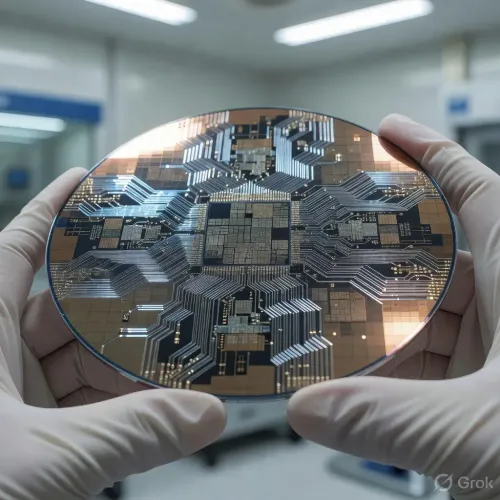
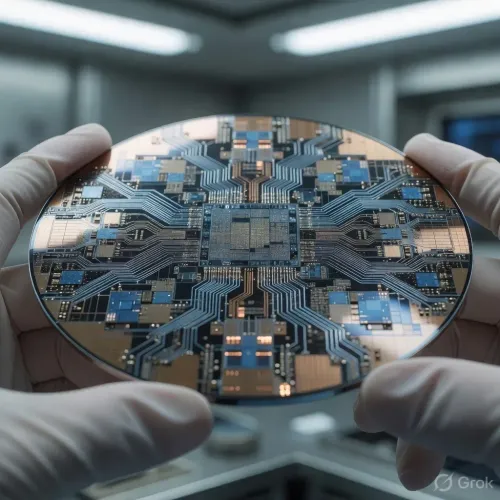
China's integrated circuit exports nearly doubled in the first half of 2026, with customs data revealing a 96 per cent year-on-year surge as global appetite for AI-grade computing hardware reshapes the country's export profile. The figures mark one of the sharpest half-year jumps in the country's semiconductor trade history and signal how artificial intelligence infrastructure spending is rippling through global supply chains.
The numbers: a record-setting half-year
According to data released by the General Administration of Customs on Tuesday, 14 July 2026, China exported 179.44 billion integrated circuits valued at US$177.28 billion in the January–June 2026 period — up more than 96 per cent compared with the same period a year earlier. Exports of automatic data processing machines and parts — a category covering computers, servers, memory, and other computing components — rose 41.3 per cent to US$138.08 billion over the same stretch.
Why it matters
The IC export surge emerged as one of the primary engines behind China's broader double-digit export growth in H1 2026, alongside robust overseas demand for industrial robots and other high-technology products. The data underscores a deliberate pivot toward technology-led export growth even as the global trade environment grows more complex. 'The export growth was fundamentally driven by precisely matching 'Made in China' [products] with diverse global demand,' Wang Jun, a vice-minister of customs, told a news briefing on Tuesday.
Domestic chip push meets Nvidia exception
Beijing has actively promoted domestically designed chips as part of a broader semiconductor self-reliance strategy. At the same time, authorities recently approved the sale of Nvidia's H200 graphics processing units — a high-demand option for training AI models — to a select group of Chinese technology companies, according to reports. The dual-track approach highlights the tension between self-sufficiency goals and the near-term computational demands of the country's fast-growing AI sector.
The competitive backdrop
Emerging AI technology and its applications have become one of the biggest drivers of global tech trade, with demand for servers, memory, and computing components surging across data centres worldwide. China's ability to capture a growing share of that demand — even amid export-control pressures from Western governments — points to the depth and scale of its semiconductor manufacturing base. Industrial robots and other advanced hardware have amplified the trend, broadening the technology export basket beyond chips alone.
What's next
Analysts will be watching whether the second half of 2026 sustains the pace, particularly as global data-centre build-outs continue and AI model training cycles intensify. The trajectory of Nvidia H200 approvals for Chinese buyers and any new export-control measures from trading partners will be the most consequential variables to monitor in the months ahead.
Point of View
And China is capturing a disproportionate share of that windfall. What mainstream coverage underplays is the strategic contradiction embedded in these numbers: Beijing is simultaneously pushing semiconductor self-reliance and greenlighting Nvidia H200 imports, suggesting that domestic chips are not yet competitive enough for frontier AI workloads. The surge also complicates Western export-control calculus — restricting specific high-end chips has not prevented China from becoming a dominant supplier of the broader computing hardware stack that feeds global AI infrastructure. The second half of 2026 will test whether this growth is structural or a front-loaded surge ahead of anticipated trade restrictions.
NationPress
12 Oct 2026
Frequently Asked Questions
How much did China's chip exports grow in the first half of 2026?
China's integrated circuit exports surged more than 96 per cent year on year in H1 2026 , reaching 179.44 billion units valued at US$177.28 billion , according to data from the General Administration of Customs .
Why are China's chip exports growing so fast?
The primary driver is surging global demand for AI -grade computing hardware, including servers, memory, and processing components needed to build and run artificial intelligence systems. Wang Jun , vice-minister of customs , cited the alignment of Chinese manufacturing capacity with diverse global demand as the key factor.
Did China approve Nvidia H200 GPU sales to Chinese companies?
Beijing recently approved the sale of Nvidia 's H200 graphics processing units to a select group of Chinese technology companies, according to reports. The H200 is a high-demand chip used for training large AI models.
What other tech products drove China's export growth in H1 2026?
Beyond integrated circuits, exports of automatic data processing machines and parts — covering computers, servers, and memory — jumped 41.3 per cent to US$138.08 billion . Industrial robots and other high-technology products also contributed to the double-digit overall export growth.
How does China's chip export boom affect global AI supply chains?
China's dominant position in computing hardware manufacturing means it is a critical node in global AI infrastructure supply chains. The surge signals that AI-driven hardware demand is accelerating faster than export-control frameworks can constrain, with implications for data-centre operators, cloud providers, and AI developers worldwide.