China's humanoid robots dazzle on stage but falter in factories, report finds

Synopsis
China can build humanoid robots that walk, gesture, and impress at trade fairs — but the harder question is whether they can hold a job. With regulators slowing IPOs over valuation concerns and early demand propped by state funding, the world's most ambitious robotics push is still searching for its first proof of genuine commercial scale.
Key Takeaways
China has identified humanoid robotics as a strategic emerging industry , with a 2026 programme targeting more than 100 application scenarios and tens of thousands of deployed units.
A national standard system for humanoid robots was unveiled in March 2026 , developed by more than 120 research institutions and companies .
Chinese regulators are reportedly slowing humanoid robotics IPOs over concerns that high valuations do not reflect real commercial demand.
A Shenzhen -based startup is using synthetic data and virtual simulations to cut training costs and has begun industrial deployments.
Analysts warn that early demand is driven by state funding rather than independent commercial willingness, raising market discipline concerns.
Rising connectivity of robots is expected to intensify scrutiny over data security in overseas markets.
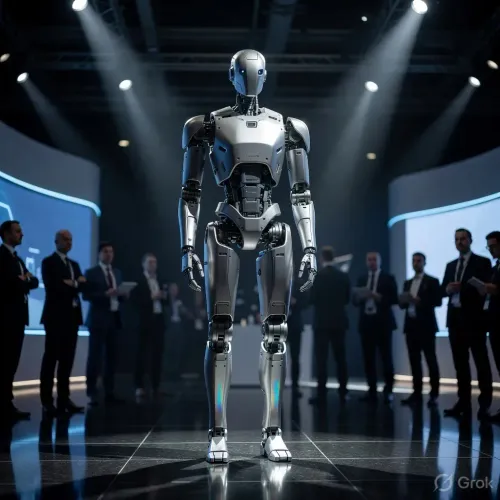
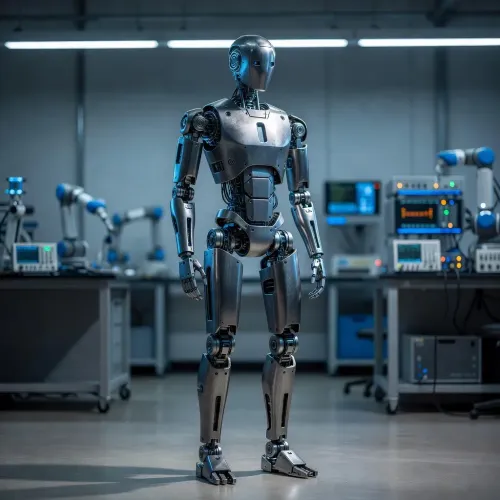
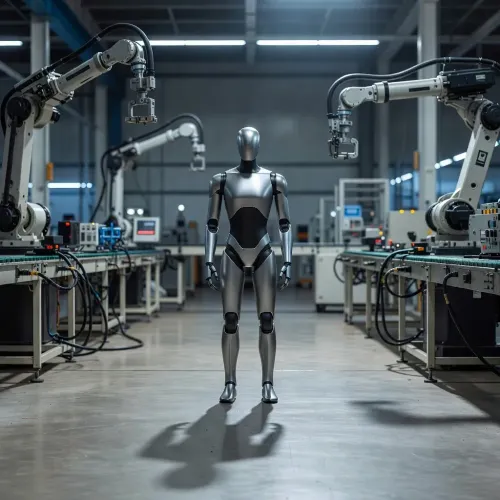
China's humanoid robotics sector is confronting a defining test: whether machines that perform impressively at trade fairs and government showcases can deliver reliable, cost-effective work in real industrial environments, according to a recent analysis. The gap between choreographed demonstration and commercial deployment remains the industry's central unresolved challenge.
The Spectacle vs. the Shop Floor
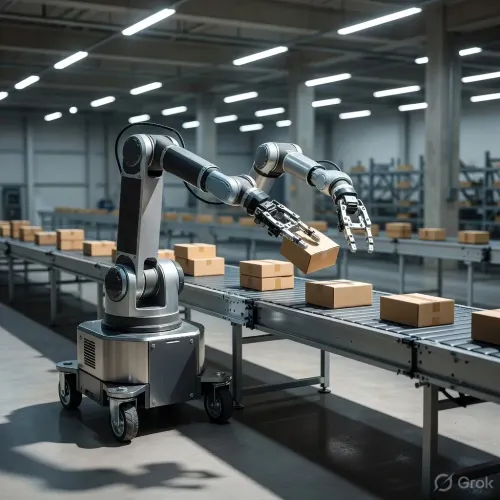
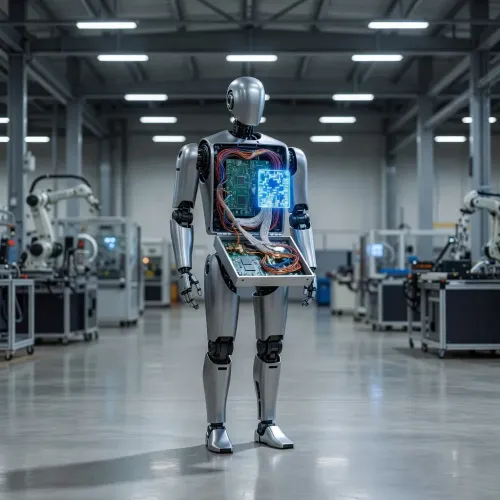
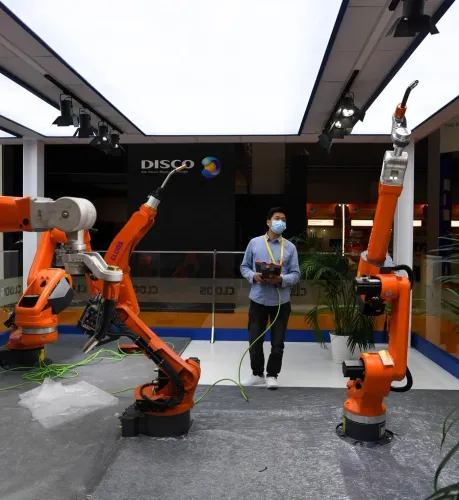
From international trade expos to state-organised factory showcases, China has positioned humanoid robots — machines capable of walking and manipulating objects — as flagship symbols of its push into artificial intelligence (AI) and what analysts call embodied intelligence, where AI systems interact directly with the physical world. Yet behind the spectacle, questions persist over whether these robots can move beyond scripted routines to perform reliable, long-duration tasks in factories, warehouses, and hospitals.
Beijing's Strategic Ambitions
The Chinese government has formally designated humanoid robotics as a strategic emerging industry. A programme launched in 2026 set targets to create more than 100 high-value application scenarios and enable the deployment of tens of thousands of units by the end of that year. In March 2026, China unveiled its first national standard system for humanoid robotics, covering components, intelligent computing, applications, safety, and ethics — a framework developed with input from more than 120 research institutions, companies, and industry users, according to the analysis.
Regulatory Caution and Valuation Concerns
The sector's momentum is being tempered by regulatory scepticism. Chinese regulators have reportedly been slowing initial public offerings (IPOs) of humanoid robotics firms amid concerns that high valuations and state-backed revenues do not accurately reflect underlying commercial demand. Critics argue that early demand is being driven by government funding and infrastructure investment rather than independent commercial willingness — raising questions about genuine market discipline.
Structural Strengths and Persistent Gaps
China does hold notable structural advantages: extensive manufacturing capacity, dense supply chains, and deep expertise in batteries, motors, and sensors. A Shenzhen-based startup is reportedly using synthetic data and virtual simulations to train robots, reducing the cost of physical-world training and has begun limited deployments in industrial settings. However, the core challenge remains economic viability — whether robots can operate safely in unpredictable environments and perform useful tasks at a cost that makes genuine business sense.
Data Security and the Road Ahead
As humanoid robots become more connected and begin collecting physical-world data, scrutiny over data security and technological dependence in overseas markets is expected to intensify. The analysis concludes that the critical question is not whether China can build humanoid robots — it demonstrably can — but whether those robots can become 'sufficiently capable, reliable and affordable to generate genuine demand on a large scale.' That answer remains unproven.
Point of View
But capitalisation is not commercialisation. The decision to slow robotics IPOs signals that even Beijing's regulators sense a valuation-reality mismatch — a rare moment of institutional self-correction in a sector driven heavily by national prestige. The deeper risk is that state-backed demand creates a false floor: robots get deployed in showcase factories, metrics look good on paper, and the hard work of proving cost-competitiveness in genuinely unpredictable environments gets deferred. India, which is building its own automation ambitions, should watch this closely — the lesson is that a dense supply chain and government will are necessary but not sufficient conditions for a robotics industry that can survive without subsidy.
NationPress
24 Oct 2026
Frequently Asked Questions
Why are China's humanoid robots considered unproven in factories?
Despite impressive performances at trade fairs and government showcases, China's humanoid robots have yet to demonstrate reliable, long-duration operation in unpredictable real-world environments such as factories, warehouses, and hospitals. The core challenge is economic viability — whether the robots can perform useful tasks safely at a cost that makes commercial sense.
What is China's 2026 humanoid robotics programme?
The Chinese government launched a programme in 2026 to create more than 100 high-value application scenarios for humanoid robots and enable the deployment of tens of thousands of units by the end of that year. It is part of Beijing's broader strategy to position humanoid robotics as a strategic emerging industry.
Why are Chinese regulators slowing humanoid robotics IPOs?
Regulators are reportedly concerned that the high valuations of humanoid robotics firms and their reliance on state-backed revenues do not accurately reflect underlying commercial demand. This has led to a slowdown in approvals for public listings in the sector.
What advantages does China have in humanoid robotics?
China holds structural strengths including extensive manufacturing capacity, dense supply chains, and deep expertise in batteries, motors, and sensors. A Shenzhen-based startup is also reportedly using synthetic data and virtual simulations to reduce robot training costs, with early industrial deployments underway.
What data security concerns surround China's humanoid robots?
As humanoid robots become more connected and collect physical-world data, analysts expect rising scrutiny over data security and technological dependence, particularly in overseas markets where Chinese-made robots may be deployed.