CM Pema Khandu hails Army outreach in Arunachal border villages
Synopsis
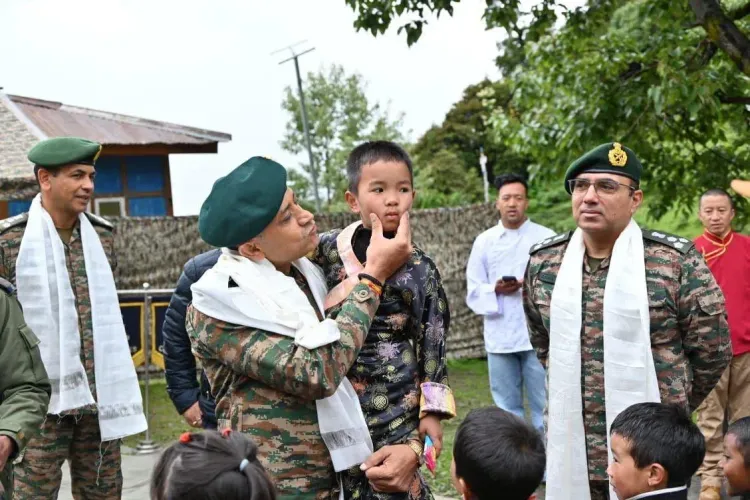
Arunachal Pradesh CM Pema Khandu on 9 July 2026 commended the Indian Army's Gajraj Corps for engaging Gaon Burahs, villagers, and yak graziers in the LAC-adjacent villages of Thingbu and Mago in Tawang district, highlighting education outreach and civil-military bonding at India's northeastern frontier.
Key Takeaways
CM Pema Khandu on 9 July 2026 publicly praised the Indian Army's Gajraj Corps for a community outreach programme in border villages.
The outreach took place in Thingbu and Mago , remote villages in Tawang district adjacent to the Line of Actual Control with China.
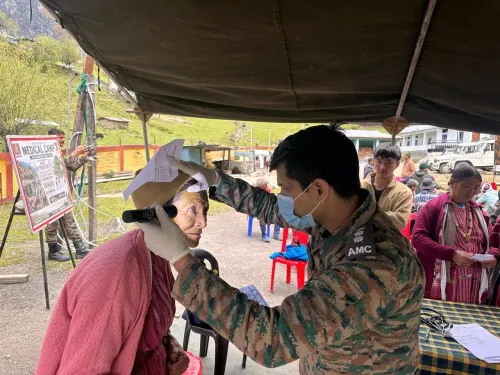
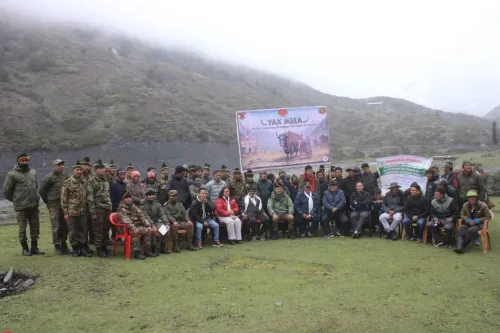
Activities included engagement with Gaon Burahs , yak graziers, and villagers, with a focus on inspiring youth to pursue education.
Lt Gen Neeraj Shukla , Corps Commander of the Gajraj Corps, was specifically appreciated by the Chief Minister for the initiative.
The programme aligns with the long-standing Operation Sadbhavana framework and complements central schemes like the Vibrant Villages Programme targeting frontier hamlets.
Local communities including yak graziers play a critical informal role in border surveillance and military logistics along Arunachal Pradesh's 1,346 km frontier with China.
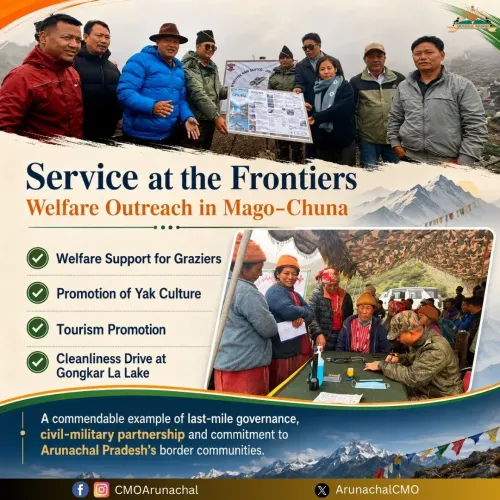
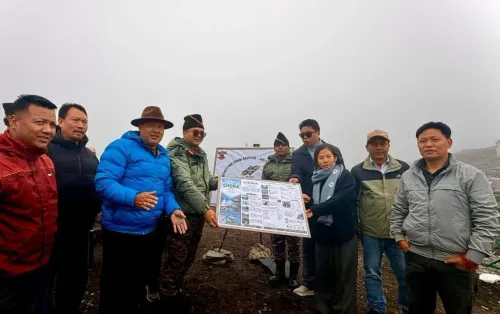
Arunachal Pradesh Chief Minister Pema Khandu on Thursday, 9 July 2026, praised the Indian Army for conducting a community outreach programme in the remote border villages of Thingbu and Mago, reaffirming what he described as the unbreakable bond between the armed forces and frontier communities that keeps India's borders secure.
Context
The outreach, conducted under the aegis of the Gajraj Corps — the IV Corps of the Indian Army headquartered in Tezpur, Assam — brought soldiers into direct engagement with Gaon Burahs (traditional village headmen), local villagers, and yak graziers in Tawang district. The initiative focused on encouraging youth to pursue education and reinforcing values of service, patriotism, and nation-building. CM Khandu specifically appreciated Lt Gen Neeraj Shukla, Corps Commander of the Gajraj Corps, for what he called 'commendable outreach.'
Thingbu and Mago are among the most remote settlements in Arunachal Pradesh, situated adjacent to the Line of Actual Control (LAC) with China. Their strategic significance extends beyond geography — local communities here have historically played a quiet but critical role in supporting military logistics and border surveillance.
Policy Backdrop
The Army's civil engagement in Arunachal Pradesh draws from a long institutional tradition. Operation Sadbhavana, launched in the 1980s, established the framework for civic action programmes across Northeast India's border districts, covering educational support, medical camps, and infrastructure assistance. The Gajraj Corps has been a primary executor of such initiatives in Arunachal Pradesh, where the Indian Army secures a frontier stretching approximately 1,346 km along the border with China.
Successive central governments have complemented Army-led outreach with dedicated schemes targeting border hamlets — from the Border Area Development Programme (BADP) to the more recent Vibrant Villages Programme, which specifically targets sparsely populated frontier settlements in states including Arunachal Pradesh. Together, these create a layered civil-military presence in districts like Tawang.
Stakeholders and Impact
The immediate beneficiaries of such outreach are the border communities themselves — villagers, yak graziers, and the youth of Thingbu and Mago. For yak graziers who operate in high-altitude pastures close to the LAC, regular Army engagement builds trust and provides an informal information network critical to border management. The Gaon Burah institution, a government-recognised system of village-level administration in Arunachal Pradesh, serves as the key intermediary between the Army and local populations.
For the state government, such Army initiatives complement CM Khandu's broader push to integrate border villages into the developmental mainstream. By publicly acknowledging and amplifying the Army's work on social media, the Chief Minister also signals the state's political alignment with civil-military cooperation as a governance priority in a border-sensitive region.
What's Next
Attention will now turn to whether the Gajraj Corps expands similar outreach to other frontier hamlets across Tawang and neighbouring districts ahead of the winter season, when high-altitude access becomes severely restricted. State-level coordination between the Army and district administrations in Tawang is expected to intensify as part of annual operational planning cycles. The Vibrant Villages Programme rollout in Arunachal Pradesh also remains a key indicator of how civil-military synergies translate into on-ground development for communities like those in Thingbu and Mago.
Point of View
Where India's most sensitive territorial dispute with China plays out. By amplifying Army outreach in Thingbu and Mago, Khandu reinforces the political narrative that border communities are both protected and integrated, countering any perception of governmental neglect in frontier hamlets. This fits a broader BJP-led pattern of pairing military presence with development optics in the Northeast, particularly since the launch of the Vibrant Villages Programme. The focus on youth education signals an attempt to build long-term civilian stakes in border security, moving beyond immediate relief to generational investment.
NationPress
9 Jul 2026
Frequently Asked Questions
Where are Thingbu and Mago villages located in Arunachal Pradesh?
Thingbu and Mago are remote border villages in Tawang district of Arunachal Pradesh, situated close to the Line of Actual Control with China, making them among the most strategically sensitive settlements in the state.
What is the Gajraj Corps of the Indian Army?
The Gajraj Corps , officially the IV Corps , is an Indian Army formation headquartered in Tezpur, Assam , responsible for military operations and civic outreach across Arunachal Pradesh and parts of the Northeast.
What is Operation Sadbhavana and how does it relate to this outreach?
Operation Sadbhavana is an Indian Army civic action programme launched in the 1980s that provides educational, medical, and infrastructure support to border communities in Northeast India; the Gajraj Corps outreach in Thingbu and Mago falls within this broader framework.
Who are Gaon Burahs and what role do they play?
Gaon Burahs are government-recognised traditional village headmen in Arunachal Pradesh who act as the primary interface between local communities and administrative or military authorities, making them key partners in Army outreach programmes.
What is the Vibrant Villages Programme and is it relevant to Tawang?
The Vibrant Villages Programme is a central government scheme targeting sparsely populated frontier settlements along India's northern borders, including villages in Arunachal Pradesh such as those in Tawang district, to boost infrastructure and reduce isolation.