HP CM Office: Post-Oath Visit to Orphaned Children Revealed Gaps
Synopsis
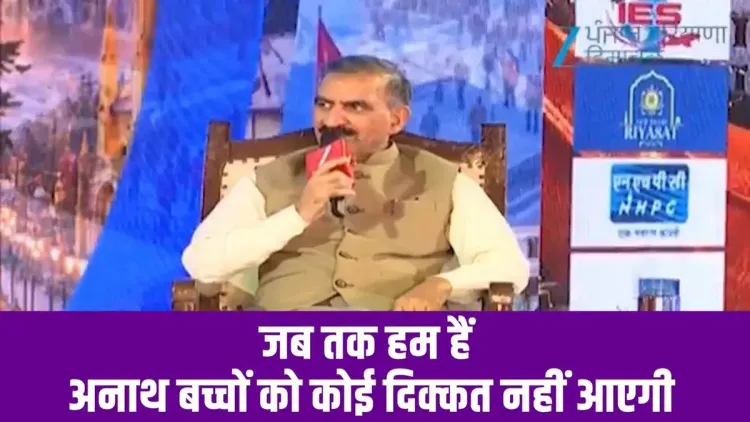
The Chief Minister's Office of Himachal Pradesh has shared a personal account of the CM visiting orphaned children right after his oath at Ridge Maidan, Shimla, finding inadequate facilities and pledging to address their welfare — signalling child care as an early administrative priority.
Key Takeaways
The Chief Minister of Himachal Pradesh visited orphaned children shortly after his oath-taking ceremony at Ridge Maidan, Shimla .
The visit revealed that children lacked proper accommodation and other essential facilities at the time.
The Chief Minister's Office stated a formal resolve to understand and reduce the suffering of children who have lost both parents.
India's Juvenile Justice (Care and Protection of Children) Act, 2015 mandates care and rehabilitation standards for such children, which states must implement.
Himachal Pradesh has existing welfare schemes for vulnerable children covering education, health, and shelter, but ground-level gaps were identified.
Future state budget announcements and departmental orders on Child Care Institutions will indicate whether this commitment is acted upon.
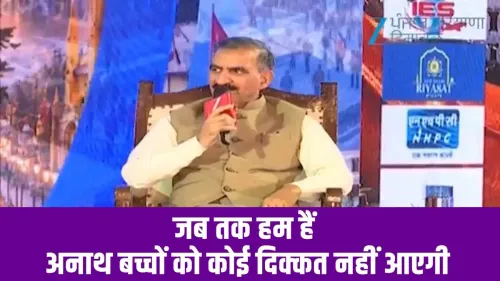
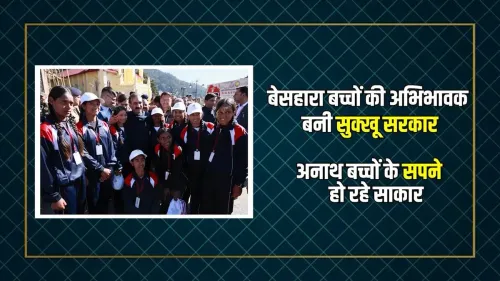
The Chief Minister's Office of Himachal Pradesh shared a personal account on 9 July 2026, describing how the Chief Minister visited orphaned children shortly after the oath-taking ceremony at Ridge Maidan, Shimla, and found their living conditions to be inadequate — a moment the post says prompted a firm resolve to address their pain.
The post, written in Hindi, states: 'माता-पिता के न रहने पर बच्चों के मन पर क्या बीतती है, यह उनसे बेहतर कोई नहीं समझ सकता' — 'No one can understand better than them what a child goes through when parents are no longer there.' The Chief Minister added that after taking the oath at Ridge Maidan, he personally went to meet these children and found that neither proper accommodation nor other essential facilities were in place at that time.
Context
Ridge Maidan is the historic open ground in Shimla where Himachal Pradesh governments traditionally hold their oath-taking ceremonies. A post-oath visit to a children's care facility signals that welfare of orphaned children was among the new administration's early priorities. The Chief Minister's account frames the visit not as a formal inspection but as an empathetic engagement — acknowledging the emotional reality of children who have lost both parents.
The post reflects a broader administrative practice in Indian states, where incoming governments conduct early field visits to public institutions to identify ground-level gaps before framing policy responses.
Policy Backdrop
India's Juvenile Justice (Care and Protection of Children) Act, 2015 sets the legal framework for the care, rehabilitation, and shelter of children in need of protection, including orphans. State governments are responsible for implementing these standards through Child Care Institutions (CCIs) such as children's homes and observation centres.
Himachal Pradesh has historically maintained schemes covering education, health, and shelter support for vulnerable children. However, the Chief Minister's account suggests that at the time of his visit, the facility in question fell short of the standards expected under this framework — with gaps in both accommodation and essential services.
Stakeholders and Impact
The primary stakeholders are orphaned children housed in state-run or state-supported care institutions across Himachal Pradesh. Their conditions — physical, emotional, and infrastructural — are directly shaped by the priority the state government assigns to child welfare in its budgets and departmental orders.
Child rights advocates and workers in Child Care Institutions are secondary stakeholders who depend on government resolve translating into concrete resource allocation. The Chief Minister's public statement, made through the official CMO account, can be read as a commitment signal to both these groups and to the broader electorate.
What's Next
The post closes with the phrase 'हमने उनके इसी दर्द को समझने और उसे कम करने का संकल्प लिया' — 'We took a resolve to understand their pain and reduce it' — indicating that a policy or administrative response is intended, if not already underway. Observers will watch for state budget allocations, departmental orders on infrastructure upgrades to children's homes, or new welfare schemes specifically targeting orphaned children in Himachal Pradesh.
Whether this resolve translates into measurable improvements in staffing, accommodation, and essential services at Child Care Institutions across the state will be the key test of the administration's follow-through on this early commitment.
Point of View
Empathetic account — rather than a formal policy announcement — is a deliberate narrative choice: it humanises governance and builds political capital around child welfare ahead of potential scheme launches. It fits a pattern seen across Indian state administrations where post-election goodwill is channelled into visible welfare commitments targeting the most vulnerable. The real measure, however, will be whether infrastructure upgrades and budget allocations follow the rhetoric. Until concrete orders or allocations are made public, this remains a statement of intent rather than a policy outcome.
NationPress
9 Jul 2026
Frequently Asked Questions
What did the Himachal Pradesh CM find when he visited orphaned children after his oath?
According to the Chief Minister's Office, the CM found that the children lacked proper accommodation and other essential facilities at the time of his post-oath visit.
Where did the Himachal Pradesh oath ceremony take place?
The oath-taking ceremony was held at Ridge Maidan in Shimla , the historic public ground traditionally used for such events in Himachal Pradesh.
What law governs the care of orphaned children in India?
The Juvenile Justice (Care and Protection of Children) Act, 2015 is the primary law governing the care, shelter, and rehabilitation of children without parental support, with implementation responsibility resting with state governments.
What is the HP government's plan for orphaned children?
The Chief Minister's Office has stated a resolve to understand and reduce the suffering of orphaned children. Specific policy measures or budget allocations have not yet been announced publicly.
What are Child Care Institutions in Himachal Pradesh?
Child Care Institutions (CCIs) are state-run or state-supported facilities — including children's homes — that provide shelter, education, and essential services to children in need of care and protection under the Juvenile Justice Act.