China's AI registry vs Trump's deregulation: who leads on rules?

Synopsis
China quietly built a 1,400-entry AI registry while Trump ditched a federal AI review order — the governance gap between the world's two AI superpowers has never been wider, and both sides are now reportedly eyeing bilateral talks.
Key Takeaways
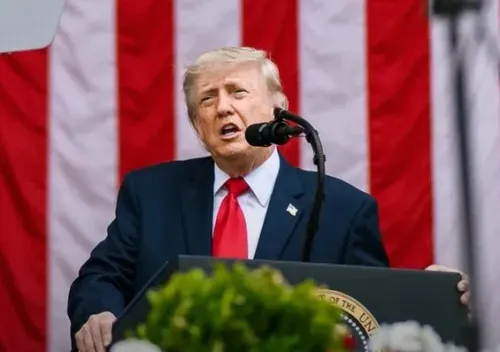
President Donald Trump last week abandoned a draft executive order that would have required US agencies to review advanced AI models, citing competition with China .
China has enforced a mandatory generative AI services filing regime under the Cyberspace Administration of China (CAC) since 2023 .
The full filing process — covering security self-assessments, keyword interception lists, and testing questions — takes three to six months , according to AllBright Law Offices .
As of April 2026 , the CAC had logged 868 filed and 530 registered generative AI services in China .
Major Chinese AI developers subject to the framework include DeepSeek , Zhipu AI , Alibaba Group Holding , and Tencent Holdings .
Both governments are reportedly considering opening a formal bilateral dialogue on AI governance.
China has operated a mandatory registration framework for large language models (LLMs) since 2023, while US President Donald Trump last week abandoned plans to require federal agencies to review advanced AI models — citing the need to preserve America's competitive edge over Beijing. The divergence marks a pivotal moment in how the world's two largest AI powers are approaching governance of the technology.
Trump pulls back on AI oversight
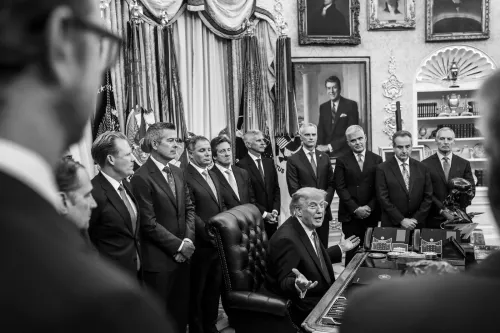
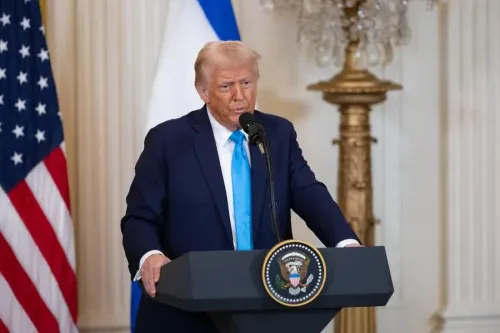
President Trump scrapped a draft executive order that would have directed government agencies to conduct safety reviews of advanced AI models. 'We're leading China, we're leading everybody, and I don't want to do anything that is going to get in the way of that lead,' Trump told reporters, according to CNBC. He added that he felt the order 'could have been a blocker.'
The decision reflects the Trump administration's broader posture: treat AI regulation as a competitive liability rather than a safety imperative. The White House reversal came even as both countries are reportedly considering opening a formal dialogue on the rapidly advancing technology.
How China's layered AI registry actually works
Under rules administered by the Cyberspace Administration of China (CAC) — the country's top internet regulator — AI model developers must submit filings before any public release. The process, known as generative AI services filing, requires companies to provide a security self-assessment report, a keyword interception list, and testing questions.
Documents are first reviewed at the provincial-level CAC, then escalated to the central CAC. The full procedure typically takes three to six months, according to a March blog post by AllBright Law Offices. Major developers subject to this framework include DeepSeek, Zhipu AI, Alibaba Group Holding, and Tencent Holdings.
A lighter track for AI applications
Firms deploying AI applications — such as AI agents that call the API of an already-approved third-party model — fall under a separate, lighter regime called generative AI services registration. This track does not require a security self-assessment and is reviewed only at the provincial level.
As of April 2026, the CAC had logged 868 filed generative AI services and 530 registered ones, according to figures the regulator publishes periodically.
Why it matters
The contrast is stark: China now has a functioning, quantifiable AI registry with nearly 1,400 approved or registered services, while the US has moved away from even a review mandate. Critics of deregulation warn that the absence of federal oversight could allow unsafe models to proliferate; proponents argue it accelerates innovation and keeps American firms globally competitive.
The debate is no longer purely domestic. With both governments reportedly exploring bilateral AI talks, each side's regulatory posture will shape the terms of any future agreement on standards, safety benchmarks, or export controls.
What's next
The immediate question is whether US tech companies — including firms such as Anthropic — will push for voluntary safety frameworks to fill the federal vacuum, or whether Congress will step in. On the Chinese side, the CAC registry continues to expand, and the pace of approvals will be a key indicator of how quickly domestic AI products can reach consumers. Watch for any joint communiqué from potential US–China AI dialogue sessions, which could set informal global norms even without binding regulation.
Point of View
Giving Beijing visibility into every commercial LLM before it reaches users. That dual purpose makes a direct comparison with Western safety frameworks misleading. The more consequential question is whether any forthcoming US–China AI dialogue will treat China's registry as a baseline standard or as a template to avoid — because whichever framing wins will shape global AI governance norms for years.
NationPress
10 Oct 2026
Frequently Asked Questions
Why did Trump cancel the AI executive order?
President Trump scrapped the draft executive order because he believed it could slow America 's AI development relative to China . He told reporters, 'I really thought [the order] could have been a blocker,' according to CNBC .
How does China regulate AI models before release?
China requires AI model developers to complete a generative AI services filing with the Cyberspace Administration of China (CAC) before any public release. The process involves a security self-assessment, keyword interception list, and testing questions, reviewed first at provincial level and then centrally, typically taking three to six months .
How many AI models has China approved?
As of April 2026 , the CAC had recorded 868 filed generative AI services and 530 registered generative AI services in China , according to figures the regulator publishes periodically.
Which Chinese companies must file with the CAC?
Major LLM developers including DeepSeek , Zhipu AI , Alibaba Group Holding , and Tencent Holdings are required to submit filings under the framework. Companies deploying AI applications via third-party approved models follow a lighter generative AI services registration track reviewed only at the provincial level.
Are the US and China talking about AI governance?
Both governments are reportedly considering opening a formal dialogue on AI governance, though no agreement has been announced. The outcome of any such talks could influence global standards on AI safety and model oversight.