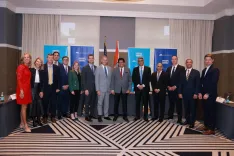
Trump, tech giants sign White House 'Super Intelligence' accord
Synopsis
Trump didn't just rebrand AI as 'Super Intelligence' — he corralled the CEOs of Google, Meta, OpenAI, Anthropic, xAI and Nvidia into a White House accord with board-level accountability built in. The voluntary framework could become law. The geopolitical subtext is unmistakable: Washington is treating this as a race it cannot afford to lose to China.
Key Takeaways
President Trump and six tech leaders signed the White House Accord on Super Intelligence on 30 September 2026 .
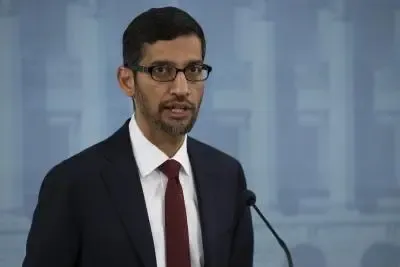
Signatories include Sundar Pichai (Google), Dario Amodei (Anthropic), Mark Zuckerberg (Meta), Greg Brockman (OpenAI), Elon Musk (xAI), and Jensen Huang (Nvidia).
The accord establishes a four-layer oversight framework : internal controls, internal compliance teams, independent external auditors, and independent board-level committees .
Trump signed a separate executive order replacing 'AI' with 'Super Intelligence' in all official US government usage.
The voluntary safeguards could eventually be codified into law or regulation , according to the accord's own language.
The administration simultaneously launched America.gov , a federal services portal powered by 'Super Intelligence'.
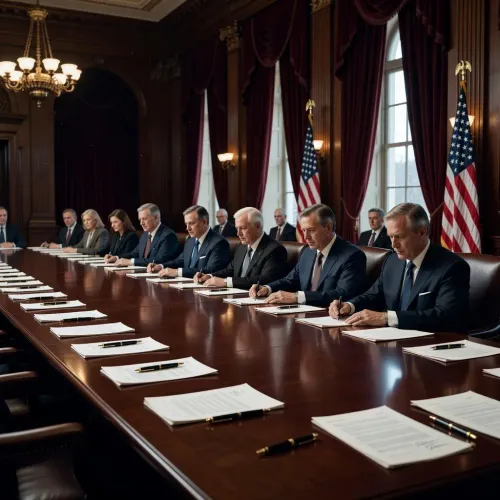
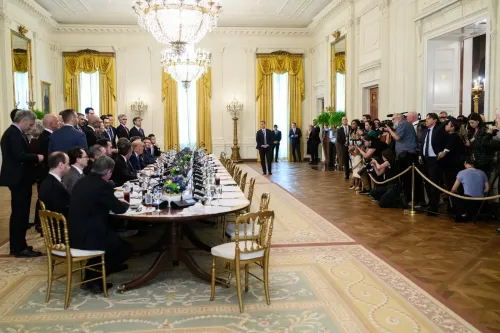
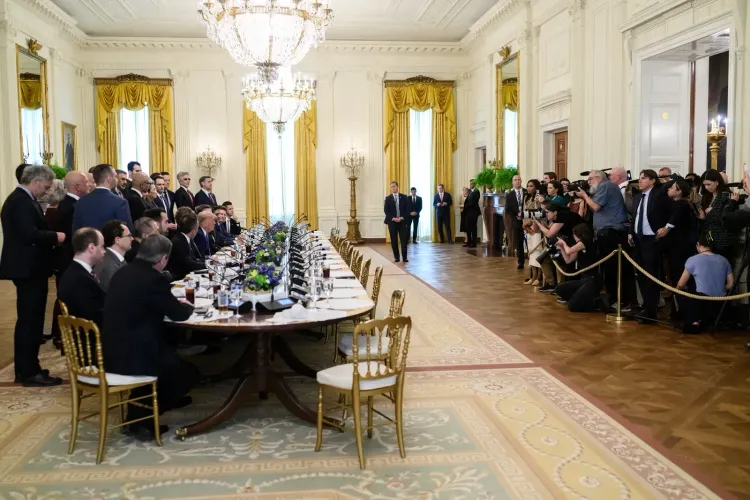
US President Donald Trump and the leaders of several of the world's most powerful technology companies on 30 September 2026 signed a landmark White House accord committing to safeguards, independent audits, and board-level oversight in the development and deployment of advanced 'super intelligence' systems. The agreement, formally titled the 'White House Accord on Super Intelligence' and described as a 'Joint Commitment on Frontier Responsibilities', marks the most significant voluntary governance framework the US government has produced for frontier AI technology to date.
Who Signed and What They Agreed To
The accord was signed by President Trump alongside Google CEO Sundar Pichai, Anthropic CEO Dario Amodei, Meta CEO Mark Zuckerberg, OpenAI President Greg Brockman, xAI founder Elon Musk, and Nvidia CEO Jensen Huang. The participating companies commit to establishing multiple, layered controls to ensure their systems operate safely and as intended across areas including cybersecurity, biosecurity, and chemical threat prevention.
'In order to build a positive future for the American people and the world, we believe every company is responsible for developing its own technology safely and in a way that builds trust with customers and the public,' the accord states.
Four Layers of Oversight
The framework establishes a four-tier oversight architecture. The first layer requires robust internal controls to monitor model capabilities and alignment during both training and deployment. The second empowers a dedicated internal team to verify those controls are functioning and that problems are remedied. The third mandates engagement of an independent external auditor or evaluator to assess the effectiveness of safeguards. The fourth — and most structurally significant — elevates accountability to the corporate boardroom: each company must designate an independent board committee to oversee the entire process, receive reports from internal and external reviewers, and ensure identified problems are resolved.
The Terminology Shift: From 'AI' to 'SI'
The accord was released on the same day Trump signed an executive order directing the federal executive branch to replace the terms 'Artificial Intelligence' and 'AI' with 'Super Intelligence' and 'SI' in all official government usage. Trump argued the new terminology more accurately reflects the capabilities of the technology. 'This isn't — this is extreme intelligence. It's superior intelligence. It's, supreme also intelligence, but the word super is the best word of all and it's the simplest,' he said at the White House event.
Notably, as recently as June 2026, the administration's executive orders still formally used the term 'Artificial Intelligence', making Tuesday's terminological pivot a sharp and deliberate rebranding of the federal government's posture.
Strategic Competition With China
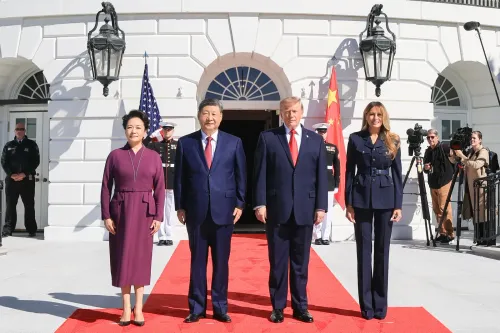
Trump framed the development of super intelligence explicitly as a geopolitical contest. 'Whoever wins super intelligence wins,' he said. 'You're going to have a winner and a loser, and you're probably not going to have a second place.' The remarks underscore the US-China technology race as the central strategic backdrop to Washington's accelerating push on frontier computing.
What Comes Next
The accord leaves open the possibility that its currently voluntary safeguards could eventually become mandatory. 'Over time, it may make sense to codify these steps into laws or regulations,' the document says, while also affirming that signatory companies consider these controls critical regardless of any legal requirement. Alongside the accord and the terminology change, the administration launched America.gov, a new digital gateway for federal services that the White House says will use 'Super Intelligence' to help Americans navigate government information. The participating companies are also expected to meet regularly to develop shared standards and best practices for system safety.
Point of View
Zuckerberg, Pichai, and Amodei to sign the same document is itself a geopolitical signal aimed squarely at Beijing. The voluntary-to-mandatory language is a pressure valve: it signals legislative intent while giving Congress and regulators time to catch up. The rebranding of 'AI' to 'Super Intelligence' is strategically deliberate — it resets the public narrative from a technology that feels routine to one that demands national mobilisation. The risk is that a voluntary accord with no enforcement mechanism becomes a reputational shield rather than a real constraint on frontier development.
NationPress
30 Sept 2026
Frequently Asked Questions
What is the White House Accord on Super Intelligence?
It is a voluntary governance agreement signed on 30 September 2026 by President Trump and the CEOs of Google, Anthropic, Meta, OpenAI, xAI, and Nvidia, committing their companies to layered safeguards, independent audits, and board-level oversight of advanced 'super intelligence' systems. The accord covers risks in cybersecurity, biosecurity, and chemical threats, and leaves open the possibility of the commitments becoming legally mandatory.
Why did Trump rename 'Artificial Intelligence' to 'Super Intelligence'?
Trump signed an executive order on 30 September 2026 directing the federal government to replace the terms 'Artificial Intelligence' and 'AI' with 'Super Intelligence' and 'SI' in official usage, arguing the new language better reflects the technology's capabilities. He described it as 'extreme intelligence' and 'superior intelligence' at the White House signing event.
Which tech company leaders signed the accord?
The accord was signed by Google CEO Sundar Pichai, Anthropic CEO Dario Amodei, Meta CEO Mark Zuckerberg, OpenAI President Greg Brockman, xAI founder Elon Musk, and Nvidia CEO Jensen Huang, alongside President Trump.
Could the voluntary safeguards become law?
The accord explicitly leaves that door open, stating: 'Over time, it may make sense to codify these steps into laws or regulations.' The document also affirms that signatory companies regard the controls as critical regardless of whether they are ever made legally binding.
How does this accord fit into the US-China technology competition?
President Trump framed the development of super intelligence as a winner-takes-all geopolitical contest, saying 'whoever wins super intelligence wins' and warning there would be no second place. The accord, combined with the executive order and the America.gov launch, represents the administration's most comprehensive effort yet to centralise and accelerate US frontier-technology leadership with China as the explicit strategic rival.