Sundar Pichai, top tech CEOs sign White House AI safety accord on frontier models
Synopsis
The biggest names in AI — Google, Meta, Nvidia, Anthropic — have signed a White House pact promising self-policing on frontier models. But with no legal teeth, no regulator, and an enforcement body still on the drawing board, the accord's real impact hangs entirely on whether Silicon Valley keeps its word.
Key Takeaways
Google CEO Sundar Pichai , Meta 's Mark Zuckerberg , Nvidia 's Jensen Huang , and Anthropic 's Dario Amodei signed the accord on 30 September 2026 .
The agreement is titled the White House Accord on Superintelligence Joint Commitment on Frontier SI Responsibility .
Safeguards include internal risk reviews , independent external auditors , and board-level scrutiny — modelled on corporate financial controls.
The accord creates no legally enforceable standards and establishes no government regulator .
President Trump called it 'morally binding' and said companies would 'largely police themselves'; a monitoring committee of roughly 10 people is under consideration but unconfirmed.
The EU has adopted binding AI rules; the US continues to rely on voluntary commitments and executive guidance.
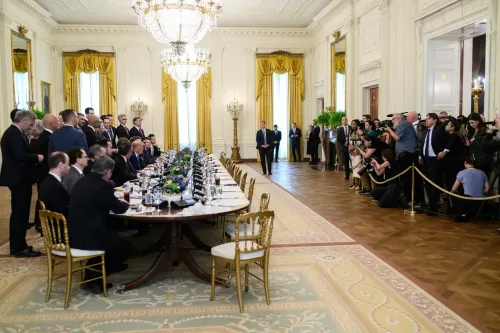
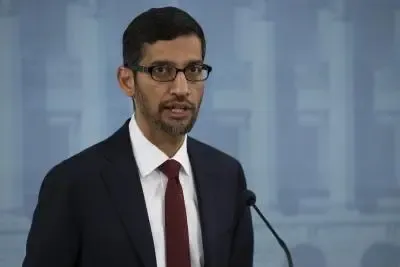
Google CEO Sundar Pichai joined fellow technology executives on 30 September 2026 in signing a White House accord committing their companies to internal controls, independent audits, and board-level oversight as they build increasingly powerful artificial intelligence systems. The agreement, titled the White House Accord on Superintelligence Joint Commitment on Frontier SI Responsibility, sets common expectations for firms developing advanced AI models — though it creates no legally enforceable standards and establishes no government regulator.
What the Accord Requires
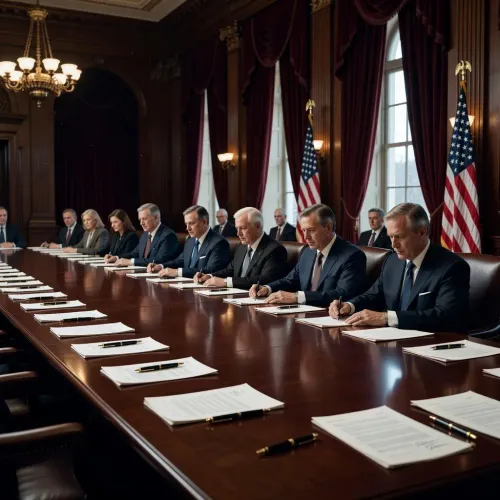
The agreement mandates internal risk reviews, evaluations by outside assessors, and independent scrutiny by company boards of directors. Signatories include some of the largest names in artificial intelligence development. The safeguards are structured along the lines of financial controls already used by major corporations, according to Pichai.
Meta CEO Mark Zuckerberg described the accord as calling for 'robust internal controls' and systems designed to detect problems early. He framed it as a starting point rather than a final settlement. 'The idea isn't that this is the only thing that we will ever do,' Zuckerberg said. 'It is that this is a start and an accord that the whole industry could come to.'
Key Voices From the Signing
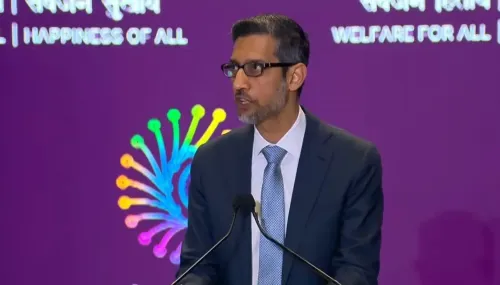
Pichai, an Indian-born executive, said the industry had been called to take greater responsibility for AI risks. 'I think this movement is historic and consequential, and I think there are extraordinary benefits to this technology,' he said, adding: 'We have to make sure we are addressing the risks, and the president has asked us as an industry to step up.'
Nvidia CEO Jensen Huang pushed back on the notion that safety requirements necessarily constrain innovation. 'There's no conflict between innovation, technology, and safety,' Huang said. He argued the technology was 'so consequential to humanity' and pledged to advance it 'responsibly and safely.'
Anthropic CEO Dario Amodei sounded a notably more cautious tone, acknowledging both the promise and the peril of the technology. 'I think the technology has very real risks, and you know, the mechanism how we address those risks is still under discussion,' Amodei said. Anthropic is widely regarded as among the more safety-focused frontier AI developers.
What President Trump Said
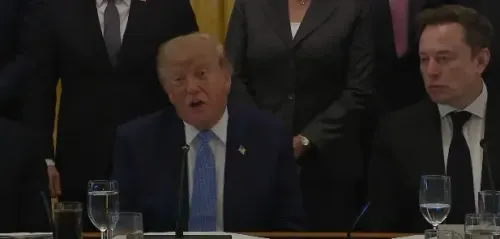
President Donald Trump described the accord as 'morally binding' while conceding it was fundamentally self-regulatory. 'It's all self-regulating,' he said. Trump argued that commercial incentives — reputational and business risk — would drive companies to prevent failures. He added that the Justice Department, FBI, and CIA would pursue bad actors who misuse the technology.
Trump also said the administration was considering forming an oversight committee of roughly 10 people to monitor the AI industry. No details on membership, authority, or enforcement powers were announced.
The Wider Regulatory Debate
The accord arrives as governments worldwide grapple with whether voluntary industry commitments are adequate for systems capable of reshaping employment, national security, elections, and access to information. The European Union has enacted binding, risk-based AI legislation, while the United States has thus far relied on executive action, agency guidance, and company-level pledges. Critics argue that without legally enforceable standards, voluntary accords risk becoming little more than public-relations exercises, particularly as AI capabilities accelerate. This is not the first such commitment from the industry — previous voluntary safety pledges at the UK AI Safety Summit in 2023 drew similar scrutiny over enforcement gaps.
How rigorously the accord's internal controls and audits are implemented — and whether a formal oversight body ever takes shape — will determine whether this moment translates into a durable governance framework or remains a high-profile symbolic gesture.
Point of View
A named regulator, or even a finalised oversight committee means the entire edifice rests on the commercial self-interest of companies that also have enormous incentives to race ahead. Amodei's candour about 'very real risks' whose remedies are 'still under discussion' is the most honest sentence in the room — and the most damning indictment of a deal that calls itself historic.
NationPress
30 Sept 2026
Frequently Asked Questions
What is the White House Accord on Superintelligence?
It is a voluntary agreement signed on 30 September 2026 by leading AI companies, including Google, Meta, Nvidia, and Anthropic, committing them to internal risk reviews, independent audits, and board-level oversight for frontier AI models. The accord sets common industry expectations but does not create legally enforceable rules or a government regulator.
Who signed the White House AI safety accord?
Signatories include Google CEO Sundar Pichai, Meta CEO Mark Zuckerberg, Nvidia CEO Jensen Huang, and Anthropic CEO Dario Amodei, among other technology executives. The accord was announced at the White House with President Donald Trump present.
Is the White House AI accord legally binding?
No. The accord is voluntary and creates no legally enforceable standards. President Trump described it as 'morally binding' and said the companies would largely self-regulate. A proposed monitoring committee of about 10 people is under consideration but has no confirmed membership or enforcement powers.
How does the US approach to AI regulation compare with the EU?
The European Union has enacted binding, risk-based AI legislation that imposes legal obligations on developers. The United States has relied primarily on executive action, agency guidance, and voluntary company commitments, of which this accord is the latest example.
What did Anthropic CEO Dario Amodei say about AI risks?
Amodei acknowledged that AI carries 'very real risks' and said the mechanisms for addressing those risks are 'still under discussion.' His remarks were notably more cautious than those of other signatories, reflecting Anthropic's positioning as a safety-focused frontier AI developer.