Sacks Defends White House AI Accord Against Democrat Pushback
Synopsis
White House AI and Crypto Czar David Sacks defends the White House Accord on Super Intelligence, arguing fiduciary duty, D&O insurance liability, and existing FTC and securities law make its governance framework legally binding — and accuses Democrats of exploiting AI safety as a campaign issue.
Key Takeaways
White House AI and Crypto Czar David Sacks defended the White House Accord on Super Intelligence against Democratic criticism on October 1, 2026 .
Once an independent auditor reports a safety issue to a board committee, directors face a fiduciary duty to act — making the Accord's governance legally consequential.
A bad-faith auditor finding can give a D&O insurance carrier grounds to deny directors-and-officers coverage, creating a strong personal compliance incentive.
Any public claim by a company that contradicts external audit findings remains subject to FTC regulations and securities law .
Sacks argues the Democratic alternative — a freeze on frontier AI development — cedes ground to China at a critical moment.
He accuses Democrats of preferring AI safety as a campaign issue rather than acknowledging the Accord as substantive policy progress.
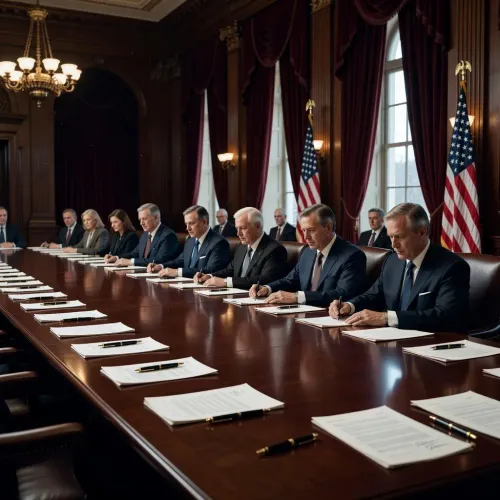
The battle lines over America's AI governance just got sharper. White House AI and Crypto Czar David Sacks fired back at Democratic critics on Thursday, October 1, 2026, defending the White House Accord on Super Intelligence as a legally enforceable framework — not the toothless handshake deal his opponents are calling it.
Why Sacks Says 'Voluntary' Does Not Mean 'Optional'
The central Democratic attack is that the Accord is mere self-policing — companies sign up, companies decide whether to comply. Sacks rejects that framing head-on. He cites investor Gavin Baker's analysis to make the legal mechanics concrete: once an independent auditor flags a safety issue to an independent board committee, corporate directors carry a fiduciary duty to act on it. Ignore the finding, and personal liability follows.
The second legal tripwire is insurance. A bad-faith finding by an auditor gives a directors-and-officers (D&O) carrier grounds to deny coverage — a consequence no executive team takes lightly. That threat alone transforms a voluntary commitment into a compliance imperative with real teeth.
The third layer is existing federal law. If a company publicly claims it is meeting Accord standards and the external audit says otherwise, that gap becomes actionable under FTC regulations and securities law. The Accord, in Sacks's framing, is not a replacement for regulation — it is a trigger mechanism that activates existing enforcement.
The China Argument at the Heart of the Debate
Sacks positions the Democratic alternative — a freeze on frontier AI development — as strategically reckless. His argument is direct: while American labs pause, China races ahead. The Accord, he contends, threads the needle between safety and speed, allowing development to continue under a verified governance structure rather than grinding it to a halt.
This is the Trump administration's core AI doctrine in miniature — lead, don't stop. The Accord represents that doctrine in contractual form, binding frontier developers to safety audits without surrendering the competitive ground that Washington believes defines the next decade of geopolitical power.
Sacks Accuses Democrats of Weaponising AI Safety
The sharpest line in Sacks's post is not a legal argument — it is a political one. He accuses Democrats of preferring AI safety as a campaign issue over acknowledging genuine progress. In his telling, admitting the Accord works would cost them a talking point, so they dismiss it instead.
It is a pointed charge. The Accord's architecture — voluntary entry, external audit, board oversight, existing-law enforcement — is precisely the kind of layered, market-compatible governance that Silicon Valley has long argued is more effective than blanket legislative bans. Whether Congress agrees will define the next phase of this debate.
Point of View
Then existing legal infrastructure as the enforcement engine — a model that sidesteps the slow pace of new legislation while retaining real accountability. The fiduciary-duty and D&O-insurance arguments are legally credible and signal that the administration has thought carefully about durability. However, the political charge against Democrats cuts both ways: by attributing opposition purely to electoral cynicism, Sacks risks dismissing legitimate concerns about whether external auditors can be sufficiently independent from the very companies they audit. The China-competition framing, while powerful, also tends to foreclose deliberation — a rhetorical pattern that deserves scrutiny even when the competitive stakes are real.
NationPress
2 Oct 2026
Frequently Asked Questions
What is the White House Accord on Super Intelligence?
The White House Accord on Super Intelligence is a governance framework for frontier AI development introduced by the Trump administration. Companies enter it voluntarily, but the Accord activates independent safety audits, board-level oversight, and existing federal law enforcement for any compliance failures.
Why does David Sacks say the AI Accord has legal teeth?
Sacks argues that once an independent auditor reports a safety issue to a company's board, directors face a fiduciary duty to act on it. Additionally, a bad-faith finding can void D&O insurance coverage, and any false public compliance claim is subject to FTC and securities law.
What do Democrats want instead of the White House AI Accord?
According to Sacks, Democrats prefer a freeze on frontier AI development. He argues this approach would allow China to advance its own AI capabilities while American development stalls.
Who is Gavin Baker and why does Sacks cite him?
Gavin Baker is an investor whose analysis Sacks references to explain the fiduciary and insurance liability mechanics that give the Accord's governance structure real legal consequences for corporate directors.
What is a D&O carrier and how does it relate to AI governance?
A D&O, or directors-and-officers, carrier is an insurer that covers executives against personal liability. Sacks argues that a bad-faith finding from an AI safety auditor could give the carrier grounds to deny coverage, making compliance a matter of personal financial risk for corporate leaders.