CM Himanta marks 100 years of UPSC, hails its role in Viksit Bharat
Synopsis
Assam CM Himanta Biswa Sarma marked 100 years of UPSC on 2 October 2026, praising the Commission's legacy of merit and integrity, and calling it central to building a future-ready civil service for Viksit Bharat by 2047.
Key Takeaways
UPSC completes 100 years in 2026, marking a major milestone since its establishment in 1926 under British India.
Assam CM Himanta Biswa Sarma lauded UPSC's role in 'strengthening administration and serving the people,' echoing PM Modi's framing.
UPSC recruits officers for the IAS, IPS, IFS and dozens of other central services through one of the world's most competitive examinations.
CM Sarma connected UPSC's future role to the Viksit Bharat vision — a developed India by 2047 .
The Commission's core values of merit, integrity and public service were highlighted as foundational to India's nation-building project.
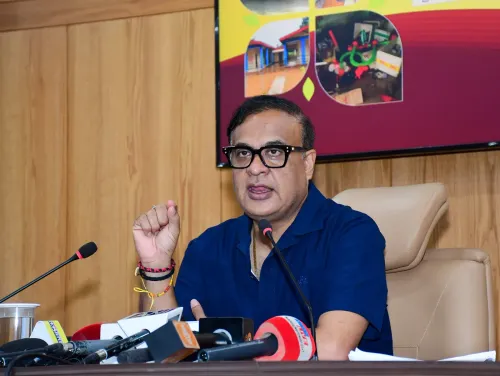
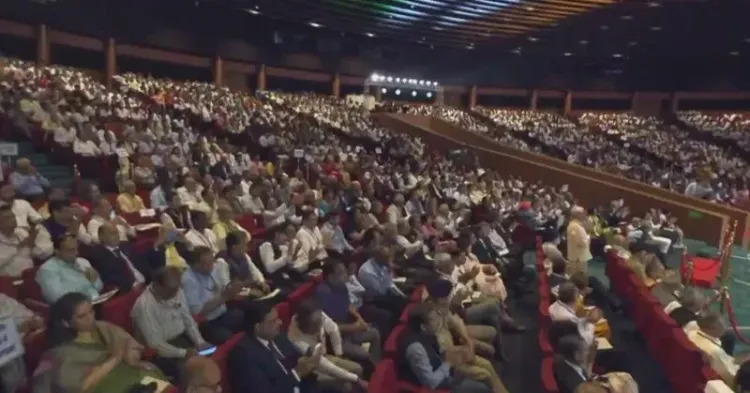
A century of filtering India's finest minds into public service — and Assam Chief Minister Himanta Biswa Sarma wants the country to pause and recognise it. On 2 October 2026, CM Sarma took to X to mark 100 years of the Union Public Service Commission (UPSC), calling the milestone 'a proud moment in India's journey of public service.'
A century of merit and the mandate it carries
Quoting Prime Minister Narendra Modi, CM Sarma noted that for a full century, UPSC has played 'an important role in strengthening administration and serving the people.' The Commission, established in 1926 under British India's Lee Commission recommendations, has since evolved into the constitutional body that recruits officers for the Indian Administrative Service (IAS), the Indian Police Service (IPS), the Indian Foreign Service (IFS), and dozens of other Group A and B central services. Its centenary is not just an institutional anniversary — it is a reminder of how a single examination has shaped the entire architecture of Indian governance.
CM Sarma described UPSC's legacy as one of 'merit, integrity and public service,' three values that have defined — and at times been tested by — the Commission's long history. The civil services examination, considered one of the most competitive in the world, draws over a million applicants annually for a few hundred final selections. That funnel, unchanged in its essential rigour across ten decades, is what Sarma is celebrating.
The Viksit Bharat connection
The CM explicitly linked UPSC's next chapter to Viksit Bharat — the government's flagship vision of a developed India by 2047, the centenary of Independence. His argument is straightforward: a future-ready nation needs a future-ready civil service, and UPSC is the engine that builds it. As India accelerates urbanisation, digital governance, and infrastructure delivery, the demands on the bureaucracy are evolving fast — and so, the subtext goes, must the examination and training frameworks that UPSC oversees.
For CM Sarma, who as a state chief minister works daily with IAS officers recruited through this very system, the tribute carries operational weight, not just ceremonial sentiment. The North-East, a region long dependent on effective district administration for development delivery, has particular stakes in a high-calibre civil service pipeline.
Point of View
Administrative reform, and whether the generalist-IAS model suits a 21st-century developmental state. By anchoring his tribute to the Viksit Bharat framework, CM Sarma subtly positions UPSC not as a relic but as a living instrument of national ambition. For BJP-governed states, celebrating institutional continuity while gesturing toward reform is a delicate but deliberate balance. The North-East's own development story — heavily mediated by district-level administration — gives Sarma's endorsement a practical credibility beyond political signalling.
NationPress
2 Oct 2026
Frequently Asked Questions
When was UPSC established?
UPSC was established in 1926 , making 2026 its centenary year. It was created following the recommendations of the Lee Commission under British India.
What is the significance of UPSC's 100 years?
A century of UPSC marks 100 years of merit-based recruitment for India's civil services, including the IAS, IPS, and IFS, underpinning the country's administrative framework since before Independence.
What did CM Himanta Biswa Sarma say about UPSC?
CM Sarma called UPSC's centenary 'a proud milestone,' praised its legacy of merit, integrity, and public service, and said the institution will be central to building a capable civil service for Viksit Bharat.
What is Viksit Bharat and how does UPSC relate to it?
Viksit Bharat is the Indian government's vision of a fully developed nation by 2047 , the centenary of Independence. CM Sarma argued that a future-ready civil service — recruited through UPSC — is essential to achieving that goal.
How competitive is the UPSC civil services examination?
The UPSC civil services examination is considered one of the most competitive in the world, with over a million applicants annually competing for a few hundred final selections across the IAS, IPS, IFS, and other services.