CM Fadnavis Launches 'Invest Maharashtra', Eyes $1 Trillion Economy
Synopsis
CM Devendra Fadnavis and Deputy CM Sunetra Ajit Pawar launched 'Invest Maharashtra' in Mumbai, presenting 67 MoUs worth over ₹8.5 lakh crore across sectors like semiconductors, aerospace and renewables, as Maharashtra charts a course to a $1 trillion economy by 2030.
Key Takeaways
Invest Maharashtra platform launched in Mumbai on October 1, 2026 by CM Devendra Fadnavis and Deputy CM Sunetra Ajit Pawar .
67 proposed MoUs representing over ₹8.5 lakh crore in investment and more than 3,00,000 projected jobs .
Priority sectors include data centres, semiconductors, renewable energy, aerospace, defence, healthcare, and agro-processing .
Government commits to single-window coordination across departments for land, power, permits, and manpower for every investor.
MMRDA has completed ELU mapping of 2,100 sq km to plan Mumbai-3 and Mumbai-4 urban nodes — described as India's fastest such process.
Maharashtra targets a $1 trillion state economy by 2030 , with industry also urged to contribute to water conservation and drought relief.
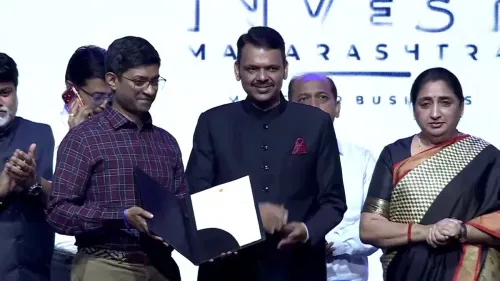
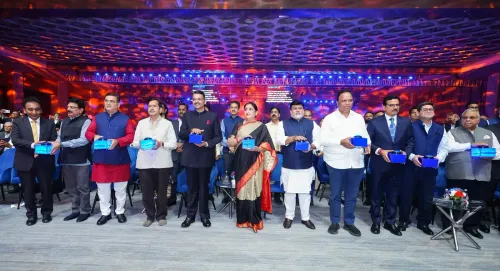
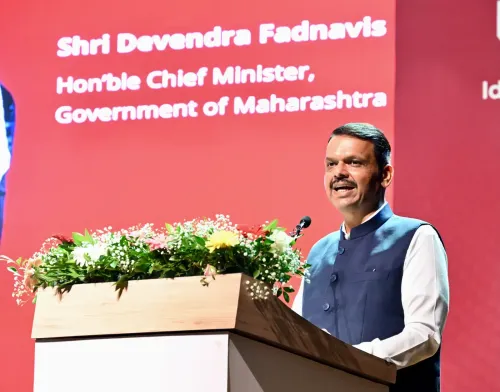
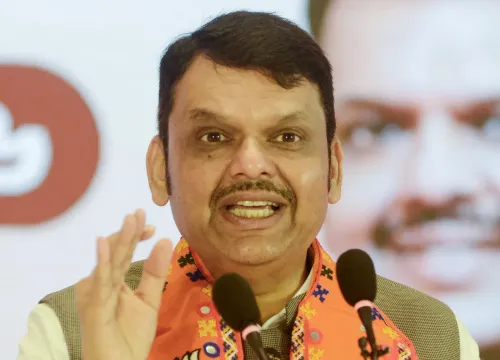
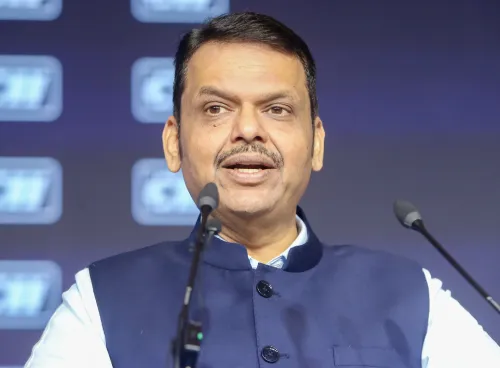
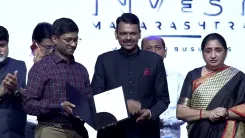
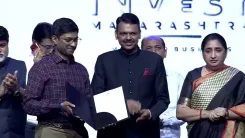
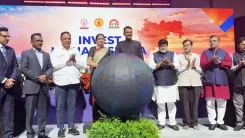
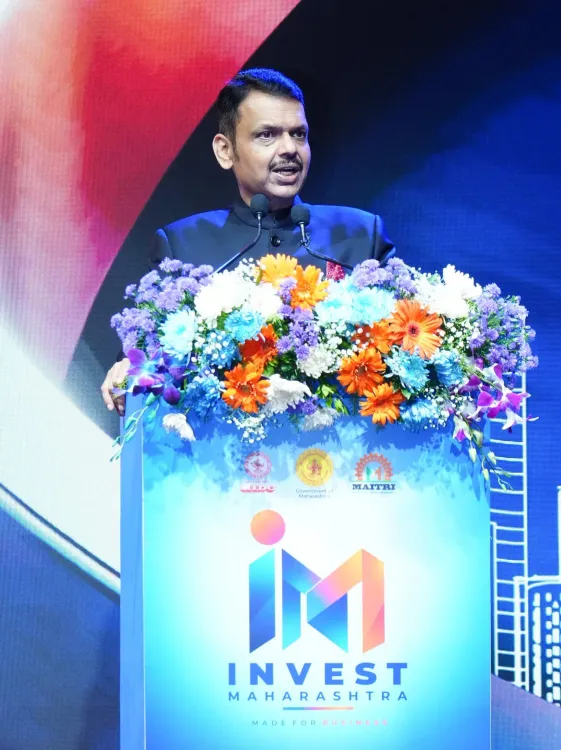
Maharashtra just made its most ambitious pitch yet to global capital. Chief Minister Devendra Fadnavis and Deputy Chief Minister Sunetra Ajit Pawar formally launched the 'Invest Maharashtra' platform in Mumbai on October 1, 2026, unveiling a portfolio of 67 proposed MoUs worth over ₹8.5 lakh crore — a number large enough to reshape the state's economic geography for a generation.
₹8.5 Lakh Crore in MoUs — and the Sectors Behind the Number
The 67 proposed memoranda of understanding are projected to generate over 3,00,000 direct and indirect jobs, with investments spanning data centres, semiconductors, renewable energy, advanced manufacturing, aerospace, defence, healthcare, and agro-processing — precisely the sectors global supply-chain realignment is currently rewarding. CM Fadnavis was explicit: benefits must cascade beyond large corporations to local MSMEs, suppliers, farmers, and youth. He called on industry to absorb local firms into supply chains, fund skill training in partnership with institutions, and support expansion of homegrown enterprises.
The platform's new logo — merging the letters 'I' and 'M' — encapsulates its identity: 'Made for Business'. Fadnavis gave that phrase concrete meaning: when an investor contacts an official, awaits a decision, or breaks ground on a project, government must respect their time, own problems, resolve them, and stay alongside the investor all the way to commercial scale.
One-Government Promise: Land, Power, Permits — All Coordinated
The architecture of 'Invest Maharashtra' is explicitly anti-silo. Once an investor selects a project, the government accepts responsibility for coordinating across departments to deliver land, electricity, infrastructure, approvals, and skilled manpower — eliminating the investor's need to navigate multiple ministries. The Chief Minister described this as the state operating as a single, unified entity rather than a collection of competing departments.
Mumbai-3, Mumbai-4, and the Regional Spread
MMRDA has completed an Existing Land Use survey of approximately 2,100 sq km to lay the planning foundation for the proposed Mumbai-3 and Mumbai-4 urban nodes — described as the fastest ELU process completed in India. Investment proposals span Chandrapur, Wardha, Nagpur, Gondia, Nashik, Jalgaon, Dhule, Chhatrapati Sambhajinagar, Jalna, Pune, Ahilyanagar, Ratnagiri, Palghar, and the Mumbai Metropolitan Region, signalling a deliberate effort to distribute growth beyond Maharashtra's western coastal belt.
The $1 Trillion Goalpost by 2030
CM Fadnavis anchored every commitment to a single, time-bound target: a $1 trillion state economy by 2030. He framed the number not as an abstraction but as a promise of higher household incomes, empowered districts, and young Maharashtrians who no longer need to leave home to find opportunity. Plans for an Education City, a Medi-City, and an AI and Innovation City — weaving together industry, skills, research, health, and technology in integrated campuses — were cited as structural pillars of that journey.
Industry Called to Act on Water Crisis Too
In a notable pivot, Fadnavis called on industry to treat Maharashtra's drought-hit regions as a corporate social responsibility imperative, urging liberal contributions to the Chief Minister's Relief Fund and deploying engineering and research expertise toward water conservation, efficient irrigation, and wastewater recycling. The ask links industrial growth explicitly to rural resilience — a signal that the state views equitable development, not just aggregate GDP, as the true measure of success.
Senior ministers including Mangalprabhat Lodha, Ashish Shelar, Jaykumar Rawal, Sanjay Sawkare, and Uday Samant attended the launch. Maharashtra has framed its intent; the world's investors are now watching whether delivery matches ambition.
Point of View
Coming at a moment when global firms are actively diversifying supply chains away from China. By bundling 67 MoUs under a 'Made for Business' umbrella and promising unified government coordination, Fadnavis is attempting to solve the single biggest complaint of foreign investors in India: bureaucratic fragmentation. The $1 trillion target by 2030 is audacious — Maharashtra's current GSDP sits well below that — but the geographic spread of proposals from Nagpur to Ratnagiri suggests the government is at least aware that concentrated coastal growth alone cannot deliver the political or economic legitimacy it needs. The water-conservation ask to industry, folded into an investment summit, quietly signals that climate stress is becoming a governance variable, not just a CSR afterthought.
NationPress
2 Oct 2026
Frequently Asked Questions
What is Invest Maharashtra?
'Invest Maharashtra' is a state government platform launched by CM Devendra Fadnavis on October 1, 2026, designed to position Maharashtra as a premier global investment destination by offering unified, single-government coordination for investors across land, power, permits, and skilled labour.
How much investment is expected from the Invest Maharashtra launch?
The platform was launched with a portfolio of 67 proposed MoUs expected to attract over ₹8.5 lakh crore in investment and generate more than 3,00,000 direct and indirect jobs .
What sectors are targeted under Invest Maharashtra?
The key sectors include data centres, semiconductors, renewable energy, advanced manufacturing, aerospace, defence, healthcare, and agro-processing — all identified as high-growth future industries.
What is Maharashtra's $1 trillion economy target?
Maharashtra aims to become a $1 trillion economy by 2030 , with Chief Minister Fadnavis linking the goal to higher household incomes, empowered districts, and opportunities for youth within the state.
What are Mumbai-3 and Mumbai-4?
Mumbai-3 and Mumbai-4 are proposed new urban nodes for which MMRDA has completed an Existing Land Use survey of approximately 2,100 sq km — described by the government as India's fastest-ever ELU process — to provide a planning foundation for their development.