Maharashtra CM Fadnavis Clears Projects Worth ₹89,731 Cr
Synopsis
The Chief Minister's Office of Maharashtra announced approval of five projects worth ₹89,731 crore, tagged to CM Devendra Fadnavis. The move reinforces Maharashtra's standing as a top industrial investment destination and aligns with India's broader manufacturing push.
Key Takeaways
The Maharashtra government has approved 5 projects with a combined value of ₹89,731 crore .
The announcement was made by the Chief Minister's Office of Maharashtra on 27 May 2026 .
The approvals are directly associated with Chief Minister Devendra Fadnavis , who has prioritised industrial promotion.
The move aligns with the national Make in India initiative and Maharashtra's competitive industrial policy.
Key stakeholders include industrial investors and the state workforce , with employment generation expected across project sites.
Execution milestones — including land acquisition and capital deployment — will determine the real-world impact of these approvals.
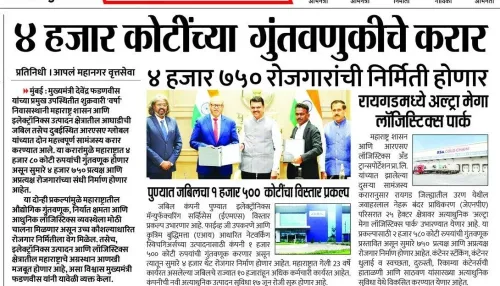
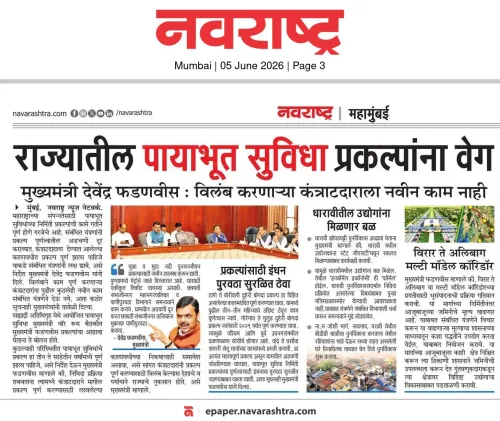
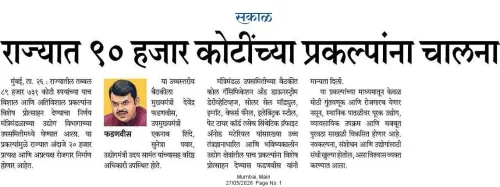
The Chief Minister's Office of Maharashtra announced on Wednesday, 27 May 2026 that the Maharashtra government has approved five major projects worth a combined ₹89,731 crore, a move framed as a significant push for industrial and infrastructure growth in the state. The announcement, shared via the official CMO handle and tagged to Chief Minister Devendra Fadnavis, signals the state's continued effort to attract large-scale investment.
Context
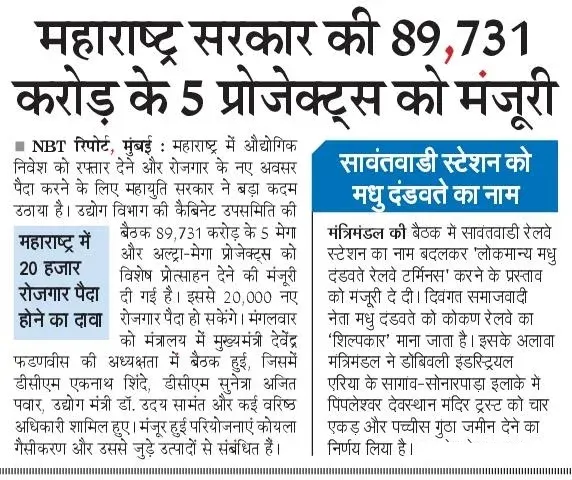
The post, in Hindi, states: 'महाराष्ट्र सरकार की ₹89,731 करोड़ के 5 प्रोजेक्ट्स को मंजूरी' — ('Maharashtra government approves 5 projects worth ₹89,731 crore'). The announcement is attributed directly to the office of Chief Minister Devendra Fadnavis, who has consistently positioned industrial promotion as a cornerstone of the state's economic agenda across his tenures in office.
The approval of five projects in a single announcement, at a combined outlay exceeding ₹89,000 crore, reflects the scale at which Maharashtra is pursuing investment commitments. The state has historically led among Indian states in attracting large industrial proposals, leveraging its established infrastructure, port connectivity, and skilled workforce base.
Policy Backdrop
Maharashtra's project-approval drive is closely aligned with the national Make in India initiative, launched in 2014, which sought to position India as a global manufacturing hub. State governments have since competed to translate that national ambition into ground-level investment through dedicated industrial corridors, single-window clearances, and policy incentives.
Maharashtra has repeatedly used high-profile investment summits and cabinet-level project clearances to signal investor confidence. Approvals of this scale typically cover sectors such as manufacturing, energy, logistics, and urban infrastructure, though the specific sectoral breakdown of these five projects has not been detailed in the official post.
Stakeholders and Impact
The primary beneficiaries of large project approvals at this scale are industrial investors, the state's workforce, and supply-chain ecosystems that grow around anchor projects. An outlay of ₹89,731 crore across five projects has the potential to generate significant direct and indirect employment, though actual job creation figures depend on the nature and execution timeline of each project.
For local communities near project sites, such approvals carry implications for land use, infrastructure development, and economic activity. State agencies responsible for land acquisition, environmental clearances, and utility provisioning will be key to translating the cabinet nod into on-ground progress.
What's Next
The critical test for any project approval of this magnitude lies in execution. Analysts and industry observers will watch for follow-through on land acquisition, environmental and regulatory clearances, and actual capital deployment reflected in subsequent state budgets or investment summit progress reports.
With Maharashtra maintaining its status as one of India's most industrially competitive states, the pace at which these five projects move from approval to ground-breaking will be a key indicator of the Fadnavis administration's delivery capacity heading into the next phase of the state's development agenda.
Point of View
731 crore in a single announcement is a deliberate signalling exercise by the Fadnavis administration, reinforcing Maharashtra's pitch as the preferred destination for large-scale industrial capital. It fits a well-established pattern of competitive federalism in which states use high-value project clearances to project governance momentum and investor confidence. The scale of the announcement — nearly ₹90,000 crore — places it among the more significant state-level industrial approvals in recent memory, though the true measure will be execution speed. For CM Fadnavis, delivering on these approvals would strengthen his government's economic narrative ahead of future political cycles.
NationPress
11 Oct 2026
Frequently Asked Questions
What projects did the Maharashtra government approve worth ₹89,731 crore?
The Chief Minister's Office of Maharashtra announced approval of five projects worth a combined ₹89,731 crore on 27 May 2026, though the specific sectors and names of the five projects were not detailed in the official announcement.
Who approved the ₹89,731 crore projects in Maharashtra?
The projects were approved by the Maharashtra government under Chief Minister Devendra Fadnavis , as announced by the official Chief Minister's Office on 27 May 2026.
How does Maharashtra attract large industrial investments?
Maharashtra uses a combination of single-window clearances, dedicated industrial corridors, competitive state industrial policies, and high-profile investment summits to attract large-scale domestic and foreign investment.
What is the Make in India connection to Maharashtra's project approvals?
Maharashtra's large project approvals align with the national Make in India initiative launched in 2014, which encourages states to build manufacturing capacity and attract industrial investment as part of a broader national economic strategy.
What will determine whether these Maharashtra projects succeed?
The real-world impact depends on timely land acquisition, environmental and regulatory clearances, and actual capital deployment — milestones that analysts will track through subsequent state budgets and investment summit updates.