Sacks Hails White House Accord on Super Intelligence Signing
Synopsis
White House AI and Crypto Czar David Sacks says frontier AI company leaders signed the White House Accord on Super Intelligence at a Trump-convened event, committing to safe development, internal controls, and external audits — framing it as a bigger industrial moment than the railroad era.
Key Takeaways
Frontier AI, chip, and data-centre company leaders signed the White House Accord on Super Intelligence at an event convened by President Trump .
The accord imposes voluntary internal controls and external audits on signatory companies for the safe development of Super Intelligence products.
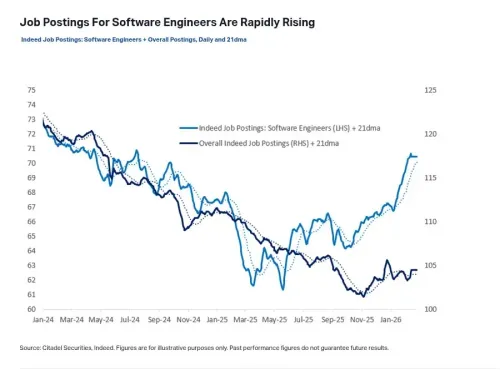
Sacks claims the AI build-out has already created one million new jobs and represents a larger infrastructure wave than railroads, canals, and the power grid combined.
The Trump administration explicitly chose industry-led voluntary commitments over a multilateral international treaty process.
Details on enforcement mechanisms, external audit providers, and disclosure standards have not yet been made public.
The accord's design could set a de facto global AI safety standard ahead of any competing UN or multilateral framework.
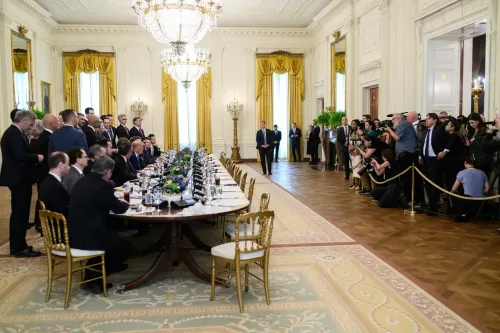
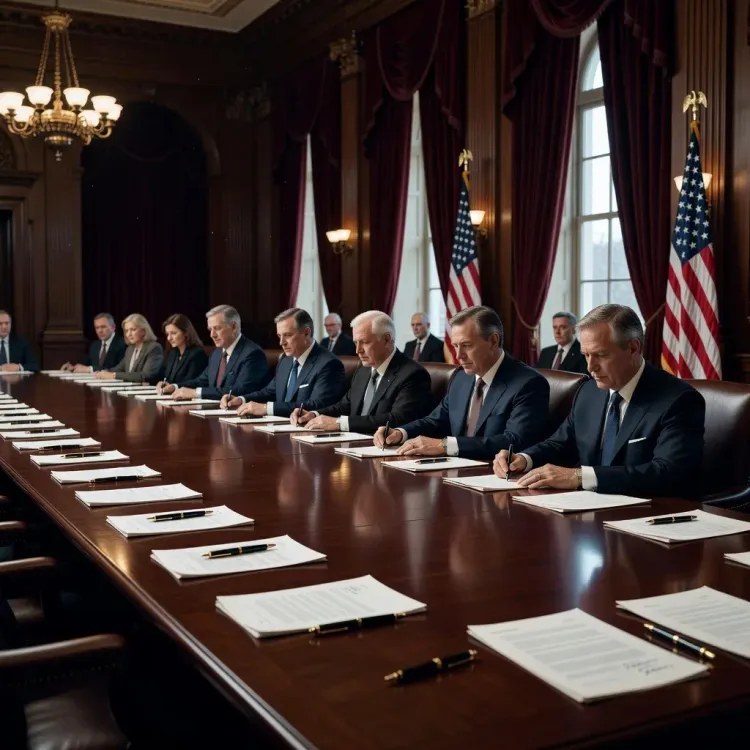
A room full of the most powerful names in chips, data centres, and frontier AI — and White House AI and Crypto Czar David Sacks was there to witness what he called a defining moment in the new Industrial Revolution. On Wednesday, September 30, 2026, Sacks announced that leaders of the world's top frontier AI companies had signed the White House Accord on Super Intelligence, a landmark voluntary agreement committing the industry to safe development practices, internal controls, and external audits.
What the Accord actually commits signatories to
Sacks described the accord as the frontier lab leaders 'accepting responsibility for the safe development of their products and imposing new internal controls and external audits.' The framework is voluntary rather than statutory — a deliberate design choice that the Trump administration has consistently favoured over multilateral treaty processes, which Sacks dismissed as agreements that would 'probably never happen.'
The accord was convened at the White House by President Donald Trump, bringing together the chief executives or senior representatives of companies building advanced chips, large-scale data centres, and the frontier models aimed at what the industry now calls Super Intelligence. No equivalent convening on this scale has been attempted by any prior administration, according to Sacks.
One million jobs and an infrastructure build bigger than railroads
Sacks framed the moment in sweeping historical terms, arguing that this technology cycle has 'already created a million new jobs' and is 'spurring a bigger infrastructure build-out than the railroads, canals and grid combined.' The comparison to nineteenth-century infrastructure waves is notable — it positions AI data-centre construction as a generational capital expenditure event, not merely a software story.
The specific one-million-job figure and the infrastructure-scale claim are drawn directly from Sacks's post and have not been independently verified. But the direction of travel — massive private capital flowing into GPU clusters, power grids, and cooling systems across the United States — is consistent with publicly reported capex plans from major technology firms over the past two years.
Industry-led governance versus a global treaty
The accord's architecture reflects a recurring tension in AI policy: move fast with domestic, industry-led standards, or pursue slower, binding international frameworks. The Trump administration has clearly picked a side. By anchoring governance in voluntary commitments with audit mechanisms, Washington retains control over the pace of deployment while giving frontier labs flexibility that a UN-style treaty process would constrain.
The approach carries risk: voluntary frameworks are only as strong as their enforcement culture, and the 'external audits' referenced in the accord will draw scrutiny from lawmakers and civil society groups who want to know who conducts them, how findings are disclosed, and what penalties — if any — follow non-compliance. Those details have yet to be made public.
What India and the rest of the world will be watching
For countries like India, which is simultaneously a major AI talent exporter, an emerging AI policy architect, and a potential chip-supply partner, the accord's design matters enormously. A U.S.-anchored voluntary standard, backed by the world's largest frontier labs, could become the de facto global benchmark — shaping everything from export controls to international AI safety dialogue — long before any multilateral body agrees on a rival framework.
The rollout details of the internal controls, the identity of the external auditors, and any follow-on executive actions or congressional hearings on AI infrastructure funding are the threads to pull in the weeks ahead. The accord is signed. The hard part — making it mean something — starts now.
Point of View
Industry-partnered, and outside multilateral channels. By substituting voluntary commitments backed by audits for treaty obligations, Washington accelerates deployment and retains geopolitical leverage, but also accepts that the framework's credibility will live or die on the rigour of those audits. For India, which is deepening its AI and semiconductor partnerships with the US, the accord's standards may well become the baseline that Indian AI policy must align with or actively negotiate around. The bigger question hanging over the accord is not whether it was signed, but whether audit teeth will ever be publicly shown.
NationPress
30 Sept 2026
Frequently Asked Questions
What is the White House Accord on Super Intelligence?
The White House Accord on Super Intelligence is a voluntary agreement signed by the leaders of top frontier AI, chip, and data-centre companies at a White House event convened by President Trump, committing them to safe development practices, internal controls, and external audits of their AI products.
Who is David Sacks and what is his role in the Trump administration?
David Sacks is the White House AI and Crypto Czar in the second Trump administration, responsible for shaping US policy on artificial intelligence and cryptocurrency. He is also co-founder of Craft Ventures and co-host of the All-In Podcast.
How many jobs has the AI industry created according to David Sacks?
Sacks stated in his post that the AI-driven industrial wave has 'already created a million new jobs,' though this specific figure has not been independently verified.
Why did the US choose a voluntary accord over an international AI treaty?
The Trump administration argued that waiting for a multilateral international agreement would take years and 'probably never happen,' so it opted for a faster, domestic industry-led framework that keeps the US in control of AI governance standards.
How does the White House AI accord affect India?
Because the accord involves the world's leading frontier AI companies and sets internal controls and audit standards, it could become the de facto global AI safety benchmark, directly influencing how India structures its own AI regulations and US-India technology partnership terms.