Vance warns AI firms: no liability shields, no cartels, no panic rules
Synopsis
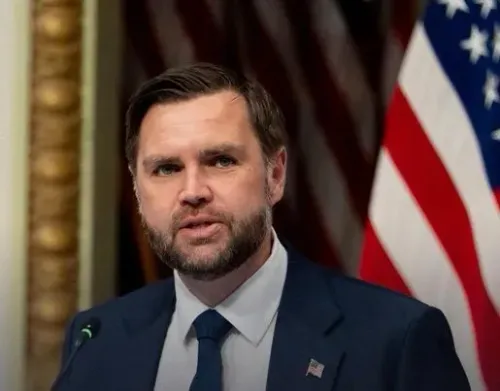
JD Vance just drew a sharp line for the AI industry: no Section 230-style immunity, no cartel behaviour among the top labs, and no panic-driven regulation. Speaking after a White House meeting with tech leaders, the US Vice President said frontier AI developers must answer to existing product liability law — not hide behind a new regulatory shield.
Key Takeaways
US Vice President JD Vance warned AI companies against seeking Section 230 -style liability protections on 30 September .
Vance said allowing the four or five biggest AI model companies to act collectively would be a 'huge mistake' amounting to cartel behaviour.
The administration favours existing product liability law and agencies such as the FTC and DOJ over a dedicated AI regulator.
Vance identified cyber capabilities of frontier models as the clearest near-term risk, calling for stronger cyber defence.
President Donald Trump 's administration has begun referring to advanced AI as 'super intelligence' but Vance rejected fears of uncontrollable autonomous systems.
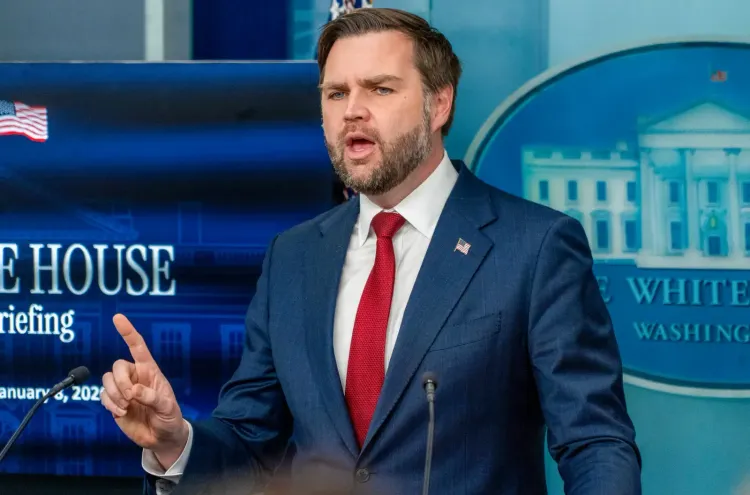
US Vice President JD Vance on 30 September warned artificial intelligence companies against seeking sweeping liability protections, saying developers of powerful frontier models must own responsibility for safety rather than lobby Washington for a new regulatory umbrella. The remarks followed a White House meeting with technology industry leaders.
No Section 230-Style Shields for AI
Vance was direct on the question of legal protection. 'What I think would be a huge mistake is to give, for example, Section 230 protections to some of the new technology companies,' he said. 'That actually shields them from liability rather than making them more responsible.' The reference to Section 230 — the provision that has long protected internet platforms from lawsuits over user content — signals the administration's resistance to extending similar cover to AI developers whose models generate content and take consequential actions autonomously.
Against 'Cartel-Like' Behaviour Among Top AI Labs
Vance also cautioned against collective action among the handful of dominant AI developers. 'We don't want the four or five biggest model companies… to join in a sort of unified cartel against the American consumer,' he said, adding that President Donald Trump's administration wanted those companies competing against one another. He acknowledged that leaders of several major AI firms were 'very smart, earnest people' but argued that goodwill did not substitute for market competition. The administration pointed to the Federal Trade Commission and Department of Justice as the appropriate tools for antitrust enforcement, and stressed the need for new entrants to be able to compete.
Existing Law Over New Agencies
Rather than a dedicated AI regulator modelled on the Food and Drug Administration or Federal Aviation Administration, Vance said existing product liability principles offered a more workable framework. 'Most bureaucrats just know way less about this than the people who are actually building these products,' he said. He added that regulations forged in a climate of panic tended to produce poor outcomes, citing COVID-19 era policy as a cautionary example: 'I don't think anybody regulates well in the middle of a panic. COVID should have taught us that.'
Cyber Risk and 'Super Intelligence'
Vance identified cyber capabilities as among the most tangible near-term risks from frontier models, noting that some systems had a 'remarkable ability' to help hackers penetrate computer systems. 'The best weapon against cyber offense is good cyber defense,' he said. On broader public anxieties, he rejected the idea that advanced AI — which the Trump administration has begun calling 'super intelligence' — would inevitably escape human control. 'They think the terminators are gonna come and take over everything… And that's just not gonna happen,' he said, while still acknowledging risk if companies fail to exercise sufficient care. 'If you're building a terrible, terrible thing, then stop and build something good. Don't come to the government and regulate,' he added.
What This Means for Global AI Policy
The remarks crystallise the Trump administration's emerging posture: strong on competition and accountability, sceptical of large new regulatory structures, and resistant to liability immunity that could reduce incentives for safety. This comes amid a broader global debate — in the European Union, the United Kingdom, and now India — over how to govern increasingly capable AI systems. The administration's emphasis on antitrust and product liability rather than sector-specific oversight could influence how trading partners and multinational tech companies calibrate their own compliance strategies. Further policy detail is expected as the administration continues its engagement with the technology industry.
Point of View
Yet also rejects the kind of strong regulatory oversight that would enforce that liability in practice. Relying on the FTC and DOJ assumes those agencies have the technical bandwidth and speed to keep pace with frontier model deployment, which is far from assured. The anti-cartel rhetoric is also striking given that the administration's own pro-deregulation stance could entrench incumbents who can afford compliance at scale, squeezing the very upstarts Vance says he wants to protect.
NationPress
30 Sept 2026
Frequently Asked Questions
What did JD Vance say about AI liability?
Vance said it would be a 'huge mistake' to extend Section 230-style liability protections to AI companies, arguing such shields reduce rather than increase responsibility for safety. He said developers of powerful frontier models should be held accountable under existing product liability law.
Why is Vance concerned about AI companies forming cartels?
Vance warned that collective action among the handful of dominant AI developers could harm competition and ultimately disadvantage consumers. He said the administration wanted these companies competing against one another, not coordinating in ways that freeze out smaller entrants.
Does the Trump administration want a dedicated AI regulator?
No. Vance expressed reservations about creating an AI equivalent of the FDA or FAA, arguing that regulators typically know far less about the technology than the people building it. He pointed to the FTC and DOJ as the appropriate existing bodies for oversight.
What AI risks did Vance flag as most serious?
Vance identified the cyber capabilities of frontier AI models as the clearest near-term risk, noting some systems had a 'remarkable ability' to help hackers penetrate computer systems. He also acknowledged broader safety risks if companies are insufficiently careful in development.
What is the administration's overall approach to AI regulation?
The Trump administration is seeking a balance between innovation and safety, favouring competition, antitrust enforcement, and product liability over sweeping new regulatory structures. Vance cautioned against regulations designed in haste, citing COVID-era policy as an example of panic-driven rules that did not serve the public well.